
Why Your SME May Need Better Conversation Capture
You finish a client call and remember the main idea, but not the exact deadline. A supplier gives you three instructions over WhatsApp voice messages, and one gets missed. Your team leaves a meeting with different interpretations of who should do what. Later, you spend valuable time replaying recordings, checking notes and asking people to repeat themselves.
For many Malaysian SME owners, the problem is not a lack of conversations. It is the gap between having a conversation and turning it into a reliable business record. Calls, site visits, interviews, briefings and informal discussions contain decisions that can easily disappear when everyone returns to their own tasks.
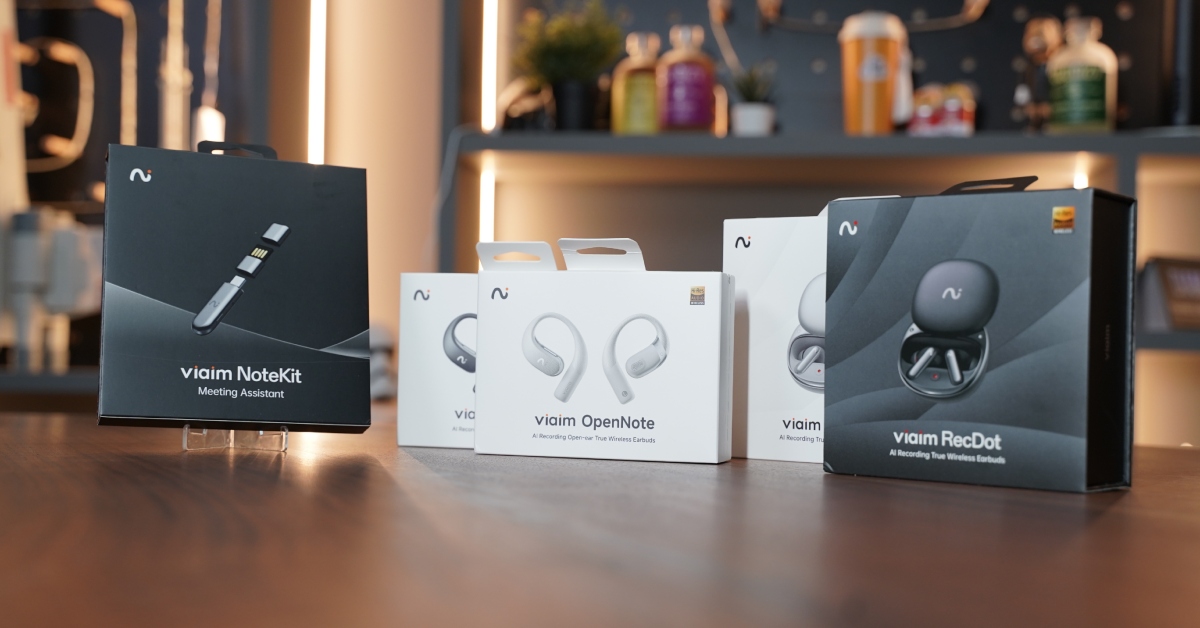
A recent review of the viaim OpenNote describes open-ear earbuds that record conversations, create transcripts and produce summaries, action items and mind maps through an accompanying app. The review is based on one week of use and identifies a practical direction for SMEs: capture information at the point of conversation, then organise it into work that people can act on.
TL;DR
Conversation-recording devices can reduce the manual work involved in recording, transcribing and organising meetings, calls and voice notes.
For your business, the real value is not the earbuds themselves. It is creating a dependable process for turning spoken decisions into assigned tasks, while protecting consent, privacy and accuracy.
What This Means
The concept is straightforward. Instead of using one app to record, another to transcribe and a third to write notes, an integrated device and software platform can bring these steps together. The reviewed OpenNote uses an open-ear design, meaning you can hear the device audio while remaining aware of colleagues, traffic and announcements. It includes recording modes for calls and meetings, followed by transcription and AI-generated summaries.
The review says the device supports 78 languages and 145 accents and dialects. Source: Vulcan Post review That matters in Malaysia, where a business discussion may move between English, Bahasa Malaysia, Mandarin, Tamil or different accents within the same conversation. However, language support does not make the transcript automatically correct. Names, technical terms, local slang and overlapping speakers still need checking.
The software can reportedly identify key points, action items and summaries, store conversations in a searchable database, and connect with tools such as Google Meet, Microsoft Teams and Skype. Source: Vulcan Post review Think of it as a first draft of your business record, not a replacement for judgement.
The important shift is from “Did someone take notes?” to “Can everyone see the same decisions and next actions?”
How This Applies to Malaysian SMEs
1. Sales and customer follow-up. A renovation contractor, software reseller, training provider or logistics company may discuss requirements during a phone call or site visit. The owner may remember the broad request but forget a specific delivery condition, document requirement or follow-up date. Recording the discussion, where everyone has agreed, gives you a source to review. A generated summary can then be converted into a customer profile, quotation checklist or follow-up email. You still need to verify the details before sending anything, but you no longer depend entirely on memory.
2. Operations and supplier coordination. SMEs often rely on a small number of people who carry a large amount of operational knowledge. A discussion with a supplier might cover stock availability, packaging instructions, delivery timing and replacement procedures. If the information remains in one employee’s memory, the business becomes vulnerable when that person is on leave or leaves the company. A searchable conversation record can help your operations team find what was agreed, especially when the same supplier has many ongoing orders.
3. Staff meetings and accountability. In a small team, meetings are usually short and practical, but that does not mean they are automatically clear. One person thinks the task is urgent, another thinks it can wait, and nobody is sure who owns it. A transcription and summary workflow can produce a simple action list: task, responsible person, due date and status. This is useful for weekly sales meetings, outlet briefings, warehouse coordination and project reviews. The process works best when someone approves the final action list rather than accepting an AI-generated version without review.
4. Multilingual customer service. Malaysian SMEs frequently serve customers and vendors who are more comfortable in different languages. A transcript may help you review a conversation after the call and identify whether an issue was caused by unclear wording, an incorrect assumption or a missed request. If your staff use a device that keeps them aware of their surroundings, it may be suitable for moving between a shop floor, office and customer counter. If the work environment is noisy, an in-ear option with noise cancellation may be more appropriate than an open-ear design. The source review describes the RecDot model as offering 48dB active noise cancellation and a 36-hour battery. Source: Vulcan Post review
What to Check Before Introducing It
Recording people is a trust issue, not merely a technology issue. Before recording a customer, employee, supplier or interviewee, tell them clearly and obtain their agreement. Explain why the recording is needed, where it will be stored, who can access it and how long you intend to keep it. This is particularly important when conversations include personal information, customer records, pricing discussions or confidential business plans.
Malaysia’s Personal Data Protection Department publishes guidance and materials relating to personal data protection under the Personal Data Protection Act 2010. Source: Personal Data Protection Department You should obtain advice appropriate to your business and the information you handle, rather than treating a device setting as a complete compliance solution.
Also consider whether the app stores recordings in the cloud, whether administrators can delete data, whether access can be separated by employee and whether exported transcripts remain on personal phones. Set a retention rule. For example, you might keep approved meeting notes but delete raw recordings after a defined period unless there is a legitimate business reason to retain them.
Useful Numbers to Compare
| Feature or figure | What it means for your business | Source |
|---|---|---|
| Up to 19 hours of earbud use | May support extended workdays without frequent charging | Vulcan Post review |
| Up to 53 hours with charging case | Useful when moving between calls, site visits and meetings | Vulcan Post review |
| 78 languages supported | Potentially useful for multilingual customer and staff conversations | Vulcan Post review |
| 145 accents and dialects supported | May improve recognition across varied speakers, but accuracy still requires review | Vulcan Post review |
| 600 free transcription minutes monthly | Can help you estimate whether the included allowance suits your call volume | Vulcan Post review |
| 1,800 minutes monthly on the reviewed Pro plan | Provides a reference point for heavier transcription users | Vulcan Post review |
Practical Takeaways
- Choose one repeatable use case first, such as client calls or weekly team meetings.
- Tell every participant before recording and provide a simple reason for doing so.
- Use the transcript as a draft. Check names, dates, figures, commitments and technical terms.
- Turn every approved summary into four fields: task, owner, deadline and follow-up method.
- Store final decisions in the system your team already uses, rather than creating another forgotten archive.
- Limit access to recordings and transcripts according to job responsibilities.
- Delete raw recordings according to a written retention rule.
- Test the workflow with Malaysian accents, mixed languages, background noise and more than two speakers.
- Ask staff whether open-ear audio helps them remain aware of customers and colleagues, or whether noise isolation is more suitable.
The Bigger Picture
For a small business, automation does not always begin with a large system. It can begin with removing one repeated administrative burden. If your team spends time reconstructing conversations, searching through voice messages or debating what was agreed, better capture can improve consistency.
The long-term benefit is a stronger organisational memory. New staff can understand the background to a decision. Managers can review recurring customer complaints. Sales teams can identify promises that need follow-up. Operations teams can compare what was requested with what was delivered. None of this happens automatically, however. The device creates information; your process decides whether that information becomes useful.
Start with a short trial involving one or two people and one business process. Define what a successful record looks like before you begin. After each week, check whether the tool reduces repeated questions, improves follow-up or creates extra review work. If it helps, expand carefully. If it does not, the problem may be your meeting structure, storage process or accountability rules rather than the recording device.
For Malaysian SMEs, the practical lesson from the OpenNote review is clear: conversations contain operational value, but only when you capture them responsibly and convert them into action. The right tool can support that workflow, while clear consent, human checking and disciplined record-keeping remain your responsibility.
Ready to Streamline Your Operations?
Your business should run itself. AutoRunBiz deploys AI agents to automate your daily operations — WhatsApp orders, invoicing, customer follow-ups, and accounting. Book a free 15-min ops audit to see where automation fits your business →