
Why AI Earbuds Deserve Your Attention
For a Malaysian SME owner, a meeting rarely ends when everyone leaves the room. You still need to remember what the customer requested, identify who owns each follow-up, update your team and prepare the next step. When those details are captured in scattered notebooks, WhatsApp messages and voice recordings, important work can easily disappear.
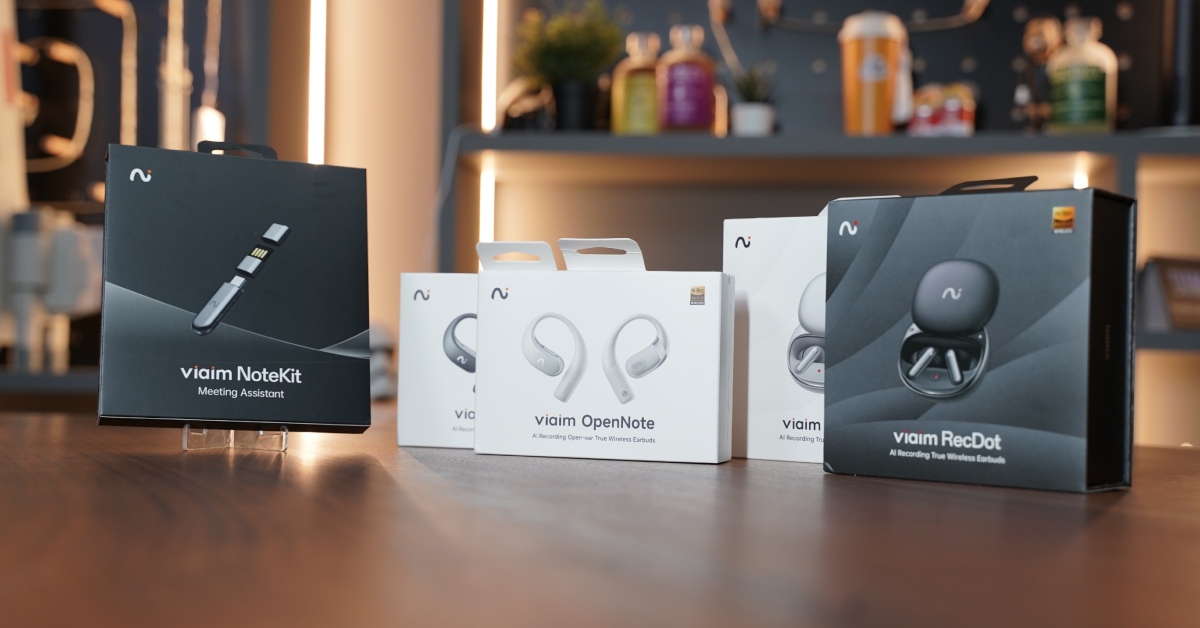
A recent review of the viaim OpenNote shows how AI-enabled earbuds are moving beyond music and phone calls. The device combines recording, transcription, summaries, action items and searchable conversation management in one workflow. The reviewer used it for calls, interviews, meetings and commuting, and reported that it reduced the need to switch between separate recording, transcription and note-taking applications. Source: Vulcan Post
This does not mean every SME should immediately buy AI earbuds. It does mean you should examine how your business handles spoken information. If your team spends hours repeating meeting notes, cleaning up transcripts or asking, “What did we agree on?”, a practical AI recording workflow may be worth testing.
What Happened
The viaim OpenNote is an open-ear pair of AI earbuds designed to keep the wearer aware of surrounding sounds while providing recording and transcription features. According to the review, the earbuds can be used for phone conversations through Call Mode, in-person discussions through Meeting Mode and quick recordings through FlashRecord. The reviewer said the device could be worn for most of the workday without sealing the ear canal. Source: Vulcan Post
After recordings are synchronised to the viaim app, its AI assistant, Vitana, can identify key points, create summaries, organise action items and generate mind maps. The app also supports workplace platforms including Google Meet, Microsoft Teams and Skype, according to the review. The product was tested in conversations involving multiple speakers and background noise, but the reviewer still noted that AI transcripts required checking before being treated as a final record. Source: Vulcan Post
The review also highlighted multilingual capability, with viaim supporting 78 languages and 145 accents and dialects. The reviewer tested a Japanese workplace dialogue translated into English and found the result reasonably accurate, particularly across different accents. The article’s central conclusion was not that the device eliminates human review, but that it can reduce the fragmented process of recording, transcribing and organising information. Source: Vulcan Post
Why This Matters for Malaysian SMEs
Many Malaysian SMEs operate through conversations. A renovation contractor discusses site changes with a client. A food distributor confirms delivery requirements with a restaurant. A recruitment agency interviews candidates. An accounting firm clarifies documents with a customer. A manufacturing supplier negotiates specifications with a buyer. In each case, the business depends on accurate details, but the person handling the conversation may also be managing sales, operations and administration.
An AI transcription workflow can turn those conversations into a working document much faster. Instead of asking a manager to type every detail during a client call, you can record the discussion, review the transcript and extract a short task list. A sales representative could use the transcript to prepare a follow-up email. An operations lead could identify delivery commitments. An owner could search earlier conversations before speaking to a repeat customer.
This is particularly useful for SMEs where knowledge often sits with one person. If a senior employee is away, customer history should not disappear with them. A searchable record can help another team member understand what was discussed, what was promised and what remains unresolved. It also provides a clearer handover between sales, customer service and operations.
| Business situation | Possible AI-assisted workflow | Human check still needed |
|---|---|---|
| Customer call | Record the discussion and produce follow-up points | Confirm commitments, deadlines and product details |
| Team meeting | Create a summary with named action items | Verify task owners and agreed decisions |
| Site visit | Capture spoken changes and questions | Match notes against drawings, quotations or contracts |
| Interview | Generate a searchable transcript for review | Assess the candidate using your own criteria |
| Supplier discussion | Extract specifications and follow-up requests | Check technical terms, quantities and dates |
What You Should Set Up Before Using It
Start with one repeatable business process rather than recording everything. A weekly sales meeting, customer discovery call or project handover is a good pilot. Define what a useful output looks like: perhaps a five-line summary, a list of tasks with owners and a draft follow-up message. This keeps the technology focused on a business result instead of becoming another app your team opens without changing its work.
Next, create a review routine. The transcript should be treated as a draft record, especially when several people speak, the room is noisy or technical terms are involved. Ask the person responsible for the meeting to check names, numbers, dates, product codes and commitments before anything is sent to a customer or added to a formal file.
You also need a clear consent practice. Tell participants when a conversation is being recorded and explain why. For Malaysian businesses, this is not merely a courtesy. Personal data and customer communications should be handled carefully, with access limited to people who need the information. Do not record confidential discussions casually, and check how the selected tool stores, processes and deletes recordings.
The Bigger Picture
The larger shift is from AI that produces text to AI that helps organise business memory. A transcript by itself is not a solution. The useful step is converting spoken information into decisions, tasks, customer updates and searchable knowledge. That can make a small team more consistent without requiring every employee to become an expert note-taker.
Still, the technology will not correct weak processes. If your meetings have no agenda, no owner and no deadline, an AI-generated summary may simply make the confusion easier to read. Introduce basic meeting discipline first: state the purpose, confirm decisions, assign responsibilities and record due dates. Then use AI to reduce the administrative effort around that process.
Open-ear earbuds may suit you if you need to remain aware of colleagues, traffic or announcements while working. The review reported up to 19 hours of use from the earbuds and up to 53 hours with the charging case, while the alternative viaim RecDot uses an in-ear design with active noise cancellation and a stated 36-hour battery. These are product specifications reported by the review, not a guarantee that either design will suit every workplace. Source: Vulcan Post
Your next step does not have to be a purchase. Choose one meeting type, obtain consent, record it using an approved method and compare the time spent on notes before and after. Measure whether follow-ups are clearer, whether fewer details are missed and whether employees spend less time reconstructing conversations. If the result is positive, expand carefully with access rules, retention guidelines and a consistent review process.
AI should not replace your judgement after a meeting. It should help you spend less time reconstructing what happened and more time acting on what was agreed.
For a Malaysian SME, that is the practical opportunity. The winning tool is not necessarily the most advanced device. It is the one that helps your team capture conversations responsibly, turn them into clear actions and carry those actions through to completion.
Ready to Streamline Your Operations?
Technology moves fast. Your operations should keep up. AutoRunBiz builds AI systems that run your daily workflows — from WhatsApp order capture to accounting. Book a free 15-min ops audit →