
Your EV Fleet Has a Hidden Weakness — Here’s How to Fix It Before It Costs You
Imagine one of your employees is parked at a charging bay when something goes wrong. A fire breaks out in the building next to the lot, someone starts a fight, or severe weather hits. Your driver’s first instinct is to get in the car and leave. But the car won’t let them go — because the charging cable is physically locked into the port. That’s not a paranoid fantasy. It’s the exact dilemma that went viral after a shooting at a Tesla Supercharger in Twin Falls, Idaho, last week. For Malaysian SME owners who are slowly adding EVs to their fleets, this story is a warning you need to take seriously.
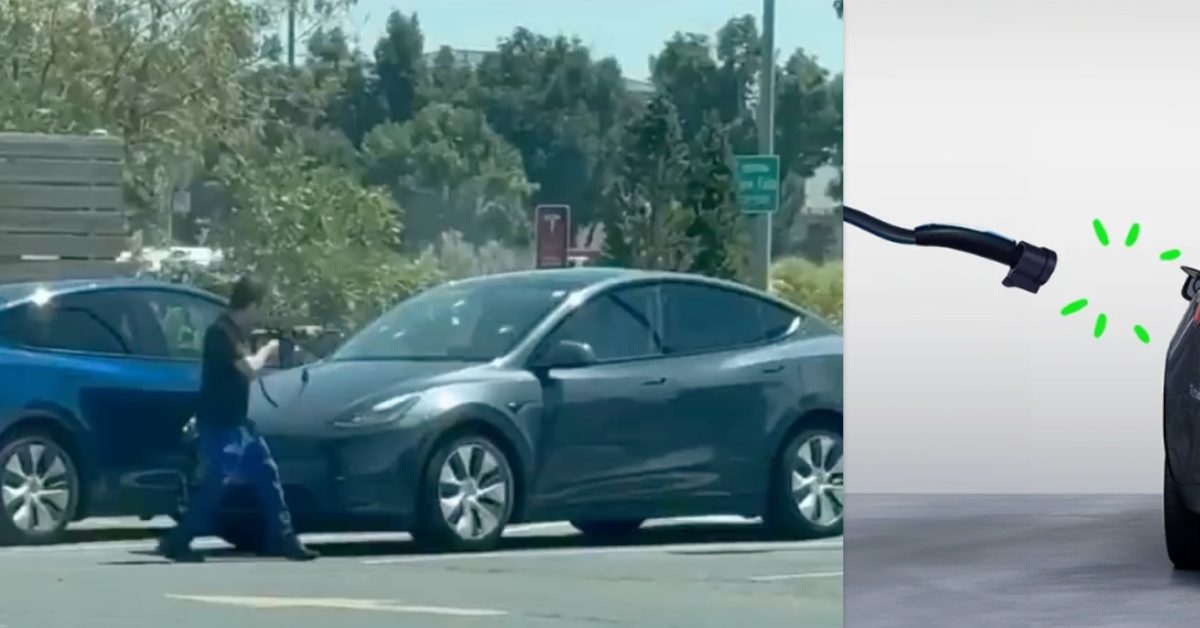
Here’s what happened. On August 1, 2026, a shooter opened fire at a newly opened In-N-Out restaurant in Twin Falls, a parking lot that also contains a Tesla Supercharger station. Video circulating online appeared to show the gunman firing into a plugged-in Tesla. Three people were killed and several injured, including a driver who was charging his Tesla and survived. In the chaotic aftermath, EV owners on social media flooded X with a recommendation: buy a breakaway charging connector called EVject, a gadget that sits between the charger cable and your car’s port, designed to snap off when you drive away.
What those viral posts left out is that this device is controversial. Tesla actually sued the maker of this adapter in 2024, calling it a safety risk — the lawsuit claimed the connector could reach dangerous temperatures during high-current charging and had no over-temperature protection. The company later released an updated version with thermal protection, and Tesla dropped the suit. But the deeper issue remains: the charging connector locks on every EV, not just Teslas. It’s baked into the NACS, CCS, and J1772 standards to prevent arcing and accidental disconnection while high-voltage power flows. So any plugged-in electric vehicle is, for those seconds, not a car you can simply floor and go.
You might be thinking, “We’re in Malaysia — nobody is shooting up our parking lots.” True. But an emergency doesn’t need a gun. Think about the flash floods that hit Selangor every year. Think about an office charger malfunction that sparks a fire in your basement car park. Think about a robbery attempt at your shop while a service vehicle is charging outside. The locked connector turns a simple “get in and drive” response into a multi-step process: tap the screen to unlock the charge port, wait for the cable to disengage, then shift into drive. In a flood or fire, those seconds can be the difference between escaping and getting trapped.
The more immediate problem for Malaysian SME owners is that this vulnerability is easy to miss when you plan your EV adoption. You’ve probably researched charging cost, range, and maintenance. But have you thought about how a driver leaves a charging bay in an emergency? If you’re installing chargers at your office, it’s not just a hardware question — it’s a procedural one. The source article makes an important point that applies directly to your business:
“The locking connector exists for good engineering reasons, so the escape path has to be engineered too — by the people who build the cars and the chargers, not bolted on afterward.”
As the owner of a small or medium business, that escape path is ultimately your responsibility to design into your operations.
So what can you actually do today? Start by checking whether your company’s EVs have a manual mechanical release for the charging port, and make sure every driver knows exactly where it is and how to trigger it. Test it during onboarding, not just once, but as part of a yearly safety drill. Next, talk to your charging provider — whether it’s a property owner, a mall, or a charging-as-a-service vendor — and ask whether they offer an emergency disconnect or a remote unlock feature. Some fleet management platforms allow you to remotely stop a charging session, which then releases the lock. Finally, when you’re evaluating new EVs for your fleet, add “emergency unplug procedure” to your evaluation checklist. It’s not a glamorous buying criterion — but neither is a fire extinguisher.
The Bigger Picture
Beyond your own fleet planning, the Twin Falls incident reveals a technology trend Malaysian SMEs should watch: the growing backlash against bolt-on accessories. The author of the source article argues that the real solution is a native emergency disconnect built into the vehicle — something Tesla and other automakers should design because they control both the car and the charger. That principle applies to every technology decision you make. When you adopt a new system, look for vendors who design for edge cases — like a driver needing to leave in a panic — rather than leaving you to patch together third-party fixes after a crisis.
This story also signals that EV safety standards are still evolving. As an SME owner in Malaysia, you’re adopting EVs earlier than many of your competitors. That puts you in a position to set purchasing standards for safety, reliability, and emergency readiness that bigger, slower companies will eventually have to follow. Don’t treat the Twin Falls incident as an American gun story. Treat it as a reminder that the EV transition isn’t just about energy — it’s about designing for the unpredictable moments that technology can’t eliminate.
Here’s a quick checklist for your fleet and office charging setup:
- Know the manual release: Locate the mechanical release for the charging port on every EV you own, and train drivers to use it without looking.
- Ask about remote disconnect: Check if your charging provider or fleet platform can trigger an emergency stop and unlock from a central dashboard.
- Rehearse the escape: Run a timed drill where a driver parks, plugs in, and practices an emergency departure — then identify where the time goes.
The EV transition gives Malaysian SMEs an opportunity to build safer, more resilient operations from day one. The locked charging connector is a hidden constraint that can turn a small incident into a big one. But if you plan for it now — before the flood, the fire, or the conflict — you’ll be far better prepared than most of your competitors. And that’s the kind of edge that matters, no matter what emergency comes your way.
Ready to Streamline Your Operations?
Technology moves fast. Your operations should keep up. AutoRunBiz builds AI systems that run your daily workflows — from WhatsApp order capture to accounting. Book a free 15-min ops audit →