
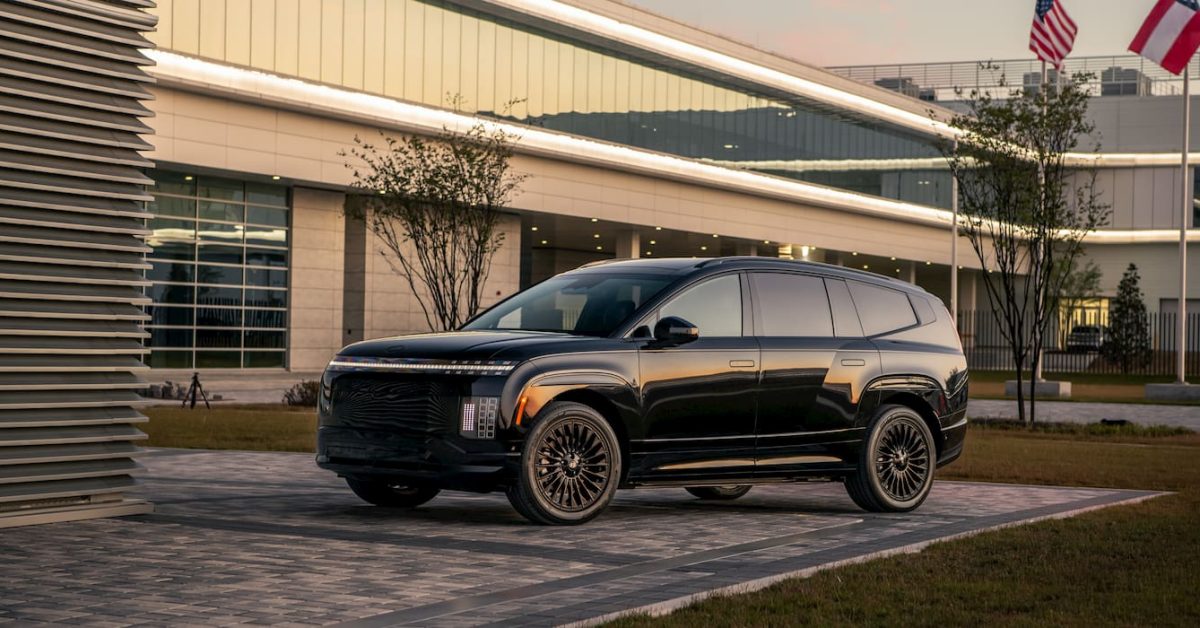
Why a US Car Sales Report Should Matter to Your Malaysian Business
You probably didn’t wake up this morning wondering how many Hyundai and Kia cars were sold in the United States last month. And honestly, that’s fair. Between managing your team, chasing suppliers, and putting out the daily fires of running an SME, global automaker sales reports feel like noise from a world that has nothing to do with you.
But here’s the thing: the story behind Hyundai and Kia’s record-breaking July sales isn’t really about cars. It’s about what happens when an entire market shifts underneath you — and the companies that spot the shift early and adjust what they offer win big. The same kind of shift is happening in Malaysia, right now, in your industry. Whether you run a logistics fleet, a workshop, a food business, or a professional services firm, the pattern applies to you.
TL;DR: Hyundai and Kia just posted record US sales, but not because their pure electric vehicles are booming. Their hybrid models are. Pure EV sales actually fell. The lesson? Your customers want to move forward — but at their own pace. The businesses that offer a bridge, not a leap, are the ones setting records.
What This Means
Let’s look at the numbers. In July, Hyundai sold 82,480 vehicles in the US, its best July ever, while Kia sold 75,867 — also a July record. But here’s the surprise tucked inside those headlines: Hyundai’s hybrid sales rose 35% year-over-year, and Kia’s hybrid sales surged 108%. Meanwhile, sales of Hyundai’s flagship electric IONIQ 5 dropped 38% for the month.
In plain language: consumers aren’t rejecting electrified vehicles. They’re rejecting the compromise that pure EVs still represent for many buyers — charging time, range anxiety, infrastructure gaps. Hybrids deliver most of the benefits without the anxiety. So Hyundai and Kia are selling more cars than ever by giving customers a practical stepping stone, not by pushing the “full future” hardest.
How This Applies to Malaysian SMEs
If you run a delivery business or manage a fleet of vehicles for your team, this pattern should hit close to home. Malaysia’s charging infrastructure is improving, but ask any logistics operator — your drivers still worry about range, especially for long-distance routes up to Penang or across to Kuching. A pure EV fleet might be the ideal end-state, but a hybrid option is the practical choice today that keeps your operations running without disruption. The same principle applies to any technology you’re eyeing for your business: cloud systems, AI tools, workflow automation. Full adoption might be your end goal, but your team often needs a middle step first — something that works with their current habits before you demand a total overhaul.
Now consider what happens if you run a workshop, spare parts business, or any automotive-adjacent SME. The rise of hybrids means a whole new set of components, diagnostic equipment, and servicing skills. Workshops that only know how to service conventional engines will find themselves squeezed as hybrid adoption grows here in Malaysia, just as it has in the US. But flip that around: workshops that proactively train their mechanics on hybrid systems today become the go-to service providers in the next few years. The demand curve is already visible in those sales numbers — the only question is whether you read it as a threat or a to-do list.
There’s another layer worth your attention. Kia is launching the EV3, a smaller, entry-level electric SUV, later this year — and it’s already among the top-selling electric vehicles in Europe. This is a model designed to open up an entirely new customer segment. For your SME, this is a reminder to check whether you have an “entry-level offering.” The customer who isn’t ready to commit to your premium package is still a customer — but only if you have a door they can walk through. A basic tier, a starter consultation, a scaled-down version of your service: these aren’t just marketing tactics, they’re how you capture people who would otherwise never buy from you at all.
Think about what’s happening on Malaysian roads right now. You’re seeing more hybrid and EV badges every month — from national marques to the Korean, Japanese, and Chinese brands — and charging stations are creeping beyond Klang Valley and along the North-South Expressway. The direction is clear. But the pace is gradual. Your customers, like car buyers, adopt in stages. If your business model depends on everyone making the full jump at once, you’re in for a long wait. If you design for the staging, you’re in for a steady ride.
“Customers rarely jump straight from the old way to the full future. They need a bridge. The companies that build that bridge are the ones setting records — and the ones that don’t are left wondering where everyone went.”
The Numbers Behind the Trend
| Metric (July 2026, US market) | Hyundai | Kia |
|---|---|---|
| Total vehicles sold | 82,480 (best July ever) | 75,867 (best July ever) |
| Hybrid sales vs. July 2025 | Up 35% | Up 108% |
| Pure EV flagship sales | IONIQ 5: down 38% (3,636 units) | EV6: down ~34% year-to-date |
| New model momentum | IONIQ 9: up 166% year-to-date | Three-row models up ~30% year-to-date |
Data compiled from Electrek’s July sales coverage.
Practical Takeaways for Your SME
- Audit your “hybrid option.” What middle-ground version of your product or service can you offer to customers who want to modernize but aren’t ready for the full shift? A starter package. An entry-level plan. A basic version that gets them in the door.
- Track your own “sales by model.” Hyundai and Kia know exactly which models are rising and falling each month. Do you know which of your services are up 35% and which are down 38%? Pull that data monthly, not yearly.
- If you run vehicles, test a hybrid. Before committing your whole fleet, run one hybrid under real Malaysian conditions — KL traffic, highway runs, delivery schedules. Let data, not hype, make the decision.
- Build the skill before the demand peaks. Whatever your trade, the next generation of technology will demand new skills. Train your people while things are still quiet — it’s far easier than scrambling later.
- Watch for the “EV3 pattern.” New, simpler, more accessible offerings often unlock growth in unexpected customer segments. What could your version of that be?
The Bigger Picture
The long-term story here isn’t really about cars. It’s about how industries transition — and Malaysia is full of industries in transition right now. From the gradual shift toward digital payments to the slow but steady adoption of business automation among SMEs, almost every business owner is facing the same question: how aggressively do we push the full future onto our customers and our team?
The Hyundai and Kia data suggests a clear answer: don’t push the full future. Build a bridge to it. Offer something that feels like progress without demanding a complete break from the old way. Their record sales are proof that the bridge strategy works at massive scale.
For your SME, that means thinking about transitions as a series of steps, not a single leap. It means respecting that your customers — and honestly, your own team — need time to adjust to new ways of working. The businesses that acknowledge that reality and design their offerings around it will be the ones posting their own record months a few years from now.
You don’t need Hyundai’s marketing budget to apply this lesson. You just need to ask one honest question: are you offering your customers a bridge to the future, or are you waiting for them to jump?
Ready to Streamline Your Operations?
Your business should run itself. AutoRunBiz deploys AI agents to automate your daily operations — WhatsApp orders, invoicing, customer follow-ups, and accounting. Book a free 15-min ops audit to see where automation fits your business →