
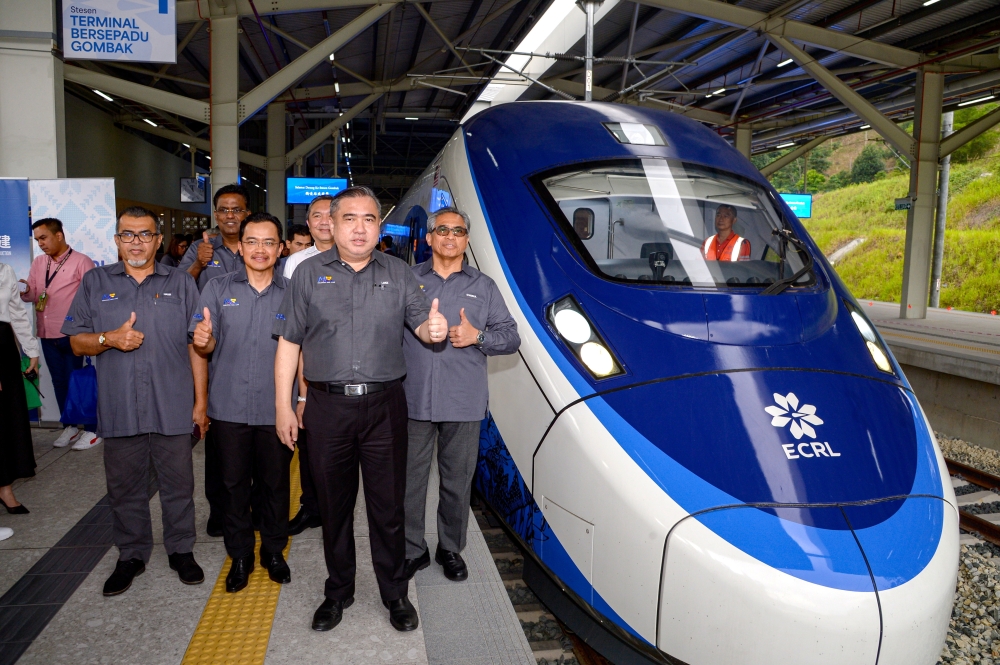
Your next customers are about to move across Malaysia — and the ECRL station designs prove a bigger point about standing out
You run a small business. You don’t have time to follow every infrastructure announcement. But when a railway line makes national news — not for its engineering, but for the stories baked into its station designs — it’s worth pausing.
Because there are actually two stories here. The first is about how Malaysia is choosing to express its identity in a massive public project. The second is about what happens when thousands of new passengers start moving between the East Coast and the Klang Valley. Both affect you, whether you’re a cafe owner in Shah Alam or a handicraft supplier in Kelantan.
TL;DR: The East Coast Rail Link (ECRL) Phase 1 is now 95.08 per cent complete as of July 2026, with commercial operations targeted for December 2026 — ahead of the original January 2027 schedule (source). Stations are being designed as cultural landmarks, not just transit points. For your SME, this means two things: a masterclass in differentiation through local identity, and a new corridor of customer movement to prepare for.
What This Means
Transport Minister Anthony Loke unveiled the main station design concepts at the Gombak Integrated Terminal Station on August 14, 2026, alongside the start of System Integration Testing and a Fault-Free Run for the Kota Bharu–Gombak stretch (source). In plain language: the track is built, and they’re now testing every system to make sure the trains run without failures before opening to the public.
But the more interesting part is the design. Every major station is an architectural tribute to its state’s heritage (source):
| Station | Design Inspiration | State |
|---|---|---|
| Kota Bharu (Bandar Batu Tunjong) | Traditional ‘Rumah Meleh Melayu’ with ‘Bunga Ketam Guri’ motifs | Kelantan |
| Kuala Terengganu | Boat and wave elements, honouring hand-carved wooden boat-making heritage | Terengganu |
| KotaSAS | State crest with ‘Gading Gajah’ (elephant tusk) | Pahang |
| Gombak Integrated Terminal | Gombak Selangor Quartz Ridge, a 14-kilometre quartz formation | Selangor |
According to Loke, this approach ensures the ECRL “highlights the cultural and heritage uniqueness of communities along its route” (source). The Gombak station’s geometric concept is drawn from the quartz ridge’s natural fort-like shape, and the 9.96-hectare site has reached 98.96 per cent completion after a 26-month development, with full completion expected this September (source).
How This Applies to Malaysian SMEs
1. Your local identity is your moat. Think about what Malaysia’s transport ministry just did. They could have built 20 identical stations — cheaper, faster, easier to maintain. Instead, they chose to make each one distinct, embedding local motifs and stories. Why? Because a generic station is forgettable, and a forgettable place attracts nobody. Your business faces the same choice every day. A café that looks and feels like ten other cafés gets overlooked. A workshop in Kelantan that puts Bunga Ketam Guri motifs on its packaging, a Terengganu food brand that tells the story of the boat-builders’ craft — these are narratives nobody else can copy. Your origin, your local materials, your community’s craft heritage: these are free differentiators that competitors in other states literally cannot replicate.
2. Your customer map is about to change. The ECRL connects Kota Bharu to Gombak, cutting travel time between the East Coast and the Klang Valley dramatically. But it’s not just about people going home for celebrations. It’s about day-trippers, weekend tourists, and business travellers moving in both directions. If you’re an East Coast SME — tourism, food, craft, retail — you’re about to see a steady stream of Klang Valley visitors who previously found the journey too long. If you’re in the Klang Valley, you now have realistic access to East Coast suppliers, partners, and markets that were once impractical. The question isn’t whether this changes your business environment; it’s whether you’ve thought about it yet.
3. The timeline is real — and closer than you think. The project has entered its testing and commissioning phase, and China Communications Construction Company president Zhang Bingnan said the start of testing marks a significant step toward completion and smooth operation (source). For you, that means the first major travel surge — Hari Raya Aidilfitri 2027 — is less than a year away. If you operate in tourism, F&B, or retail along the corridor, this is your planning window: seasonal staffing, stock levels, packaging, promotional calendars, and transport arrangements. Businesses that prepare between now and December will be the ones capturing the first wave of passengers.
“The East Coast community can look forward to returning home for Hari Raya Aidilfitri on the ECRL next year.” — Transport Minister Anthony Loke (source)
Read that again. It’s not just an infrastructure milestone. It’s a promise that families who previously endured long, tiring journeys will now travel differently. And where families travel, spending follows.
Practical Takeaways
- Audit your brand story: what local element does your business own? If you can’t answer in one sentence, your customers can’t either.
- Pick one local motif — your hometown, your materials, your community’s craft — and feature it in your packaging, signage, or menu.
- If you’re East Coast-based, prepare for Klang Valley customers: review your opening hours, payment options, and weekend capacity.
- If you’re in the Klang Valley, map East Coast suppliers and partners you couldn’t reasonably reach before the rail link.
- Put the launch date in your calendar: December 2026 target for commercial operations, with Gombak station completion expected this September (source). Plan your seasonal campaigns around it.
The Bigger Picture
What Malaysia is doing with the ECRL stations is part of a broader shift: infrastructure is no longer just functional, it’s expressive. The stations are designed to be visited, photographed, and remembered. That’s the same logic driving the experience economy — people don’t just want a transaction; they want a story they can participate in.
For SMEs, the long-term implication is clear. The businesses that thrive in the coming decade won’t be the ones that merely offer good products. They’ll be the ones that embed their identity into every touchpoint — like a train station that tells you which state you’ve arrived in. The ECRL opens a physical corridor between markets that were previously separated by geography. But the deeper opportunity is the cultural corridor: a chance for East Coast heritage to reach new audiences, and for Malaysian businesses everywhere to borrow a page from their own hometowns.
Start with one small change this month. The train is coming; make sure your business is ready to be discovered.
Ready to Streamline Your Operations?
Your business should run itself. AutoRunBiz deploys AI agents to automate your daily operations — WhatsApp orders, invoicing, customer follow-ups, and accounting. Book a free 15-min ops audit to see where automation fits your business →