
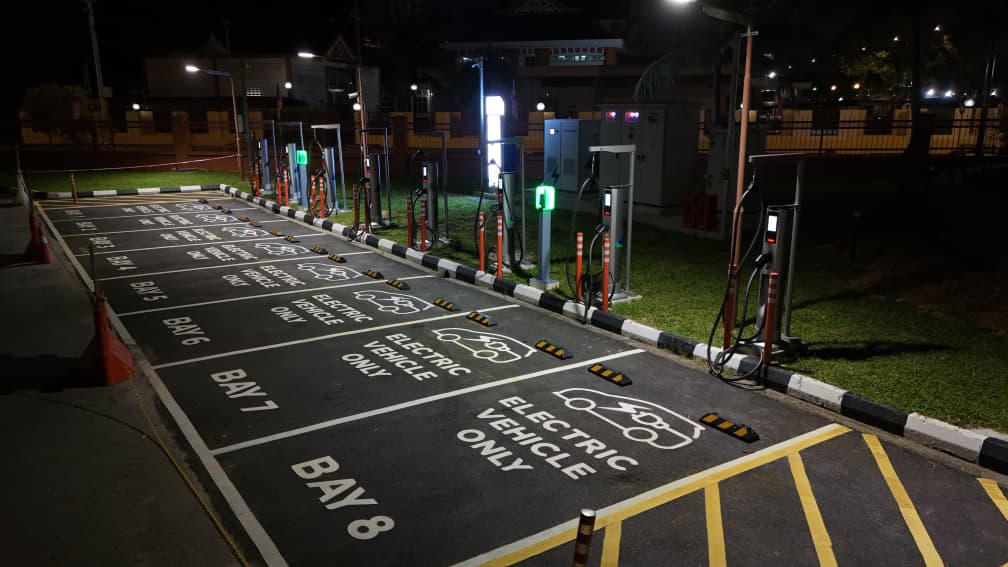
If You Run a Business in Penang, Electric Vehicles Just Got More Practical
You have probably seen the headlines about TNB Electron switching on a 480kW DC charger with eight bays in Seberang Jaya, Perai. If you run a small or medium business, you might have skimmed past it, thinking it is just another piece of EV infrastructure news. But this is not about EV enthusiasts. This is about delivery fleets, company vehicles, and whether your customers can actually reach you without range anxiety.
For years, the biggest objection to going electric among Malaysian business owners was simple: where do I charge? Fast charging was scarce, slow charging was impractical, and waiting time meant lost working hours. That objection is now crumbling, one high-speed station at a time. The Seberang Jaya installation is a concrete signal that charging infrastructure is moving beyond the Klang Valley and into industrial and commercial corridors where businesses actually operate.
TL;DR: TNB Electron has activated a 480kW DC charger with eight bays at Seberang Jaya, Perai. For Malaysian SMEs, this means faster turnaround for delivery vehicles, a more practical case for switching company fleets to EV, and a rising expectation from customers that businesses be accessible and sustainable. The infrastructure is arriving earlier than many anticipated, so the time to plan around it is now, not later.
What This Means
Let us break down what “480kW DC charger with eight bays” actually means for a non-technical business owner. A DC charger bypasses the slower onboard converter in an EV and feeds power directly to the battery. The higher the kilowatt rating, the quicker the charge. A 480kW unit is among the fastest commercially available in Malaysia today. The “eight bays” means eight vehicles can plug in at the same time, which dramatically reduces the queue problem that plagues most fast-charging sites.
To put it in perspective, a typical DC fast charger at a petrol station might offer 50kW to 150kW. At 480kW, a compatible vehicle can add a very substantial amount of range in the time it takes to buy a coffee and use the restroom. This is not an overnight charge. This is a working-hour charge. For a business, that distinction matters more than the technical specs.
The business value of EV charging is not measured in kilowatts. It is measured in how many minutes your vehicle is parked versus how many minutes it is moving.
How This Applies to Malaysian SMEs
Consider a logistics company in Penang that runs five vans doing same-day deliveries around the island. Right now, your drivers plan routes around petrol stations and traffic. If you switch to electric vans, every route plan must include a charging stop. Before this Seberang Jaya installation, your options were limited to slower chargers that could keep a van idle for over an hour. With an eight-bay high-speed site, a driver can top up during a scheduled break and be back on the road in the same coffee break that they would take anyway. That is not a hypothetical benefit; it is a route-planning solution.
But the application is wider than logistics. Think about a healthcare SME with a small fleet of mobile nurses visiting patients across the mainland. Or a construction company that needs to move tools and materials between Penang island and the mainland. Or a catering business that sends food to events in Perai and Bukit Mertajam. Every one of these businesses depends on vehicles that are either parked or moving. The better the charging infrastructure, the more flexible the moving hours become. The Seberang Jaya site sits right at a busy interchange, which means it is positioned for exactly these kinds of commercial routes, not just for private car owners on a weekend trip.
There is also a customer expectation angle. Malaysian consumers are increasingly noticing which businesses operate more sustainably. If you run a retail outlet, café, or clinic, having EV charging nearby is not directly under your control, but it changes the conversation. Customers who drive EVs will start asking whether your premises has charging. That question will become more common as fast charging expands. You do not need to install your own chargers to benefit; you simply need to know the local map so you can answer confidently and plan your operations around it.
Finally, think about employee retention. If your staff drive EVs, and you currently tell them to charge at home because the office has no facilities, you are placing a private burden on them. As public fast charging expands, you can shift that conversation. You can allow a delivery staff member to charge during work hours at a nearby station without losing half a day. That is a real operational advantage for a small business that cannot afford long downtime.
Practical Takeaways
- Map the stations along your regular delivery and travel routes, and treat this new site as a fixed point in your logistics plan.
- Calculate the actual parking time for your fleet today. If a 30-minute stop is enough to complete a route, a high-speed charger removes the main objection to switching to EV.
- Check whether the vehicles you plan to buy are compatible with 480kW charging. Not all EVs accept the fastest speeds, so verify the charging curve before you commit.
- Use the presence of high-speed charging infrastructure as a talking point in your business proposal or tender documents, especially if you are applying for contracts that value sustainability.
- Watch for announcements from other highway corridors. This Perai station signals a pattern, and more sites will follow.
What the Numbers Say
The shift is not subtle. Here is a quick comparison of what a 480kW eight-bay station changes versus a typical older fast charger:
| Factor | Typical 50kW Fast Charger | 480kW 8-Bay Charger (Perai) |
|---|---|---|
| Approximate range added in 30 minutes | Around 50–70 km | Over 250 km for compatible vehicles |
| Vehicles served simultaneously | 1–2 | 8 |
| Wait time pressure | High if busy | Low, with eight bays absorbing peak demand |
| Suitability for commercial fleets | Marginal, only for emergencies | Practical as a regular checkpoint |
These figures are based on typical EV charging behaviour and the station specification reported by SoyaCincau. Your mileage will vary, but the pattern is clear: the kind of charger that used to be reserved for highway rest stops is now sitting at a commercial location in the middle of a busy business corridor.
Infrastructure is the strategy. When chargers appear on the routes your business already travels, the economic case for electrification changes overnight.
The Bigger Picture
This is not a one-off project. TNB Electronics installing an eight-bay, 480kW station in Perai is part of a broader national push to build charging networks along industrial and trade corridors. Penang is a manufacturing hub, and the northern region carries a heavy volume of commercial traffic between industrial parks, ports, and the border with Thailand. The placement of this charger at Seberang Jaya tells you where the market is heading: not just into residential areas and shopping malls, but into the very roads your goods and staff travel on every day.
For a Malaysian SME owner, the long-term trend to watch is not the charger itself but the planning behaviour around it. Businesses that move early to align their routes, fleet choices, and customer communications with the charging map will gain a quiet advantage. They will not pay less instantly, but they will have more operational flexibility, less downtime, and a simpler answer when customers or partners ask about sustainable logistics.
The other trend is competition. As charging networks expand, the ability to offer reliable, accessible service of any kind becomes increasingly tied to transportation. Your competitors in the same industrial area are reading the same news. The question is who adjusts their route planning first. The Perai station is open now. Your next fleet meeting should include a five-minute conversation about what that means for your vans, your drivers, and your delivery promises.
You do not need to become an EV expert. You just need to treat charging infrastructure like you treat any other business utility: know where it is, know what it can do for your operations, and use it when it makes sense. Right now, in Seberang Jaya, it makes a lot more sense than it did last month.
Ready to Streamline Your Operations?
Your business should run itself. AutoRunBiz deploys AI agents to automate your daily operations — WhatsApp orders, invoicing, customer follow-ups, and accounting. Book a free 15-min ops audit to see where automation fits your business →