
When a Standard Changes, Smart Businesses Pay Attention
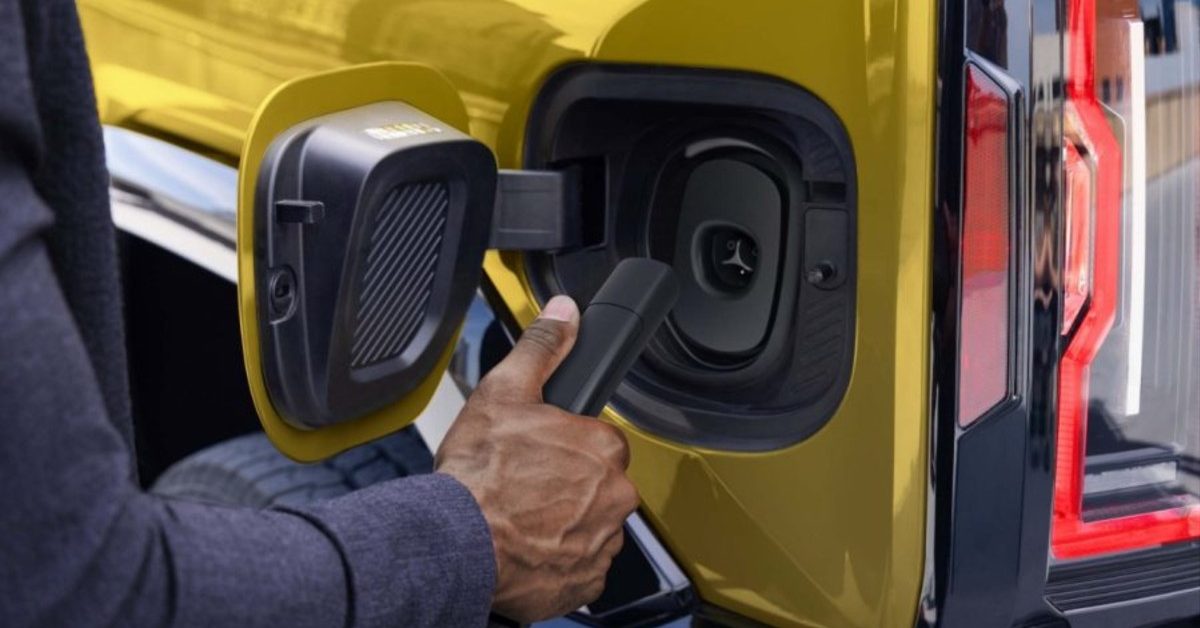
Here’s a story that looks like it belongs on a car blog, not in your business reading list. General Motors has confirmed that every 2027 model-year electric vehicle it sells—across Chevrolet, Cadillac, and GMC—will come with a native North American Charging Standard (NACS) port, also known as SAE J3400 (source). That means drivers plug directly into compatible Tesla Superchargers with no adapter in between. If you run a small business in Malaysia, you might wonder what this has to do with you. The answer is more than you’d think.
What Happened
GM’s announcement isn’t a pilot program or a test. It covers the entire 2027 model-year lineup: Cadillac Escalade IQ, Escalade IQL, Lyriq, Optiq, and Vistiq, plus the Chevrolet Bolt EV, Blazer EV, Equinox EV, and Silverado EV, and the GMC Hummer EV Pickup, Hummer EV SUV, and Sierra EV (source). The 2026 Cadillac Optiq has already made the switch, and the reborn Chevrolet Bolt, arriving in 2026 as a 2027 model, ships with the native NACS port as well. That means no adapter, no hunting for the right cable, no awkward fumbling at a charging station. One plug, straight into the socket.
There’s a second, quieter move in the same announcement. GM is pushing a feature called Energy Pass, built directly into its MyChevrolet, MyCadillac, and MyGMC apps. It lets drivers register and pay across multiple charging networks from a single account. Tesla Supercharger, IONNA, Electrify America, and ChargePoint are supported now, with EVgo on the way. Together, those networks cover nearly 70% of US DC fast chargers (source). The system supports Plug & Charge at compatible stations, meaning the vehicle handles authentication while payment runs in the background. The feature is live at IONNA and is being expanded to other networks, including Tesla Superchargers.
“The 2027 switch should make Tesla-style fast charging considerably easier, but keeping CCS1 and J1772 adapters in the trunk will still be a good idea.” (source)
Even at the moment a single standard supposedly wins, the article notes drivers will still need adapters for older CCS1 chargers and most existing Level 2 home chargers. One standard does not erase the legacy of everything before it. That detail matters for your business more than any headline.
Why This Matters for Malaysian SMEs
First, think about your delivery fleet. Malaysia’s public charging infrastructure currently runs largely on CCS2 and CHAdeMO connectors, but the global momentum behind NACS, a standard created by one manufacturer and opened to everyone, shows how quickly hardware standards can shift when a dominant player commits to them (source). If you are considering electric vans or cars for your business, ask every supplier one question: which connector will this vehicle use in three years? A vehicle that plugs into every charger without an adapter saves your drivers the kind of time you cannot afford to lose. A vehicle that needs a different adapter at every location becomes a logistics headache hiding inside a purchase order.
Second, look at what GM is actually automating. The company took a fragmented, messy experience—multiple charging networks, each with its own app, account, and payment flow—and bundled it into one interface. You don’t need to care about electric vehicles to understand the play. Your business faces the same problem every day. Your bookings live in one tool, your payments in another, your inventory in a spreadsheet, and your customer follow-ups in your inbox. Every switch between those tools is an adapter. GM’s approach is a reminder that the best technology isn’t the flashiest. It’s the one that removes the number of steps between an intention and an outcome.
Malaysian SMEs are in a particularly good position to apply this lesson early. The country is pushing toward digital adoption, with e-invoicing requirements rolling out and payment gateways multiplying. The tools you choose now will either keep your business flexible or lock you into a corner. GM looked at the charging landscape, saw where the momentum was, and decided to stop fighting it. The same logic applies to your software stack. If your accounting system can’t talk to your invoicing platform, and your invoicing platform can’t talk to your payment gateway, you will be manually moving data between systems while your competitors automate the whole loop.
The Bigger Picture
Standard wars have shaped business for decades. VHS versus Betamax. USB versus FireWire. The charging cable you use for your phone. Winners don’t always have the best technology—they have the strongest ecosystem. GM’s decision to adopt NACS natively is recognition that customers want one plug and one smooth experience, not a collection of adapters. That expectation has already reached your customers. They don’t care which backend runs your website, which payment provider processes their card, or which chatbot answers their question. They care that it works the first time, without friction.
The deeper trend here is interoperability. Every industry eventually converges on the standards that make life easier for the end user, and the businesses that adopt early position themselves to benefit. For Malaysian SMEs, that means choosing tools that integrate with the national digital infrastructure and with each other. The companies that thrive won’t necessarily be the ones with the most advanced technology. They’ll be the ones that picked standards that play well with others.
| Takeaway from GM’s Move | What It Means for Your SME |
|---|---|
| One native connector beats a dozen adapters | Choose business tools that integrate natively instead of relying on workarounds |
| Consolidated apps reduce driver friction | Fewer disconnected systems means fewer errors and faster service |
| Even after standardisation, keep adapters ready | Always have a fallback manual process while you transition to automation |
| Ecosystem commitment comes from dominant players | Watch which platforms dominate your industry before you invest |
The GM announcement is, on its surface, a story about American charging plugs. But for a business owner in Malaysia, it’s a case study in how standards evolve, how ecosystems beat isolated products, and how small operational friction quietly eats into everything you’re trying to build. You don’t need to care about NACS. You do need to care about the business equivalent of showing up at a charging station and finding out you brought the wrong cable.
Ready to Streamline Your Operations?
Technology moves fast. Your operations should keep up. AutoRunBiz builds AI systems that run your daily workflows — from WhatsApp order capture to accounting. Book a free 15-min ops audit →