
It’s 3pm. Your Rider’s Phone Just Died.
It’s mid-afternoon. Your service team is on site, your delivery rider is two junctions away, and your operations person is juggling three WhatsApp chats. Then one phone dies. Not “low battery” — dead.
The charger gets found, the customer waits, the task stalls. Ten minutes lost here, fifteen there. Multiply that across a week, across your whole team, and it stops being a phone problem. It becomes a rhythm problem for the entire business.
That is the real reason the Redmi 17 series launch in Malaysia matters to you — not as a gadget review, but as an answer to a frustration you deal with every single week.
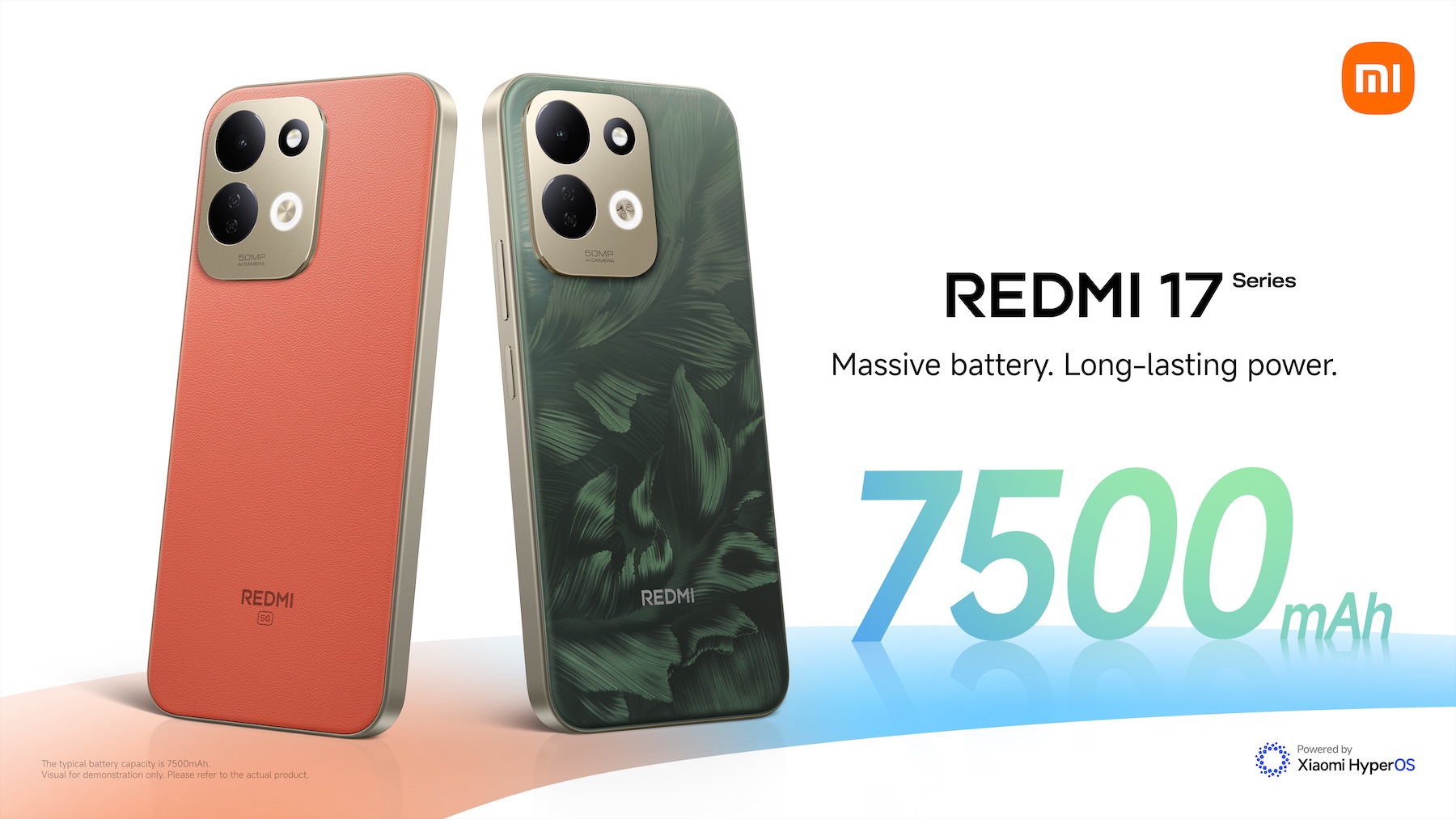
TL;DR: The Redmi 17 series arrived in Malaysia on August 8, as reported by Soya Cincau, with a 7,500mAh battery as its headline feature. For Malaysian SMEs, this is not about specs. It’s the difference between a field team that stays reachable all day and one that goes silent at 4pm.
What This Means, in Plain Language
A phone battery’s mAh rating is simply how much energy it stores. The Redmi 17’s 7,500mAh cell is far bigger than what most mainstream phones carry today. The current generation of budget and mid-range devices typically ships with batteries that are noticeably smaller.
In real terms: a phone with a typical battery might get an office worker through a day and a half of light use. A 7,500mAh battery in the same pattern can stretch toward two days. And for a field worker hammering GPS, camera, and calls all day, it’s the difference between “dies at 4pm” and “still going at 10pm.” You don’t need to understand the tech to see what that does for your daily operations.
A phone that dies at 4pm is not a phone. It’s a broken tool that only worked when it felt like it.
How This Applies to Malaysian SMEs
You’re not buying this for yourself. You’re buying it for the work that happens outside your office walls — and in Malaysia, that work happens in heat, traffic, and constant connectivity demands.
Delivery riders are the clearest example. They run GPS continuously, flip between customer calls and group chats, and rely on their phone as their only organisational tool. When it dies mid-route, the rider is lost, the customer is frustrated, and you get the “where is my order?” message you can’t answer. A full-day battery turns that problem off at the source. Your rider starts the day at 100% and finishes the shift still reachable.
Then there’s the hotspot role. Malaysian SMEs know the pain of office internet that picks the worst moment to fail. The Redmi 17’s 5G support means a spare unit can serve as a backup connection for a laptop or even the whole site office. And a 7,500mAh battery means it can share that connection all afternoon without giving up. Your store stays online during a sale. Your event keeps taking orders. Your site office keeps sending the paperwork.
Don’t forget customer-facing staff. A WhatsApp Business number that goes quiet at 6pm because the phone died is a lead gone cold. The person who replies at 9pm — even just to say “we’ll get back to you first thing tomorrow” — is the one who keeps the sale. Long battery life is a customer service policy you don’t have to manage.
Think of the trades — electricians, air-con technicians, plumbers — running three or four jobs a day. They photograph the work, note measurements, message the client a job summary before moving on. A phone that dies at job two means site photos stay trapped on a dead device and the client hears nothing until the technician gets home. That’s a dent in your professionalism. A 7,500mAh phone removes that failure point entirely.
Practical Takeaways
- Lead with battery capacity. When you next replace a work phone, make battery size a top requirement — not screen or camera.
- Keep one fully charged spare. A 7,500mAh phone parked in a drawer stays useful for days, not hours.
- Use it as a rescue charger. Large-battery phones support reverse charging. One cable can revive a colleague’s dying phone on site.
- Test on your heaviest user. Give one to your most demanding staff member for a week. If it survives them, it survives everyone.
- Set a 10% rule. Tell staff to flag a phone that regularly dips below 10% by end of day. That’s the signal to replace it — not when it finally dies on a customer.
- Simple charging ritual. Plug in overnight. That’s the whole maintenance schedule.
What the Specs Mean for Your Business
| Feature | Redmi 17 Series | Why It Matters |
|---|---|---|
| Battery | 7,500mAh | A full workday on one charge, even with heavy use |
| Connectivity | 5G | Fast backup hotspot when office internet fails |
| Launch | Malaysia, August 8 2026 | Available locally through official channels |
| Series | Redmi 17 | A practical, no-fuss device for day-to-day ops |
Specs are drawn from Soya Cincau’s coverage of the Malaysian launch.
The Bigger Picture
A 7,500mAh battery in a mainstream phone isn’t a one-off stunt. It’s a direction. The industry is shifting towards multi-day endurance as a real selling point, and Malaysian SMEs get to benefit from that shift without needing premium flagship models.
What does that mean long-term? When you plan your equipment needs for next year, you can start expecting workhorse devices that simply do not die on shift. The “my battery habis” excuse from staff becomes less acceptable. The “I couldn’t reply because my phone died” customer conversation becomes avoidable.
Small hardware choices build into a more consistent business. And for a busy SME owner, consistency — not innovation, not clever features — is what actually keeps customers coming back.
Ready to Streamline Your Operations?
Your business should run itself. AutoRunBiz deploys AI agents to automate your daily operations — WhatsApp orders, invoicing, customer follow-ups, and accounting. Book a free 15-min ops audit to see where automation fits your business →