
The Unlikely Productivity Tool Hidden in a Phone Launch
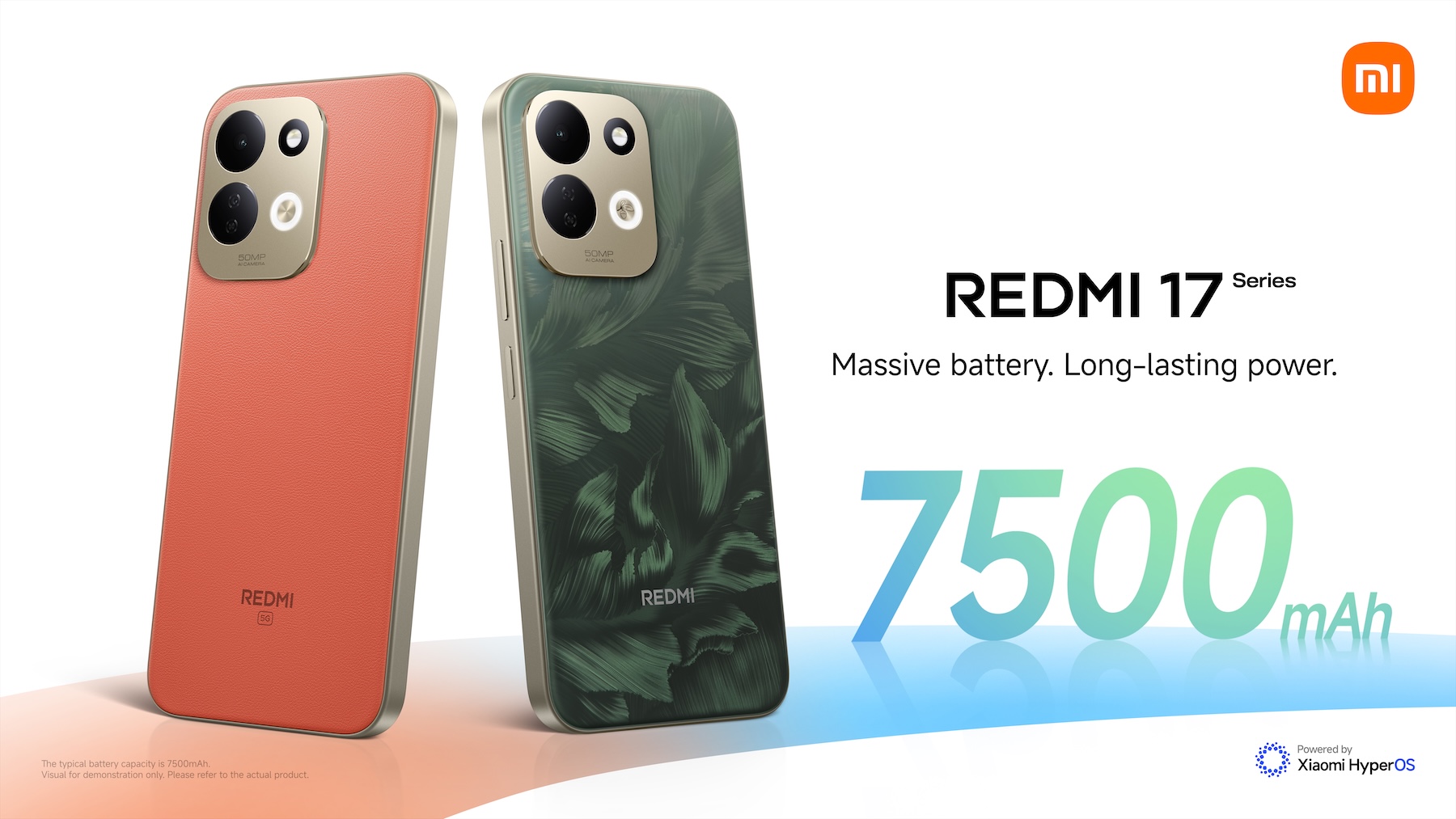
When you run a business with 1 to 50 employees, the last thing you need is another gadget announcement. You need your team to answer customer enquiries, process orders, and keep operations moving. But every now and then, a consumer product launch deserves a second look from a business owner’s perspective. The Redmi 17 series, launched in Malaysia on August 8, 2026, is one of those moments—not because of gaming specs or camera megapixels, but because of what a 7,500mAh battery means for a small business on the ground.
Think about your typical workday. Your delivery crew is out with phones for navigation and order updates. Your service team is on-site, flipping between apps for job sheets and client communication. Your own phone is running inventory spreadsheets and payment notifications. Every one of these devices has one point of failure: battery life. When a phone dies mid-shift, work stops. The Redmi 17 series isn’t just another consumer release; it’s a signal about how long a workhorse device can last between charges according to the launch coverage.
What Happened
Xiaomi brought the Redmi 17 series to the Malaysian market on August 8, 2026. The headline feature is a 7,500mAh battery, a capacity that outlasts most current mid-range and even flagship devices. For context, a typical smartphone battery sits between 4,500mAh and 5,500mAh. The Redmi 17 effectively adds roughly a full workday of extra capacity for active use.
The series also comes as part of Xiaomi’s ongoing push to capture value-conscious consumers in Southeast Asia. The positioning is clear: this is a device meant for heavy, daily use without requiring a mid-day recharge as detailed in the Malaysian launch report. And that single feature alone shifts the calculation for any SME owner who has ever watched staff huddle around a power bank on a job site.
It’s not just about the battery either. The Redmi 17 series continues the trend of bringing durable, long-lasting hardware into the mainstream Malaysian market based on the launch specs. The timing also lands in the second half of 2026, when many small businesses are preparing for year-end peak season.
Why This Matters for Malaysian SMEs
The connection between a phone launch and your business operations may not be obvious at first. But consider this: your company’s daily workflow is built on a chain of mobile devices. Your technician in Shah Alam needs to capture before-and-after photos for a client report. Your runner in Johor Bahru is coordinating delivery slots via WhatsApp. Your admin team is cross-checking e-invoices on the go. Every single one of these tasks dies the moment the screen goes black.
The 7,500mAh battery in the Redmi 17 series means your team can realistically go from morning briefing to evening closeout without hunting for a charger. For an SME, that reduces the risk of missed updates, late replies, and lost productivity. It also means you can cut down on the “phone’s dying, I’m heading back to the office” moments that quietly eat your staff’s billable hours. When you multiply a few saved minutes per employee across a 10-person team, the operational benefit is tangible.
There’s another angle that matters for Malaysian business owners, especially those with field staff or delivery fleets. In this country, traffic and geography often keep your people far from a power outlet. A worker moving between Ipoh and KL or navigating Penang’s island traffic cannot reliably stop for a charge. The Redmi 17’s endurance is built for that reality according to the specifications shared at launch. You can hand this device to a driver or a field technician without attaching a strict “keep your phone charged” rule to it.
“The best automation tool is the one your employees don’t have to think about. A phone that lasts all day removes the single most common reason work gets interrupted mid-task.”
What This Means for Your Vendor and Tool Decisions
If you’re planning to buy devices for your team or set a standard for bring-your-own-device (BYOD), the Redmi 17 series gives you a practical benchmark. The launch tells you that long battery life is no longer a premium feature—it’s standard, even in budget-tier hardware as demonstrated by the Malaysian release. When you next review your equipment list, you can set a minimum battery capacity threshold and know that the market now supports it. That’s useful for procurement decisions, inventory tracking, and even for deciding which field staff get a company device versus using their own.
For the SME owner who uses automation tools to dispatch jobs, track attendance, or manage customer communication, device longevity is a supporting actor that gets ignored until it breaks. A phone with a 7,500mAh battery keeps your automation pings, notifications, and forms flowing throughout the day. The devices you issue become reliability multipliers for the software layers you’ve already invested in.
The Bigger Picture
Look beyond the Redmi 17 itself and you’ll notice a pattern in the Malaysian tech market: hardware is shifting to support longer, unbroken work sessions. Batteries, cloud connectivity, and mobile-first app design are all converging to make field work more seamless. The Redmi 17 series launch is one signal among many that device endurance is becoming a business-critical feature.
For an SME owner, the strategic takeaway is to evaluate your entire mobile ecosystem with this lens. It’s not just about whether a phone has a big screen or a capable camera. The real question is whether the device can carry your workday without becoming a bottleneck. The Redmi 17 series makes a compelling case that it can based on the battery-focused design revealed at launch.
Your next step isn’t to rush out and buy phones. It’s to reconsider what “work-ready equipment” means for your team. If a new phone launch can prevent even one delayed customer response or one lost job report, that’s a change worth understanding.
| Key Point | Why It Matters to Your SME |
|---|---|
| 7,500mAh battery capacity | Keeps field staff and admin connected through a full workday without recharging |
| Malaysian launch on August 8, 2026 | Devices are locally available for team deployment or BYOD standard setting |
| Mass-market positioning | Long battery life is no longer restricted to premium models |
| Practical benchmark for procurement | You can set a minimum requirement for any future company phone purchase |
Ready to Streamline Your Operations?
Technology moves fast. Your operations should keep up. AutoRunBiz builds AI systems that run your daily workflows — from WhatsApp order capture to accounting. Book a free 15-min ops audit →