
Your Delivery Vehicle May Be Carrying the Wrong Things
If your business depends on deliveries, site visits, mobile services, or frequent trips between customers, you may already feel the limits of a standard motorcycle. It is quick and practical, but there is only so much you can carry safely. Add parcels, tools, documents, spare parts, groceries, or protective equipment, and the rider may need to make extra trips or use a car.
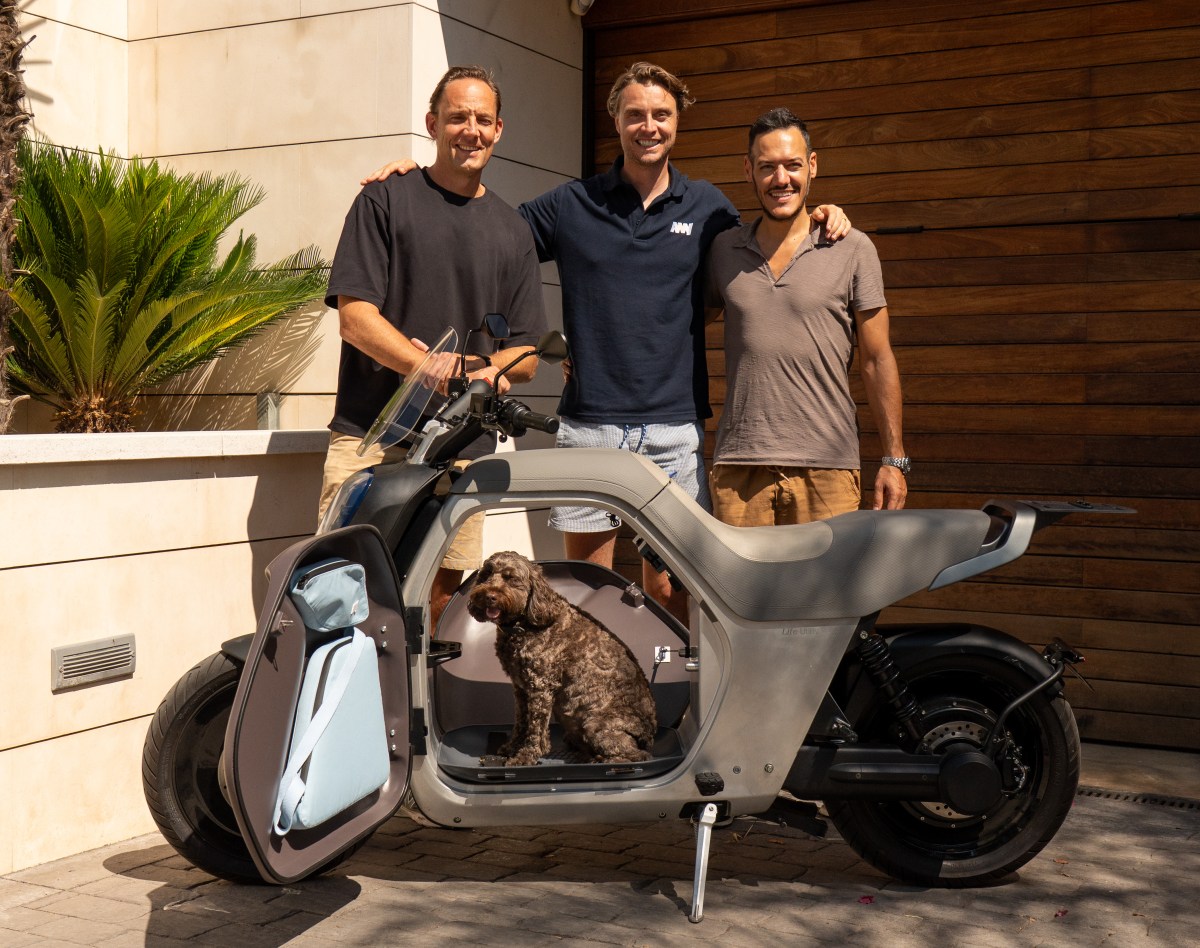
That gap is where a new type of electric two-wheeler is attracting attention. Belgian startup Any has designed the LUV1, a modular electric motorcycle with up to 120 litres of storage and a claimed top speed of 100 km/h. The company calls its category “life utility vehicles”, focusing on what people need to carry rather than treating the motorcycle as transport for one rider only. The product details and positioning were reported by TechCrunch.
TL;DR: The useful lesson for your business is not to copy a European vehicle immediately. It is to examine whether your transport setup is designed around real workloads, including cargo, route length, weather, charging, and rider safety.
For Malaysian SMEs, better cargo planning can reduce repeat trips, improve delivery consistency, and help you decide when a motorcycle, electric vehicle, van, or mixed fleet makes the most sense.
What This Means
Most two-wheelers are designed around a simple assumption: one rider, perhaps with a small bag. That works for commuting, food delivery, and light parcels. It becomes less suitable when the rider needs to transport bulky or delicate items, complete several jobs in one route, or carry equipment to a customer site.
Any’s approach is to make storage a core part of the vehicle rather than an accessory added later. The LUV1 can reportedly hold up to 120 litres, use an open frame or enclosed panels, and support options such as racks, a windshield, and weather protection. It also uses two swappable batteries and has a claimed range of up to 87 miles per charge, equivalent to roughly 140 kilometres. These specifications come from the source article and should be treated as manufacturer claims until independently tested: TechCrunch.
The broader concept is simple: transport should match the job. A vehicle for a florist may need stable storage and weather protection. A maintenance company may need compartments for tools. A retailer may need a secure box for multiple orders. A pet service may need a different enclosure altogether.
The practical insight: Do not ask only, “How far can this vehicle travel?” Ask, “What can my team complete in one trip, under real Malaysian conditions?”
This matters because range alone does not determine productivity. If a rider must return to the shop after every few deliveries, a vehicle with good battery performance may still be inefficient. Storage capacity, loading time, route planning, battery replacement, security, and access to service support can matter just as much.
How This Applies to Malaysian SMEs
1. Last-mile delivery businesses can plan routes around load capacity. If you operate a bakery, pharmacy, florist, meal-preparation service, or online retail business, your main problem may not be speed. It may be how many orders can travel safely in one run. A cargo-capable electric two-wheeler could be suitable for short urban routes where a rider currently carries only a few parcels at a time. You would still need to check local registration, licensing, road-use, insurance, charging, and vehicle approval requirements before making any operational decision.
2. Field-service companies can carry equipment more reliably. Air-conditioning technicians, plumbers, electricians, pest-control operators, locksmiths, and appliance repair teams often travel with tools and replacement parts. A standard motorcycle may force the technician to choose which equipment to bring. That can lead to a second visit when the required part is left behind. A properly configured cargo vehicle could support a more complete toolkit, provided the load is secured and the rider can handle the vehicle safely.
3. Retailers can use vehicles as part of their fulfilment process. A neighbourhood grocer, specialty food seller, nursery, or home-based business may not need a full van for every delivery. A modular two-wheeler could be useful for smaller orders within a defined radius. You could separate customer orders into categories: fragile items, chilled items, bulky items, and standard parcels. Each category would require different packaging and storage arrangements. The vehicle should fit that process rather than forcing every product into the same box.
4. Service businesses can improve mobile operations. Laundry collection, tailoring, mobile grooming, cleaning, and event-support businesses regularly move between homes, offices, and venues. Their work involves more than carrying a parcel; it may include uniforms, machines, samples, or consumables. You can map the items needed for a typical day, measure their volume, and compare that with your current vehicle’s usable storage. This gives you a more objective basis for evaluating a new transport option.
5. Businesses in dense areas should consider access, not just distance. In Kuala Lumpur, Petaling Jaya, George Town, Johor Bahru, and other busy areas, a smaller vehicle may reach customers more easily than a car during congested periods. However, a compact vehicle does not remove operational risks. You still need clear loading points, secure parking practices, rider training, route rules, and a process for handling rain. Malaysian weather is a major design consideration, so open cargo storage may not suit goods that are sensitive to water, heat, or dust.
Numbers Worth Tracking Before You Change Vehicles
Start with your own operating data. The figures below are not market claims; they are a simple measurement framework you can use for a two-week review.
| Measure | What to record | Why it matters |
|---|---|---|
| Daily trips | Number of completed routes per rider | Shows whether extra trips are limiting output |
| Average load | Parcel count, item size, and total weight | Helps identify the right storage format |
| Return trips | Trips back to collect missing items | Highlights poor loading or insufficient capacity |
| Loading time | Minutes spent sorting and securing items | Reveals whether storage design supports faster dispatch |
| Weather disruption | Deliveries delayed or repacked because of rain | Shows the need for covers, panels, or packaging changes |
| Failed deliveries | Customers unavailable or parcels damaged | Connects transport choices with service quality |
Practical Takeaways
- List everything a rider carries during a normal working day, including tools, packaging, documents, and safety equipment.
- Measure the largest and most awkward items, not only the average parcel.
- Track how often your team returns to base because the vehicle cannot carry the full workload.
- Separate lightweight volume from heavy cargo; a large storage box does not automatically mean a suitable payload.
- Test how quickly riders can load, secure, access, and unload items.
- Plan for rain, heat, theft prevention, and safe parking before choosing an open or enclosed design.
- Check Malaysian rules covering vehicle classification, licensing, registration, insurance, and commercial use.
- Confirm whether batteries, charging equipment, spare parts, and trained technicians are available locally.
- Use route data from your order system or spreadsheet to identify the areas where a smaller delivery vehicle would be most useful.
- Start with one clearly defined route or service team instead of changing your entire fleet at once.
Use Automation Before Buying More Vehicles
Transport decisions become easier when your business records the right information automatically. Your order form or sales system can capture delivery area, item count, item type, preferred time, and special handling requirements. A simple dashboard can then show which routes generate the most repeat trips and which products create loading problems.
You can also create dispatch rules. For example, standard parcels within a selected service area may be grouped for motorcycle delivery, while bulky or weather-sensitive orders are assigned to another vehicle. Customer notifications can reduce waiting time, and digital proof of delivery can help your team identify recurring address or handover problems.
For an SME, the goal is not to collect complicated data. It is to make daily decisions less dependent on memory and guesswork. Once you can see your delivery patterns, you can decide whether the answer is a cargo motorcycle, better packaging, improved route planning, an additional van, or a combination of these.
The Bigger Picture
The long-term trend is toward transport designed around specific work rather than broad vehicle categories. Electric two-wheelers may become more useful when manufacturers focus on storage, safety, weather protection, battery handling, and serviceability alongside speed and range.
The source article notes that the European Association of Motorcycle Manufacturers expects the European two-wheeler market to be mostly electric by 2030. That forecast applies to Europe, not Malaysia, and it is a forecast rather than a guarantee; the figure is sourced here: TechCrunch. Still, it points to a wider direction that Malaysian SMEs should monitor: electric transport is likely to be evaluated increasingly as a business tool, not simply as a personal mobility product.
The winning question for your business is therefore not whether electric two-wheelers are fashionable. It is whether a vehicle can help your team complete more work safely, with fewer interruptions and a clearer operating process. Cargo capacity is one promising part of that answer, but it must be considered together with charging, local support, regulations, rider capability, and your actual delivery data.
Ready to Streamline Your Operations?
Your business should run itself. AutoRunBiz deploys AI agents to automate your daily operations — WhatsApp orders, invoicing, customer follow-ups, and accounting. Book a free 15-min ops audit to see where automation fits your business →