
What a 100-Hour Battery Means for Your Business
The lights flicker. Your point-of-sale system reboots. The queue at the counter freezes while customers check their phones. If you run an SME in Malaysia, you know this drill — whether it’s a thunderstorm rolling through Klang Valley, maintenance work up north, or just an old building with tired wiring. Each time it happens, your operations take a hit.
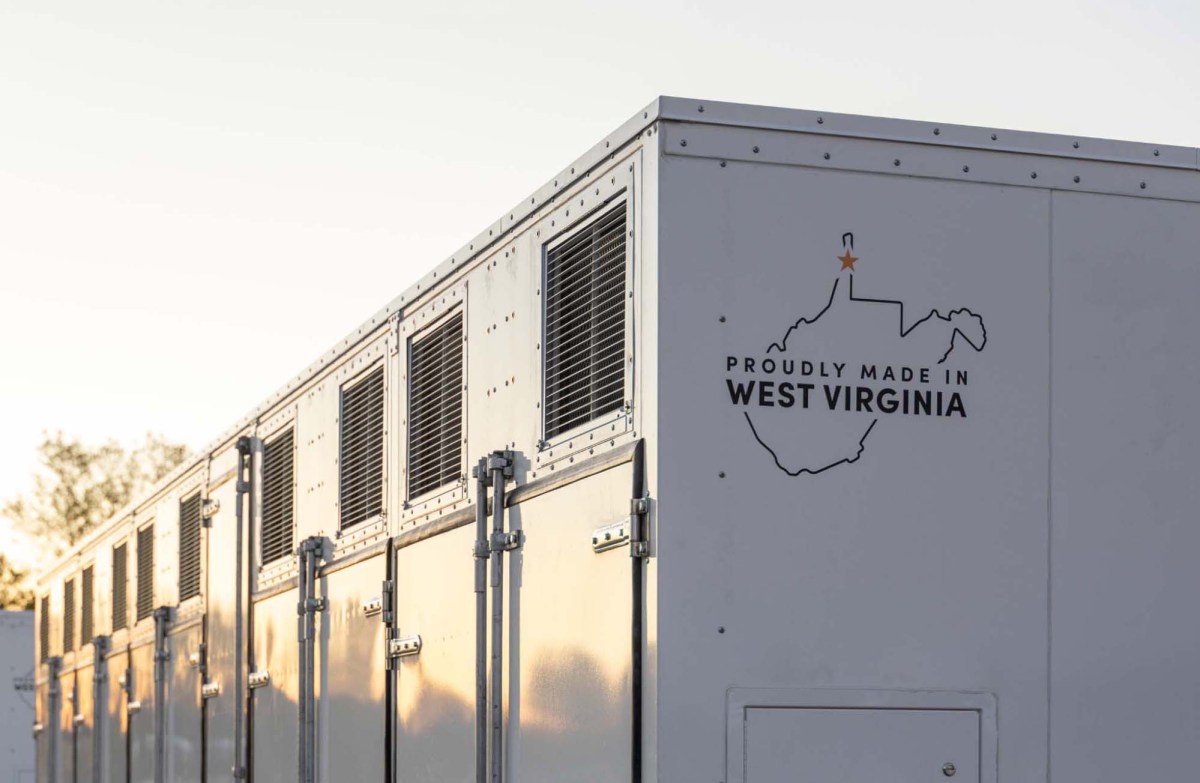
Now consider a quieter piece of news that most business owners skipped. A US company called Form Energy just raised a significant investment round to expand production of “100-hour batteries” — grid-scale storage built for long-duration energy delivery. The technical details are interesting, but the business implications are what should get your attention, because the same forces driving this investment are reaching Malaysia’s shores.
This isn’t a story about a distant tech company. It’s a story about where electricity — the fuel for every machine, computer, and server you own — is heading, and how you can position your SME to benefit instead of being caught off guard later.
TL;DR: Form Energy makes iron-air batteries that can discharge for up to 100 hours, far beyond the typical few hours of lithium-ion systems. Long-duration storage is scaling fast, powered by the AI data center boom. For Malaysian SMEs, the result will be more practical solar-plus-storage setups, more time-of-use tariffs, and a stronger reason to automate when your business draws power.
What This Means
Most batteries you know — phone batteries, car batteries, even the big container-sized ones — are built for short bursts. They hold two to four hours of energy. That’s enough to smooth over evening peaks or keep an office running through a brownout, but it can’t carry a grid through a windless night or a multi-day monsoon. Form Energy’s iron-air batteries stretch that to 100 hours. Plug one in on a sunny day, and you can keep drawing steady power until the weekend.
The chemistry is deceptively simple. The battery uses iron — the same stuff as nails and frying pans — and generates electricity by letting the iron oxidize, which is a fancy way of saying it turns into rust while discharging. Charge it back up and the process reverses, turning rust back into iron. Using iron instead of lithium, cobalt, and nickel makes the storage dramatically less expensive to produce and frees manufacturers from the most constrained supply chains in the world. Form Energy says about 80% of its materials come from the US, with the balance from Europe and Asia — notably not China, which dominates conventional battery supply chains (TechCrunch).
“A battery that can discharge for 100 hours doesn’t just smooth over the evening peak. It turns solar and wind into something close to a 24/7 power plant. That changes the math for every grid on the planet.”
The scale of this shift is visible in the numbers. The US installed 9.7 gigawatt-hours of energy storage in the first quarter of this year, up 32% from the same period in 2025 (TechCrunch). Most of those systems still only discharge for a few hours, but Form Energy already holds a commercial backlog of about 80 gigawatt-hours of projects — four times what it had earlier this year (TechCrunch). Google is even powering a new data center partly with a massive Form battery. The reason is simple: renewable sources are expected to make up more than 90% of new US generating capacity this year, and long-duration storage is how a grid keeps the lights on when the sun isn’t shining (TechCrunch).
And what is driving all that new demand? Data centers. The boom in AI computing means US data centers are expected to quadruple their electricity use by 2035, consuming about 20% of all electricity generated in the country (TechCrunch). Energy storage is the pressure valve that lets grids absorb those spikes without collapsing.
| What’s happening | The number | Why it matters to you |
|---|---|---|
| US energy storage installed in Q1 2026 | 9.7 GWh — up 32% from 2025 (source) | Storage is scaling fast, and equipment follows scale |
| Renewables’ share of new US generating capacity this year | More than 90% (source) | Grids worldwide are becoming dependent on the weather |
| Form Energy’s project backlog | About 80 GWh — four times earlier this year (source) | Major customers are already betting on 100-hour storage |
| US data center electricity use by 2035 | Four times today’s level, about 20% of all US power (source) | AI demand is squeezing electricity supply everywhere |
| Form battery discharge duration | Up to 100 hours (source) | Backup measured in days, not minutes |
How This Applies to Malaysian SMEs
First, this makes solar-plus-storage far more attractive for Malaysian businesses. Many factory owners in Johor and the Klang Valley have already installed rooftop solar — they enjoy free daytime power but still pay full charges the moment the sun sets. Long-duration storage changes that equation completely. A battery that can hold your daytime solar output through the night means a factory in Shah Alam or a restaurant in Penang can run on its own clean energy for the better part of two days, far beyond the current four-hour window most systems offer. As companies like Form Energy scale up, solar installers in Malaysia will eventually offer storage packages built for our climate and weather patterns.
Second, Malaysia is going through its own data center surge, particularly in Johor, which is rapidly becoming one of Southeast Asia’s biggest hubs for cloud and AI infrastructure. The Malaysian government has set ambitious renewable energy targets under the National Energy Transition Roadmap (Ministry of Economy). When massive data centers plug into the same grid your shop draws from, supply margins tighten and the case for storage grows stronger. TNB is already investing in grid upgrades and large-scale solar, and the direction of travel clearly points toward time-of-use tariffs, where electricity charges more during peak hours and less at night (TNB). If you run energy-heavy equipment — a bakery with overnight proofing, a factory with compressors, a cold storage warehouse — a simple automation controller can shift those loads to cheaper windows.
Third, this is exactly where automation meets energy. You don’t need to wait for 100-hour batteries to arrive in Malaysia to benefit from the trend. The principle behind them — store energy when it’s abundant, use it when it’s scarce — applies to your operations today. A modest investment in smart building controls, occupancy sensors, and automated scheduling can reduce your electricity charges immediately, doing for your business what a giant battery does for the grid. The businesses that treat energy as a managed input, rather than a fixed monthly cost, are the ones that will gain the most as tariffs become more dynamic.
Finally, think about your backup plan. If you run a clinic, an online store with a server room, or a food business with cold storage, your current backup may cover 30 minutes to two hours. Long-duration storage means backup measured in days, not minutes, which changes how you think about business continuity during flood season or prolonged outages. Add energy monitoring to that picture and you can see exactly which equipment is worth powering through a crisis — and which can wait.
Practical Takeaways
- Look at your latest electricity statement and identify your peak consumption hours. If time-of-use tariffs are coming to your area, you’ll want to know your pattern before they arrive.
- If you already have rooftop solar, ask your installer about adding battery storage. Even a small unit covering your evening load becomes more worthwhile as storage technology improves.
- List the equipment that can’t survive a power cut — and be honest about how long your current backup actually lasts.
- Automate energy-heavy processes. A smart timer on your water heater, air conditioning, or production line can shift usage to off-peak hours with zero effort from your team.
- Watch announcements from TNB and the Ministry of Energy about grid upgrades and renewable programs. Storage incentives usually follow those initiatives.
The Bigger Picture
Long-duration storage is the missing piece that lets a country run on renewable energy without sacrificing reliability. When batteries can hold power for 100 hours, electricity starts behaving less like a fragile utility and more like a manageable inventory — something you purchase when it’s plentiful and consume when it’s scarce. That is a shift every business owner should care about, because it determines how predictable your power supply — and your operations — will be over the next decade.
For Malaysia, the path is clear: abundant sunlight, strong government renewable targets, and a digital economy hungry for power. The technology that makes solar and wind dependable — multi-day storage — is improving with each funding round, and it will arrive here. The SME owners who prepare by understanding their energy patterns, automating their consumption, and thinking of storage as a business asset will be the ones who keep their operations running smoothly no matter what the grid throws at them.
The future isn’t about accepting whatever the grid gives you. It’s about managing energy like any other input — flexibly, reliably, and on your own terms.
Ready to Streamline Your Operations?
Your business should run itself. AutoRunBiz deploys AI agents to automate your daily operations — WhatsApp orders, invoicing, customer follow-ups, and accounting. Book a free 15-min ops audit to see where automation fits your business →