
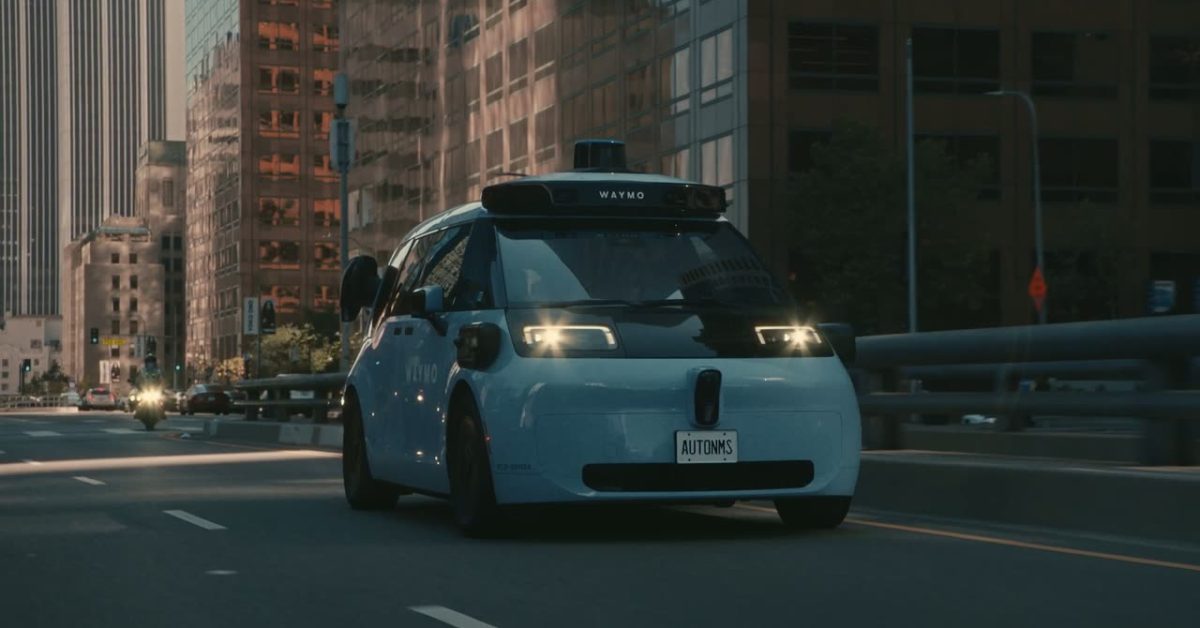
Waymo just got permission to run driverless taxis across most of California. That should change how you think about automation in your business.
Why should a Malaysian SME owner care about a robotaxi decision in California? On the surface, Waymo’s approval to expand across 18 counties is about American roads, American regulations, and American traffic. But beneath the news story is something far more relevant to you: a live, public demonstration of how real automation scales — and how fake automation gets exposed. Your business may never operate a driverless car, but the pattern Waymo followed is the same one you follow when you automate your operations, your customer service, or your delivery logistics.
Meanwhile, Tesla runs a competing “Robotaxi” service in the same Bay Area with a human safety driver behind the wheel. One company just got cleared to charge for fully driverless rides in 18 counties. The other holds a permit that a regulator says is the same one a limousine company uses. That contrast is worth studying closely — because the same battle between real automation and pretend automation plays out in Malaysian SMEs every single day.
What Happened
On August 14, 2026, the California Public Utilities Commission signed off on Waymo’s Advice Letter No. 4, a filing the company submitted on January 28. The approval allows Waymo to charge for fully driverless rides across the entire Bay Area and Los Angeles, and to open two new markets in Sacramento and San Diego. The filing took nearly seven months to clear, including a suspension through September 25 and a supplemental submission in May that addressed unaccompanied minors and rider procedures during service disruptions.
The approval covers 12 counties in Northern California — Alameda, Contra Costa, Marin, Napa, Sacramento, San Francisco, San Mateo, Santa Clara, Santa Cruz, Solano, Sonoma, and Yolo — and six in the south: Los Angeles, Orange, Riverside, San Bernardino, San Diego, and Ventura. That puts most of the state’s population inside the service area. And the operating conditions are wide: all speed limits, freeways, highways, city streets, rural roads, parking lots, driveways, and rail crossings, day and night, in rain, fog, and hail. The only real carve-out is widespread snow or ice. Both the Jaguar I-Pace and Waymo’s newer Ojai robotaxi, running its sixth-generation Driver, are covered.
Waymo’s announcement was measured. The rollout, the company said, “will be gradual and guided by our safety framework.” Contrast that with Tesla, which operates its so-called Robotaxi service with a human sitting in the driver’s seat. In March, CPUC deputy executive director Pat Tsen said plainly that “Tesla is not operating an autonomous vehicle service.” The permit Tesla holds is a charter-party carrier permit — the same one a limousine company gets — and it doesn’t come with AV safety reporting, data transparency, or the quarterly filings Waymo and Zoox must submit.
“This is what the boring version of winning looks like. Waymo filed in January, sat through a suspension, answered protests, supplemented in May, and came out the other side with permission to operate in most of California.” — Electrek
Why This Matters for Malaysian SMEs
Read that blockquote again, because it’s the core lesson for your business. The boring version of winning is something too many Malaysian SME owners avoid. You see big companies launching automated systems and you assume the value is in the launch. It isn’t. The value is in the months of quiet work — mapping processes, testing edge cases, fixing failures, and documenting everything — that happen before the launch. When you automate your invoicing, your inventory management, or your customer support, the “filing” phase is your process mapping and your testing. If you rush that phase, you’re not saving time. You’re borrowing it from your future.
The Waymo-Tesla contrast offers a second lesson. Tesla branded its service as a Robotaxi, but behind the wheel is a human. For you, evaluating automation tools for your SME, this is the question you must ask every vendor: what is actually automated, and what still depends on a person quietly doing the work? A “smart” scheduling system that your staff have to manually correct every morning. A “chatbot” that escalates everything to a human. An “automated” report that someone has to compile by hand each week. If the human is still doing the driving, you don’t have automation. You have a limousine with a robotaxi sticker.
Now consider the expansion itself. Waymo made the point that approval isn’t deployment. Depots, charging, mapping, remote support, and vehicles all have to show up first. For you, looking to grow — say, taking your retail brand from Bangsar to Penang, or expanding your logistics coverage to East Malaysia — the same logic applies. Your “depots and charging” are your SOPs, your trained staff, your supplier agreements, and your customer support capacity. Expanding before those are in place doesn’t speed you up. It strands your customers.
There’s one more lesson hiding in the regulatory details: transparency. Waymo is required to file safety reports and quarterly data submissions. That requirement is not a burden. It’s a forcing function that keeps the company honest. For your SME, the equivalent is your own key metrics. If you can’t measure how often your automated systems fail, how long they take, and what your customers actually experience, you’re operating on faith, not data. Real automation produces data you can inspect. Fake automation produces excuses.
The Bigger Picture
Waymo’s service area passed 1,400 square miles across 11 cities in May, using a fleet of roughly 3,000 vehicles that has completed more than 20 million trips. The company is targeting 1 million rides a week by the end of this year. Each expansion makes the next expansion easier — more data, more experience, more trust from regulators and riders alike.
This is the compounding effect of automation done properly. For your business, that compounding starts with your first honest automation project. You don’t need driverless cars. You need the discipline to automate one process properly — your daily inventory reconciliation, your customer follow-ups, your delivery scheduling — with clear metrics and a specific person accountable for the outcome. Then you do the next one.
For Malaysia specifically, autonomous delivery on public roads is still years away. Malaysian weather, road markings, and infrastructure present challenges that even Waymo hasn’t faced. But you don’t need to wait for that future. The playbook is already visible and it applies whether you’re running a production line in Penang, a logistics operation in Johor Bahru, or a service business in the Klang Valley.
- Permission before expansion. Waymo spent nearly seven months getting one filing approved. Make sure your own systems are tested and compliant before you scale them to a new branch or a new market.
- Real automation can be verified. Ask vendors for proof their solution works without a human quietly filling the gaps. A demo is not a deployment.
- Infrastructure first. Your people, processes, and support systems must be in place before you open anything new.
- Data is your safety framework. If you’re not tracking failure rates and response times, you can’t know when you’re ready to grow.
Waymo’s win is not really about self-driving cars. It’s about how any organisation — including your SME — escapes the trap of pretending to automate, and instead builds the real thing, slowly and steadily. The roads in California are different from the roads in Malaysia. The principles are exactly the same.
Ready to Streamline Your Operations?
Technology moves fast. Your operations should keep up. AutoRunBiz builds AI systems that run your daily workflows — from WhatsApp order capture to accounting. Book a free 15-min ops audit →