
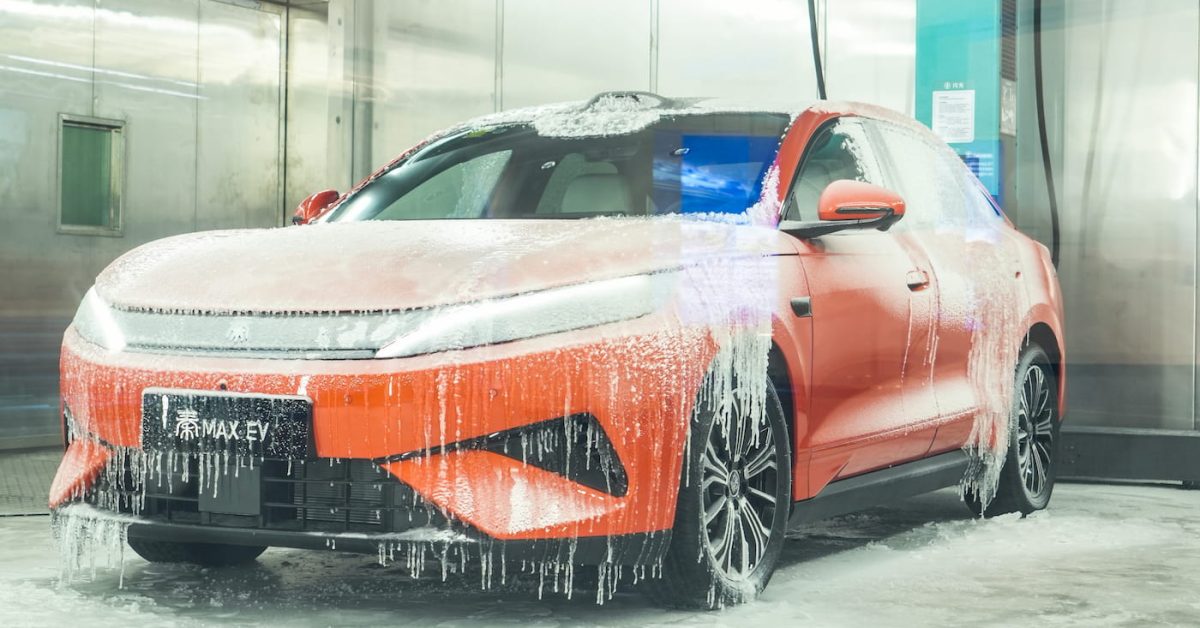
BYD just accelerated the automotive industry’s feature roadmap by years — and the same dynamics are about to hit yours
If you run a business in Malaysia — whether it’s a delivery fleet, a retail chain, or a professional services firm — the news out of China this week should not be filed under “car stuff.” It’s a signal about how fast technology is becoming more capable, more accessible, and more standard. And that signal has direct implications for how you should be thinking about your own business tools, your suppliers, and your competitive position.
Here’s what happened: BYD launched the Qin Max EV, a Tesla Model 3-sized sedan with charging speeds that would have been science fiction just a few years ago. According to Electrek, the new model can charge from 10% to 70% in just five minutes, and from 10% to 97% in nine minutes, using BYD’s new Blade Battery 2.0 and Flash Charging system.
What Happened
The Qin Max joins BYD’s popular Qin lineup, sitting just above the Qin L. It comes in two versions: a pure electric variant and a plug-in hybrid (DM-i). But the headline isn’t just another sedan — it’s the speed of the technology and the features being packed into it. Electrek reports the EV version comes with either 160 hp or 321 hp power outputs, and CLTC driving ranges of up to 330 miles (530 km) or 391 miles (630 km), depending on the configuration. The plug-in hybrid pairs a 1.5-liter engine with a 234 hp motor, offering a combined CLTC range of 1,472 miles (2,370 km).
Then there’s the tech. The Qin Max ships with BYD’s “God’s Eye B” ADAS system, which includes a roof-mounted LiDAR that supports assisted driving features like Navigation on Autopilot (NOA) in both city and highway environments. Until recently, this kind of system was mostly reserved for higher-priced vehicles. The 15.6-inch center infotainment screen and 8.8-inch driver display round out an interior package that rivals cars in a much higher segment.
What makes this week particularly notable: BYD also launched the Seal 06, a similarly-sized sedan, just days earlier. As Electrek observes, the Qin Max and Seal 06 are essentially the same electric sedan, sold under two different brand series (Dynasty and Ocean). Same platform, same week, two products.
Why This Matters for Malaysian SMEs
Reason one: your logistics and operational assumptions are about to shift. If you run a delivery fleet — food delivery, e-commerce, or a service business that sends technicians to customer sites — the charging-speed breakthrough matters more than battery size. A five-minute charge from 10% to 70% means an electric vehicle can be refueled about as fast as a petrol car. The practical consequence: electric vehicles with ranges of up to 630 km (CLTC) are no longer a compromise. They’re simply a better operational tool. And when the largest EV maker in the world pushes this technology into its highest-volume segment, that’s not a niche experiment — it’s a supply chain shift that will eventually reach Malaysian roads through importers and distributors.
Reason two: the “God’s Eye B” system bundled into a volume-market sedan is the automotive version of what’s happening with business software. Features that used to be enterprise-only — AI-assisted forecasting, automated customer follow-ups, intelligent inventory management — are now showing up in tools designed for companies with five employees. BYD’s decision to put LiDAR-based assisted driving in a mass-market car mirrors what your own vendor landscape is doing. The question for you is not whether these tools exist, but whether you’ve already adopted them, or you’re waiting for a “better time” that will never come.
Reason three: study the platform strategy. BYD launched two nearly identical cars in the same week under different brands. That’s not duplication — it’s modular design. The Qin Max and Seal 06 share the same underpinnings, which means BYD can offer customers choice while keeping engineering and production complexity flat. For your SME, the lesson is direct: how much of your service or product offering can you build once, then repackage for different customer segments? The businesses that figure this out can grow without proportionally growing their operational burden.
The Bigger Picture
The Qin Max story is really about the speed of technology diffusion. A few years ago, a roof-mounted LiDAR and nine-minute charging would have been flagship features. Today they’re in a volume model. BYD’s own description of the Qin Max as “the top choice for young people in the B-segment sedan category” is another way of saying: premium technology has become mainstream. The same thing is happening in accounting software, customer relationship management, and marketing automation. The gap between what the largest companies use and what a 10-person Malaysian SME can access is collapsing — and it’s collapsing fast.
The most dangerous assumption a small business owner can make is that today’s “premium” tools will stay premium for long. BYD just compressed that timeline from a decade to a single product cycle — and your competitors are paying attention.
Key Points at a Glance
| Spec | Qin Max EV |
|---|---|
| Dimensions | 4,866 mm length / 2,820 mm wheelbase — slightly longer than a Tesla Model 3 (source) |
| Charging speed | 10% to 70% in 5 minutes; 10% to 97% in 9 minutes (source) |
| Power options | 160 hp (120 kW) or 321 hp (240 kW) single motor (source) |
| EV range (CLTC) | Up to 330 miles (530 km) or 391 miles (630 km) (source) |
| Hybrid range (DM-i) | 199 miles (320 km) EV-only; 1,472 miles (2,370 km) combined (source) |
| Tech package | 15.6-inch infotainment, 8.8-inch driver display, God’s Eye B ADAS with roof LiDAR, city and highway NOA (source) |
What You Should Do This Quarter
- Audit your recurring tools. Are you still paying for “basic” versions of software that now include advanced features by default? Compare your current subscriptions against what the same vendors are rolling out to new customers — you might find you’re entitled to more than you’re using.
- Map your platform reuse. List your top three services. Is there a shared core process or technology you can standardize once and customize lightly for different clients, the way BYD reused one sedan platform under two brands?
- Re-assess your fleet assumptions. If you run any vehicles, the new charging-speed math changes downtime projections. Re-run your planning model with the fast-charging generation in mind — even if the vehicles haven’t reached Malaysia yet, the direction is clear.
The Qin Max is a car. But what it represents — the rapid democratization of cutting-edge technology into mass-market products — is a pattern that’s reshaping every industry. The question isn’t whether that pattern reaches your business. It’s whether you’re positioned on the side of the shift, or caught off guard by it.
Ready to Streamline Your Operations?
Technology moves fast. Your operations should keep up. AutoRunBiz builds AI systems that run your daily workflows — from WhatsApp order capture to accounting. Book a free 15-min ops audit →