
Your Business May Be Part of the EV Journey
If you run a café, workshop, office, retail outlet, restaurant, clinic, or property with customer parking, electric vehicle (EV) charging is becoming a practical business consideration. You may not own an EV yourself, but your customers, staff, suppliers, and delivery partners increasingly may.
The question is no longer simply whether you should install a charger. You also need to consider how charging affects parking behaviour, customer visits, facility operations, electricity management, and the experience you provide on-site.
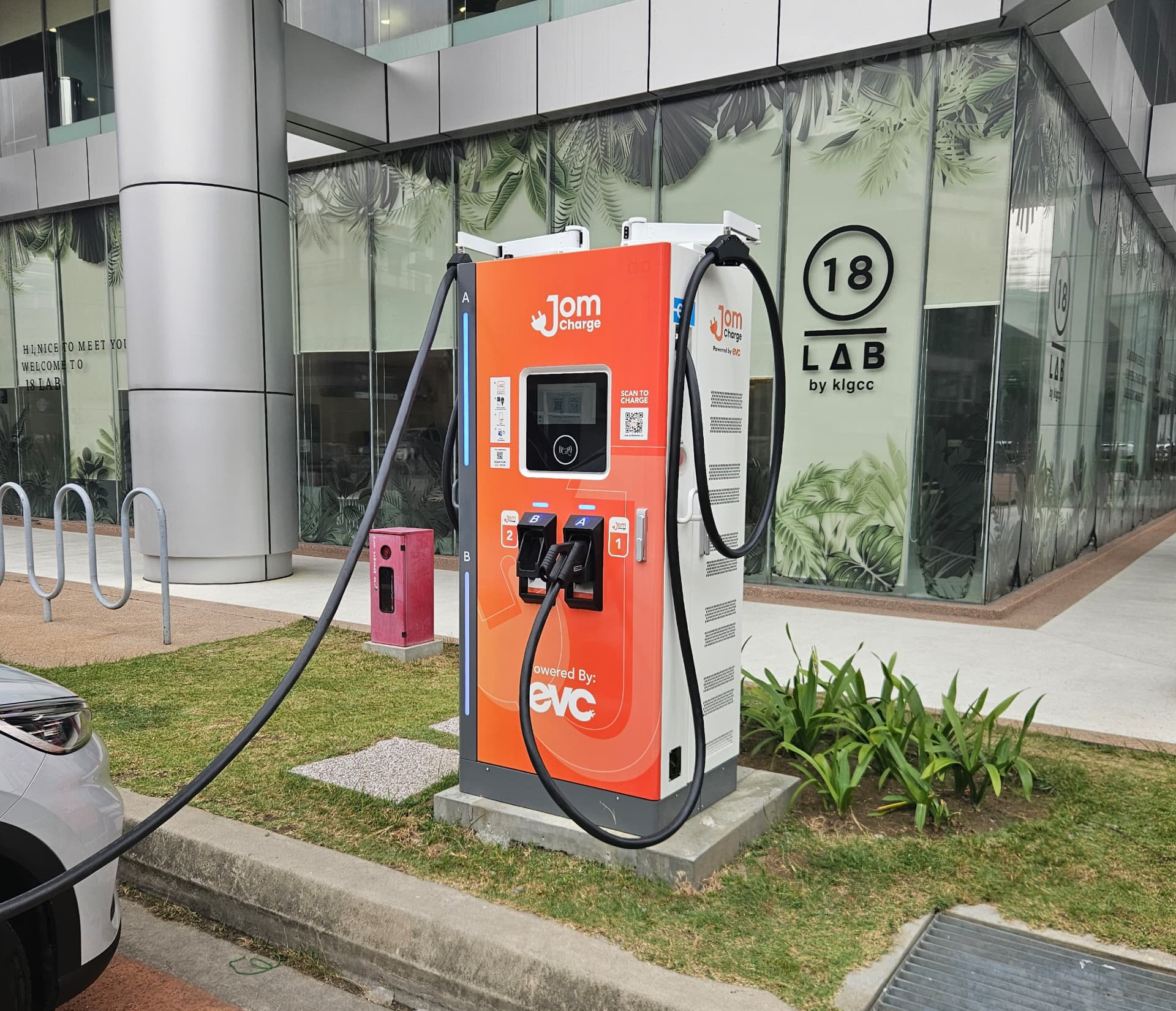
JomCharge’s relaunch of a 120kW DC charger at Oasis Damansara, reported on 4 September 2026, offers a useful example. The charger is designed for faster public charging, but the larger lesson for SMEs is about preparing your premises for changing transport habits.
TL;DR: Faster EV charging can bring new reasons for people to visit your location, but it also requires clear parking rules, reliable operations, and suitable electrical planning.
For Malaysian SMEs, the opportunity is not limited to installing equipment. You can begin by understanding your customers’ travel patterns, preparing your site, and building simple processes around EV users.
What This Means
A 120kW DC charger is a form of direct-current fast charger. In plain language, it can transfer electricity to a compatible EV much faster than a typical AC charger used at homes, condominiums, or offices. The actual charging speed still depends on the vehicle, battery condition, battery temperature, and the charging network.
That distinction matters. A charger rated at 120kW does not mean every car will continuously receive 120kW. Some vehicles accept less, while others reduce charging speed as the battery becomes fuller. Drivers may also need to move their vehicles after charging so that another customer can use the bay.
The Oasis Damansara example is relevant because charging infrastructure works best where people already spend time. A driver may charge while visiting shops, eating, attending an appointment, or meeting someone. That creates a possible connection between EV charging and the surrounding businesses.
For you as an SME owner, think of the charger as part of a wider site experience. The important questions include:
- Can customers find the charging bays easily?
- Are the bays clearly marked and kept free from non-EV parking?
- Is there a nearby business or service that gives drivers a reason to stay?
- Can staff handle basic questions about access and parking?
- Will the charger operate reliably during your business hours?
These operational details can matter as much as the charger’s technical rating.
How This Applies to Malaysian SMEs
1. Retail and food businesses can plan around charging dwell time. If your outlet is near a charging location, EV drivers may spend time there while waiting. A café could improve seating, Wi-Fi, takeaway ordering, and toilet access. A restaurant could make ordering more convenient for customers who want to remain nearby. A convenience store could ensure popular essentials are easy to find.
You do not need to assume every charging customer will enter your premises. Instead, observe the site and make the visit straightforward. Clear signs, a visible entrance, comfortable seating, and reliable operating hours can help you become the natural nearby stop for drivers.
2. Offices and service businesses should prepare for staff and visitors. If your office receives clients who drive EVs, charging availability may become part of their expectations. A legal firm, training centre, medical practice, design studio, or consultancy can review whether visitors know where to park and how long they may stay.
You can also create a basic internal policy. Decide whether charging bays are reserved for active charging, how staff report faults, and who contacts the site operator when a charger is unavailable. This avoids confusion when a customer or employee asks for help.
3. Workshops and automotive businesses can build EV readiness gradually. Traditional workshops may increasingly encounter EV owners who need tyres, brakes, body repairs, air-conditioning work, or general inspections. You do not need to become a high-voltage battery specialist immediately, but you should understand which services you can safely provide and which jobs require trained technicians.
A nearby fast charger can also make your location more convenient for customers waiting for a vehicle inspection or collecting a car. If you manage a workshop, consider whether signage, appointment timing, and customer waiting arrangements are suitable for drivers who plan their journeys around charging.
4. Property operators can treat charging as a facilities-management issue. If you manage a shoplot, office building, serviced apartment, or small commercial centre, installing or hosting chargers involves more than placing equipment in a parking bay. You must consider electrical capacity, access control, drainage, lighting, security, signage, maintenance, and enforcement.
Speak with qualified electrical professionals and the relevant site-management parties before making technical commitments. A clear operating plan should explain who owns the equipment, who handles faults, how bays are monitored, and what happens when a vehicle remains after charging.
5. Delivery and field-service SMEs should map charging into daily operations. If your team drives between customer sites, charging access may affect scheduling. A driver who must wait for a charger can be delayed if the route is not planned carefully. You can begin by recording charging locations along common routes and identifying suitable stopping points near customer appointments.
Keep the process simple. Drivers can record battery level, charging location, start time, and any fault encountered. This information helps you identify unreliable stops and improve route planning without needing complex software.
Useful Numbers to Keep in View
| Item | Why it matters to your SME |
|---|---|
| 120kW charger rating | Indicates a DC fast-charging capability, although the vehicle may receive a lower rate. Source |
| 1 charging location | A single charger site can still affect nearby parking, customer movement, and visitor expectations. Source |
| 3 operating areas to review | Check the customer experience, site operations, and electrical or safety requirements before proceeding. |
| 5 basic records to track | Record charger uptime, faults, bay misuse, peak demand periods, and customer feedback. |
Practical Takeaways
- Survey your customers: Ask whether staff, visitors, or regular customers use EVs and where they currently charge.
- Inspect your parking: Check lighting, signage, bay markings, traffic flow, and accessibility.
- Separate charging from parking: Make it clear that a charging bay is for active charging, not all-day parking.
- Confirm technical requirements: Get advice from qualified professionals before assessing electrical capacity or equipment placement.
- Prepare a fault process: Display or record the correct contact channel for charger problems.
- Train front-line staff: Give employees a short script for answering common questions about location, access, and operating hours.
- Watch customer behaviour: Note whether EV drivers enter your premises, how long they stay, and what services they use.
- Start with partnerships: If installing a charger is unsuitable, work with a landlord, charging operator, nearby retailer, or property manager.
- Review security: Consider lighting, CCTV coverage, pedestrian safety, and protection against accidental vehicle damage.
- Measure reliability: A charger that is frequently unavailable can create frustration for drivers and nearby businesses.
The useful question is not “Do I need an EV charger today?” It is “How should my premises serve people whose journeys include charging?”
Start With a Small, Practical Assessment
Before making a major decision, walk through your premises as an EV driver would. Look for the entrance, parking, signs, payment or access instructions, toilets, waiting areas, and places to buy food or essentials. Note every point where a visitor could become confused.
Next, speak to your landlord, building manager, electrician, or nearby charging operator. Ask what equipment already exists, whether the site has suitable capacity, who is responsible for maintenance, and how parking enforcement works. Keep the discussion focused on actual operating needs rather than technical specifications alone.
You can also test demand without installing equipment. Put a short survey link at your counter, ask regular customers about their vehicle types, or observe the parking pattern during busy periods. If few people currently use EVs, that does not automatically mean the issue is irrelevant. It may mean your site needs better visibility or that adoption is still developing in your area.
The Bigger Picture
Public charging changes how people choose where to stop. A location is no longer judged only by its shopfront, road access, or parking supply. The availability and reliability of charging can become another factor in a driver’s decision.
For SMEs, this does not mean every business must become a charging operator. It means you should understand whether EV activity affects your premises and customer journey. A café near a charger may benefit from better service design. A property manager may need stronger parking controls. A workshop may need new technician capabilities. A delivery business may need updated route planning.
The relaunch of JomCharge’s 120kW DC charger at Oasis Damansara is a reminder to look beyond the equipment itself. The business value comes from the surrounding experience: easy access, dependable operation, sensible parking, and useful nearby services.
Start by reviewing your site, asking your customers, and documenting the operational gaps. That gives you a practical basis for deciding whether to host a charger, partner with an operator, improve your nearby services, or simply prepare your team for EV-driving visitors.
Source for the JomCharge charger details: SoyaCincau.
Ready to Streamline Your Operations?
Your business should run itself. AutoRunBiz deploys AI agents to automate your daily operations — WhatsApp orders, invoicing, customer follow-ups, and accounting. Book a free 15-min ops audit to see where automation fits your business →