
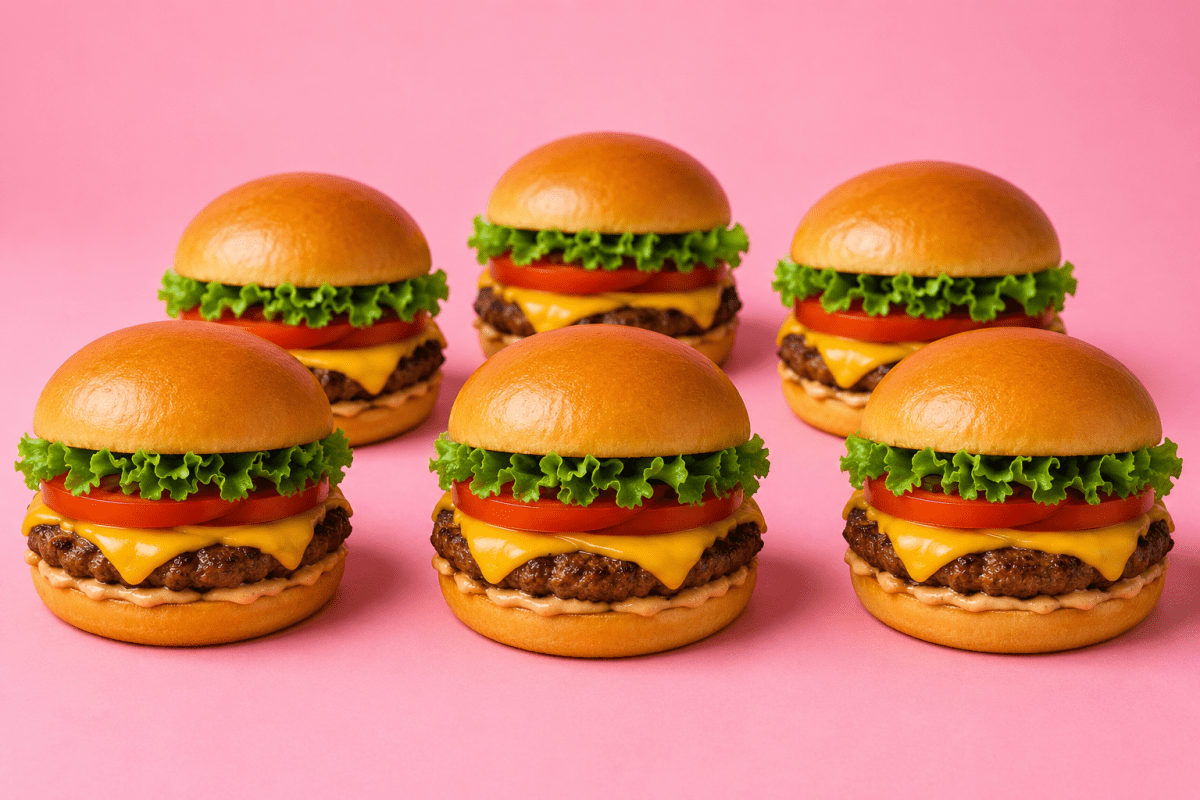
When AI Makes Your Business Look Like Everyone Else
You may be using AI to create menu visuals, product descriptions, social media captions, flyers, or promotional campaigns. It is fast, convenient, and often looks polished at first glance. But there is a risk that is easy to miss: your content may begin to look acceptable without feeling distinctive.
This is the “sameness” problem. AI systems learn patterns from large collections of existing content. When many businesses ask for similar outputs, the results can drift towards the same familiar colours, phrases, layouts, food photography, and sales messages. Your content may be technically correct, yet customers may struggle to remember who created it.
The issue is especially noticeable in food images and menus. AI-generated dishes can look too symmetrical, too smooth, or almost real in an uncomfortable way. Research from the University of Duisburg-Essen found that almost-real AI food images can produce an “uncanny valley” response, where viewers feel more uneasy than when looking at obviously artificial images. Source
TL;DR
AI is useful for producing a first draft, but repeated generic outputs can make your brand look forgettable or untrustworthy.
Use AI for speed, then add real business details, local context, original images, and human review before publishing.
What This Means
Generative AI does not create content from personal experience. It predicts likely text, images, or layouts based on patterns in its training data. If you request “a professional café menu” or “a modern cleaning service advertisement,” the system draws from familiar examples that already exist.
That can lead to predictable results. A café menu may resemble a chain restaurant from several years ago. A service advertisement may use the same cheerful headline, generic smiling worker, and staged office image seen across dozens of businesses. The output is not necessarily wrong. It is simply shaped by the most common examples.
The TechCrunch article describes this as convergence: different AI outputs gradually move towards a similar aesthetic. This is less severe than model collapse, which refers to the quality problems that can occur when AI-generated material is repeatedly fed back into training data. Source
Repeated editing can make the problem worse. For example, you generate a food image, edit the item name, adjust the background, change the layout, and revise the image again. The food may become increasingly polished, rounded, and artificial after many iterations. A useful rule is to treat AI output as a draft, not as evidence that the finished material is ready.
AI can help you produce content faster, but only your business can provide the details that make it worth remembering.
How This Applies to Malaysian SMEs
If you operate a café, bakery, restaurant, or catering business in Malaysia, real photography and accurate descriptions matter. Customers want to see what they are likely to receive, especially for signature dishes, cakes, nasi campur, kuih, drinks, and festive sets. An AI-generated image may show a beautiful plate, but it can also create the wrong expectation about portion size, ingredients, texture, or presentation. Use AI to plan layout ideas or write draft descriptions, but take your own photographs for the final menu, Google Business Profile, delivery listing, and social posts.
For retail businesses, the same issue appears in product promotions. A Malaysian fashion seller may ask AI to create a “premium modern baju kurung campaign” and receive a visually neat but generic result. Your advantage may actually be the fabric source, local tailoring, inclusive sizing, customer fitting experience, or colour selection for Hari Raya. Feed those specific details into the content process. Better still, show real customers, real product details, and real store settings with permission.
Service businesses also need to be careful. A renovation contractor, tuition centre, dental clinic, accounting firm, or air-conditioning company can easily publish identical-looking advertisements if every caption is generated from the same prompt. Instead of saying you provide “quality and reliable service,” explain the actual process: how quickly you respond, what areas you cover, how appointments are confirmed, what documents customers should prepare, and what happens after the job is completed. These practical details are harder for competitors to copy and more useful to potential customers.
Local language and cultural context are another important advantage. Your customers may move between Bahasa Malaysia, English, Mandarin, Tamil, or local slang depending on the audience and platform. AI can help draft versions, but you should check whether the wording sounds natural and respectful. A sentence that is grammatically correct may still sound stiff, overly formal, or unlike how your customers speak. Your team’s local knowledge is a quality check that an AI tool cannot replace.
If you sell through WhatsApp, Instagram, TikTok, marketplaces, or a website, consistency does not mean making every post identical. Your logo, tone, product facts, response process, and service promises should remain consistent. The visual style can still include real variation: customer stories, behind-the-scenes work, staff introductions, product demonstrations, FAQs, and local occasions. This makes the business feel active and credible instead of mass-produced.
A Simple Comparison
| Business need | Generic AI approach | Stronger SME approach |
|---|---|---|
| Food promotion | Use an AI-generated dish image | Use a real photo and explain ingredients, portion, and serving style |
| Service advertisement | “Professional, trusted, reliable service” | Explain response time, coverage area, process, and customer outcome |
| Product launch | Ask AI for a premium campaign | Share the product’s origin, use case, local relevance, and real demonstration |
| Social media caption | Publish the first polished draft | Check facts, tone, local wording, and a clear next action |
| Menu design | Revise the same AI image repeatedly | Start with real assets and use AI for arrangement or copy support |
Practical Takeaways for Your Business
- Start with your own information. Give the tool your actual product details, service areas, customer questions, brand personality, and operating process.
- Use real images when accuracy matters. Food, people, products, premises, completed projects, and results should be shown honestly.
- Limit repeated image editing. If an image has been revised many times, compare it against the original and check whether important details have become distorted.
- Ask someone outside the creation process to review it. A staff member or customer may notice that an image looks artificial or that the wording feels unlike your business.
- Keep a brand reference sheet. Record preferred words, prohibited claims, colours, tone, target audience, service areas, and common customer concerns.
- Check every factual claim. Confirm opening hours, availability, delivery areas, ingredients, qualifications, guarantees, and contact details before publishing.
- Show evidence instead of adjectives. Replace “excellent service” with a clear explanation of what you do, when you do it, and how customers experience it.
- Build a library of original assets. Save staff photos, product images, customer-approved testimonials, project results, videos, and frequently asked questions.
- Use a human approval step. Assign one person to approve AI-assisted content before it reaches customers.
A Practical Workflow for AI-Assisted Content
First, collect the facts. Write down what you sell, who it is for, what makes it different, and what customers usually ask. Second, ask AI for several draft options rather than accepting the first answer. Third, select the structure that suits your audience. Fourth, add your own proof, examples, images, and local language. Finally, review the content for accuracy, tone, cultural fit, and whether it sounds like a real person from your business.
For visuals, use AI for mood boards, rough concepts, background ideas, resizing, or layout suggestions. Use original photography for the final customer-facing image whenever the visual represents something you actually sell or deliver. This division keeps the speed benefits while reducing the risk of misleading customers.
The Bigger Picture
As more businesses adopt the same tools, generic content will become easier to produce and less useful as a differentiator. The advantage will move towards businesses with strong first-party information: their own customer questions, work records, product knowledge, staff experience, local understanding, and original media.
This does not mean you should avoid AI. It means you should use it where it is strongest. AI can organise ideas, draft replies, summarise documents, create content variations, and help a small team work more efficiently. Your responsibility is to provide the judgement, facts, personality, and evidence that make the result trustworthy.
For a Malaysian SME, distinctiveness does not require a complicated marketing department. It may come from showing the real baker preparing orders, explaining how your technician diagnoses a problem, publishing a clear Bahasa Malaysia FAQ, or sharing why your family business serves a particular neighbourhood. These details are simple, but they are difficult for generic content to imitate convincingly.
The next time an AI-generated menu, caption, or advertisement looks perfectly polished, pause before publishing it. Ask whether it accurately represents your business, whether a customer would recognise your brand without the logo, and whether it contains a detail that could only have come from you. If the answer is no, the content is not finished yet.
Ready to Streamline Your Operations?
Your business should run itself. AutoRunBiz deploys AI agents to automate your daily operations — WhatsApp orders, invoicing, customer follow-ups, and accounting. Book a free 15-min ops audit to see where automation fits your business →