
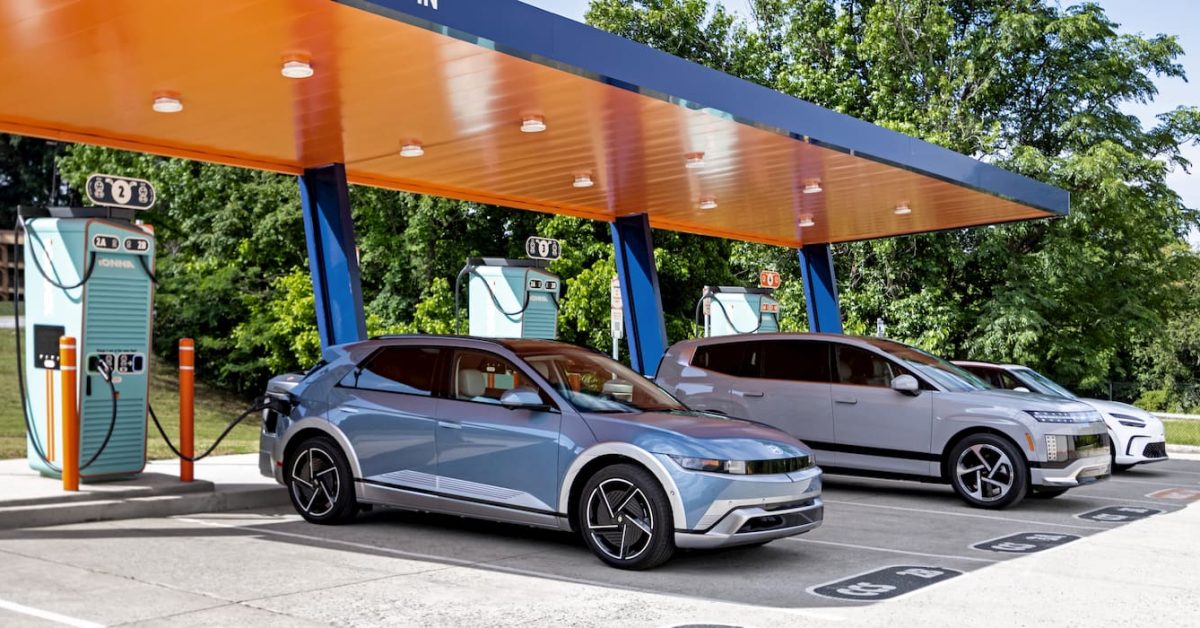
A charging discount is really a business automation lesson
A limited-time charging promotion for Hyundai and Genesis electric vehicles in the United States may seem far removed from your business in Malaysia. However, the more important story is not the discount itself. It is how vehicle brands, charging networks and mobile apps are working together to remove friction from everyday operations.
According to Electrek, eligible Hyundai and Genesis EV drivers can receive a combined 20% discount on IONNA charging sessions until 30 September 2026. The offer combines Hyundai’s 10% discount with an additional 10% automatically provided by IONNA. Drivers access the benefit through Hyundai in-app charging or Plug & Charge using the MyHyundai with Bluelink app.
For a Malaysian SME owner, the useful takeaway is this: customers and employees increasingly expect business systems to recognise them, apply the correct benefits and complete tasks without repeated manual steps. Whether you operate a sales fleet, service team, delivery operation or property business, connected technology is becoming part of the customer experience.
What Happened
IONNA is a charging network backed by several vehicle manufacturers, including Hyundai. The current promotion gives eligible Hyundai and Genesis electric vehicle drivers an extra 10% discount on charging, while IONNA adds another 10%. The combined promotion applies automatically when drivers use supported in-app charging or Plug & Charge features, as reported by Electrek.
The eligible vehicles listed in the report include the Hyundai IONIQ 5 from model year 2022 onwards, the IONIQ 5 N from 2025 onwards, the IONIQ 9 from 2026 onwards and the Kona Electric from 2025 onwards. Selected Genesis models are also included, such as the GV60 and Electrified GV70 from 2026 onwards. The exact vehicle and market eligibility should be checked directly with the relevant manufacturer and charging provider.
The key feature is not merely the percentage shown in the promotion. It is the automated connection between vehicle identity, driver account, charging platform and benefit rules. Instead of asking drivers to enter a voucher code at every charging session, the system applies the benefit based on account and vehicle eligibility. That is the kind of workflow Malaysian SMEs can adapt in their own operations.
When different systems can identify the right customer and apply the right rule automatically, your team spends less time checking details and more time serving customers.
Why This Matters for Malaysian SMEs
Malaysia’s EV ecosystem is developing, with charging points, vehicle models and digital mobility services becoming more visible. The Malaysian Green Technology and Climate Change Corporation describes low-carbon mobility as an important part of the country’s sustainability direction. For an SME, this creates practical questions: should company vehicles be electric, where should staff charge them, how should charging activity be recorded and how can you avoid disputes over usage?
You do not need to wait until your company owns a large fleet. A small business with one or two vehicles can begin by recording journeys, charging sessions, driver assignments and maintenance dates in one shared system. If you manage property, retail, hospitality or a workplace, you can also use charging access as part of a tenant or customer experience. The important step is to make the process trackable rather than relying on WhatsApp messages, screenshots and handwritten notes.
For example, a Shah Alam air-conditioning contractor may assign an EV to a technician who visits customer sites across Selangor. A digital workflow can link the vehicle to the technician, capture the job location, record charging activity and attach the information to the work order. A small catering company in Penang could use similar records to connect delivery routes with vehicle availability and charging schedules. These examples are not dependent on the IONNA promotion; they demonstrate how connected vehicle data can reduce administrative work.
There is also a customer-service opportunity. If your business serves EV drivers, you can make charging information easier to find, publish clear operating hours and notify customers when a charger is unavailable. A hotel, café, workshop or retail outlet can use a simple online form or booking system to manage charger access. When the charger, customer record and notification process are connected, your staff do not need to answer the same availability questions repeatedly.
Practical use cases for your business
| Business need | Useful workflow | Business benefit |
|---|---|---|
| Fleet charging | Assign vehicles and drivers through a shared dashboard | Clearer responsibility and easier activity tracking |
| Employee claims | Attach charging records to trips or job numbers | Fewer missing details during review |
| Customer charging | Use online booking and automatic reminders | Less manual coordination |
| Vehicle maintenance | Trigger service reminders based on mileage or dates | More consistent fleet availability |
| Sustainability reporting | Organise vehicle and energy records in one place | Stronger reporting for customers and partners |
How to Prepare Without Overcomplicating It
Start with an inventory of the vehicles and journeys your business already manages. Record the vehicle number, assigned driver, usual routes, charging locations and person responsible for approving related records. This gives you a baseline before you consider new software or electric vehicles.
Next, define simple rules. Who may use a company vehicle? Which trips are business-related? What information must be submitted after charging? Who reviews exceptions? Rules should be short enough for employees to follow consistently. You can then build digital forms, approval steps and reminders around them.
After that, connect the information to your existing operations. A charging record is more useful when it is linked to a delivery, service call, project or employee schedule. Automation can notify a manager when a vehicle is unavailable, remind a driver about a scheduled appointment or flag a missing trip record. The aim is not to collect technology for its own sake; it is to make a routine process more reliable.
The Bigger Picture
The Hyundai-IONNA arrangement shows how digital ecosystems are changing the ownership experience. The vehicle is no longer isolated from the app, charging provider, account and customer benefit. As more services become connected, SMEs will face similar expectations from customers, suppliers and employees.
This applies well beyond EVs. Your accounting platform may connect to payment services. Your online store may connect to delivery partners. Your customer database may connect to messaging tools. Your job-management system may connect to calendars and location data. In each case, the value comes from reducing repeated data entry and applying business rules at the correct moment.
Malaysian SMEs should therefore look for processes where staff repeatedly verify the same information, copy details between systems or remind customers manually. Those are strong candidates for automation. Begin with one measurable workflow, such as vehicle scheduling, service reminders or customer bookings. Document the current process, identify the delays and introduce a connected digital step.
The US charging promotion is temporary, but the underlying direction is permanent: businesses are moving towards systems that recognise context and respond automatically. For your SME, the next competitive advantage may not come from having the biggest fleet or the most advanced app. It may come from making everyday work simpler, faster and easier to track.
What You Can Do This Month
- List every vehicle, driver, route and charging or fuel record your business currently manages.
- Choose one process that involves repeated manual checking.
- Create a standard digital form for trips, charging sessions or service activity.
- Connect that form to an approval, reminder or reporting workflow.
- Review the results after four weeks and improve only the steps that cause delays.
For Malaysian SME owners, the lesson from connected EV charging is straightforward: automate the handover between systems. When customer identity, vehicle data, schedules and business rules work together, your team can focus on delivering the service instead of chasing information.
Ready to Streamline Your Operations?
Technology moves fast. Your operations should keep up. AutoRunBiz builds AI systems that run your daily workflows — from WhatsApp order capture to accounting. Book a free 15-min ops audit →