
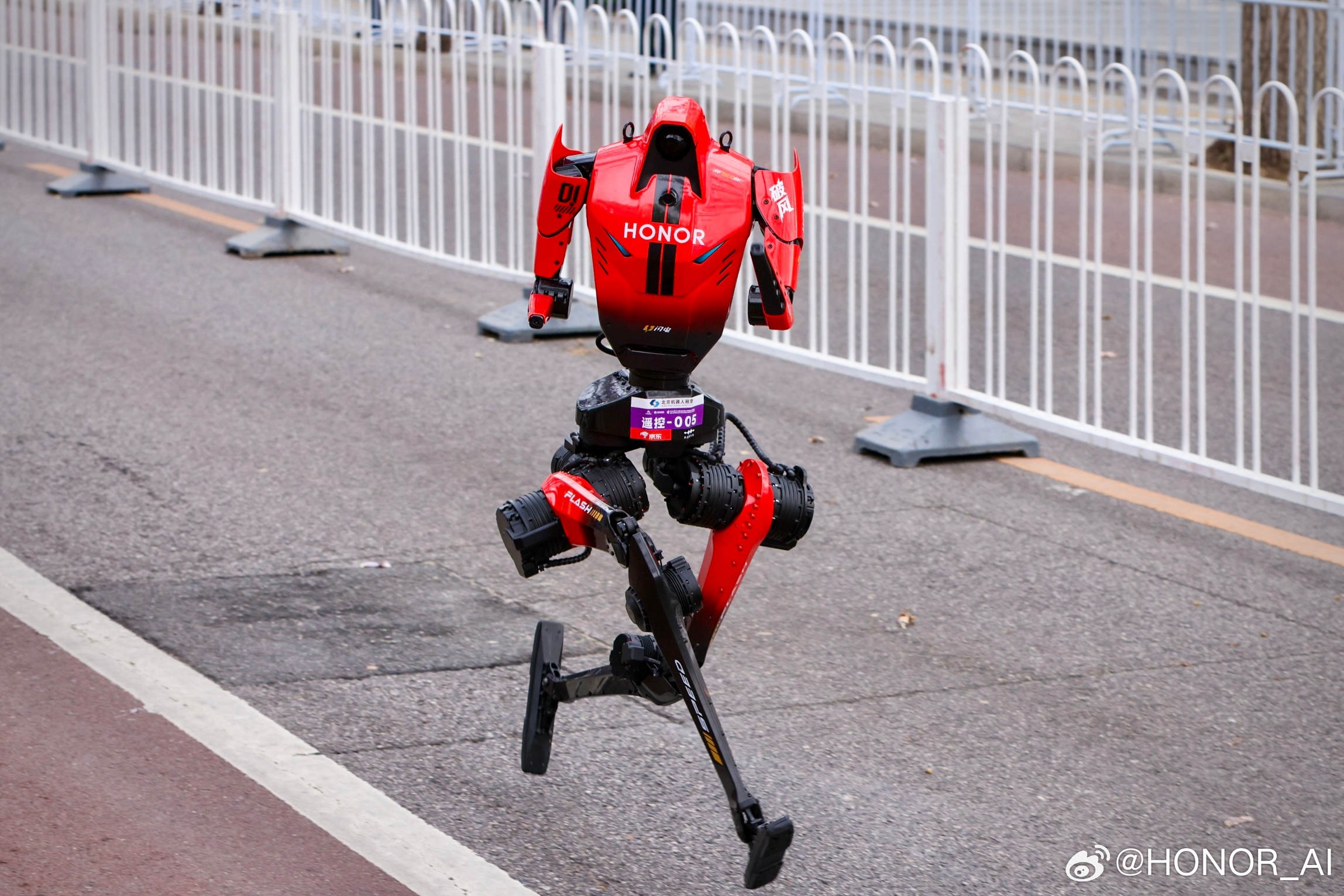
Robots Are Moving From Demonstrations Into Public View
If you run a Malaysian SME, you may have seen robots presented as something reserved for laboratories, large factories, or science-fiction films. That assumption is becoming less useful. The reported plan for Honor humanoid robots to participate in the Malaysia Marathon 2026 and the Merdeka Parade 2026 shows how robotics is increasingly being introduced through public, highly visible events. Source: SoyaCincau
You do not need to buy a humanoid robot to respond to this trend. The practical question is simpler: which repetitive, physical, or customer-facing tasks in your business could eventually be supported by machines that see, move, communicate, and follow instructions? Thinking about that now can help you make better decisions about automation, staff training, and business processes.
TL;DR: Humanoid robots appearing at major Malaysian public events signal growing familiarity with robots among customers and employees. For your SME, the immediate lesson is to improve your processes first, then identify suitable tasks for future automation.
What This Means
A humanoid robot is a machine designed with a human-like body structure, typically including a head or sensor system, two arms, two legs, and software that helps it understand its surroundings. It may be able to walk, carry objects, gesture, respond to commands, or perform demonstrations.
The Honor announcement concerns robots joining public events rather than replacing every human role. At a marathon or national parade, a robot may attract attention, interact with visitors, support brand storytelling, or demonstrate movement and artificial intelligence. The important point is not that every SME will soon employ a robot. It is that robotics is being normalised in places where ordinary Malaysians can see it directly.
That visibility can affect your business in three ways. First, customers may become more comfortable interacting with automated systems. Second, employees may expect their workplaces to use better tools for repetitive work. Third, business owners may begin asking more specific questions about where automation fits instead of treating it as an abstract technology topic.
The useful question is not “Should I get a humanoid robot?” It is “Which business task is repetitive enough, structured enough, and important enough to improve with automation?”
How This Applies to Malaysian SMEs
Retail and service businesses can prepare for more automated customer interactions. If you operate a shop, showroom, clinic, tuition centre, or hospitality business, customers may increasingly encounter digital assistants, self-service kiosks, automated appointment systems, and eventually physical robots. A humanoid robot at a public event can make these interactions feel less unusual. You can start with simpler improvements: automated booking confirmations, frequently asked question responses, digital queue updates, and standard follow-up messages. These tools do not need a human-like body to reduce manual work.
Food, logistics, and light manufacturing SMEs should examine movement-heavy tasks. Malaysian businesses often manage stock transfers, packing, sorting, shelf replenishment, delivery preparation, and workplace inspections. A humanoid robot is not automatically the best solution for these jobs. In many cases, a barcode scanner, conveyor, trolley, robotic arm, or inventory application may be more practical. The lesson from humanoid robotics is to look closely at tasks that require repeated movement and consistent procedures. Document the steps before considering any equipment or software.
Events, tourism, and marketing businesses can use robotics as an experience rather than a replacement. If you organise exhibitions, corporate launches, shopping-centre activities, or educational programmes, robots may become part of customer engagement. A robot can greet visitors, demonstrate a product, answer prepared questions, or create a memorable photo opportunity. You still need human staff for safety, empathy, unusual questions, and crowd management. The strongest use case is usually a combined experience: technology attracts attention while people handle judgement and relationships.
Small offices can learn from the supporting systems behind the robot. A public demonstration may look like a hardware story, but the underlying work involves scheduling, data collection, maintenance, safety procedures, communication, and performance monitoring. Your office has similar needs even if you never use a physical robot. For example, you can standardise how sales enquiries are recorded, how service requests are assigned, and how documents are approved. Better information flow is often the first step before any advanced automation.
A Practical Way to Assess Your Business
Begin with a task list, not a technology wish list. For one week, record repeated activities performed by you and your staff. Include customer enquiries, data entry, stock checks, delivery preparation, appointment reminders, reporting, and routine inspections. Note how often each task occurs, how long it takes, and what happens when it is delayed or completed incorrectly.
| Task characteristic | Potential automation fit | What you should check |
|---|---|---|
| Repeated and predictable | High | Can the steps be written as a clear procedure? |
| Requires frequent movement | Possible | Would a trolley, scanner, machine, or robot be safer? |
| Changes according to customer emotion | Lower | Should a trained employee remain responsible? |
| Involves confidential information | Requires control | Who can access the data, and where is it stored? |
| Has serious safety consequences | Requires caution | What human checks and emergency procedures are needed? |
The table is a decision aid, not a promise that a robot will suit every task. Physical automation must be assessed alongside workplace layout, staff capability, equipment maintenance, customer expectations, and applicable safety requirements. If your process changes every few minutes, a flexible human-led workflow may remain more suitable.
Practical Takeaways
- Map repeated work: Write down the tasks that consume staff attention every day.
- Separate physical and digital automation: A simple software workflow may solve a problem that appears to require a robot.
- Standardise first: Create clear procedures, naming conventions, and approval steps before automating them.
- Start with a controlled trial: Test one narrow workflow and define what successful completion looks like.
- Keep people involved: Assign responsibility for exceptions, safety, customer concerns, and final decisions.
- Prepare your staff: Explain whether automation removes a task, changes it, or creates a new role.
- Protect information: Review access permissions, customer data handling, device security, and audit records.
- Measure useful outcomes: Track response time, error frequency, completed jobs, customer satisfaction, and staff workload.
Questions to Ask Before Adopting Robotics
Before approving any automation project, ask whether the problem is clearly defined. Are delays caused by manual movement, missing information, unclear instructions, or poor scheduling? A robot cannot compensate for a process that nobody understands. You should also ask who will maintain the system, who will respond when it stops, and how staff will continue working during an outage.
Consider the environment as well. A robot designed for a controlled demonstration space may not perform reliably around narrow aisles, uneven floors, rain, crowds, pets, children, or constantly changing stock. Public events such as a marathon and parade involve special planning, supervision, and safety controls. Your workplace requires the same careful thinking, even if the scale is smaller.
Finally, consider the customer experience. Some customers may enjoy interacting with a robot; others may prefer a person. Offer a clear human alternative, especially for complaints, accessibility needs, sensitive services, and unusual requests. Automation should make service more dependable, not make customers feel abandoned.
The Bigger Picture
The appearance of humanoid robots at Malaysian public events is a sign of growing public exposure to robotics, but it is not a signal that every business must rush into humanoid hardware. For SMEs, the long-term opportunity is broader: build a business that can combine human judgement with reliable automated support.
As customers become more familiar with robots and artificial intelligence, they may expect faster answers, smoother service, clearer status updates, and fewer repetitive forms. Employees may also expect technology to reduce unnecessary administrative work. Businesses that have already documented their processes will be better placed to adopt suitable tools when they become reliable for a particular job.
Your next step can be modest. Choose one repeated task, document its current process, identify the common errors, and test a simple improvement. That discipline prepares your SME for many forms of automation, whether the eventual solution is a mobile application, workflow system, sensor, robotic arm, or humanoid robot.
The future of robotics will not be decided only by impressive demonstrations. It will also be shaped by practical businesses asking careful questions about safety, service, staff, and daily operations. You can begin by making one workflow clearer and more consistent this week.
Ready to Streamline Your Operations?
Your business should run itself. AutoRunBiz deploys AI agents to automate your daily operations — WhatsApp orders, invoicing, customer follow-ups, and accounting. Book a free 15-min ops audit to see where automation fits your business →