
A transport shift is coming closer to your business
If your business depends on staff transport, deliveries, scheduled routes or daily fleet coordination, vehicle decisions are probably already taking up more management time than they should. You may be dealing with fuel records, maintenance reminders, driver availability, route changes and customer delivery windows across separate spreadsheets and messaging groups.
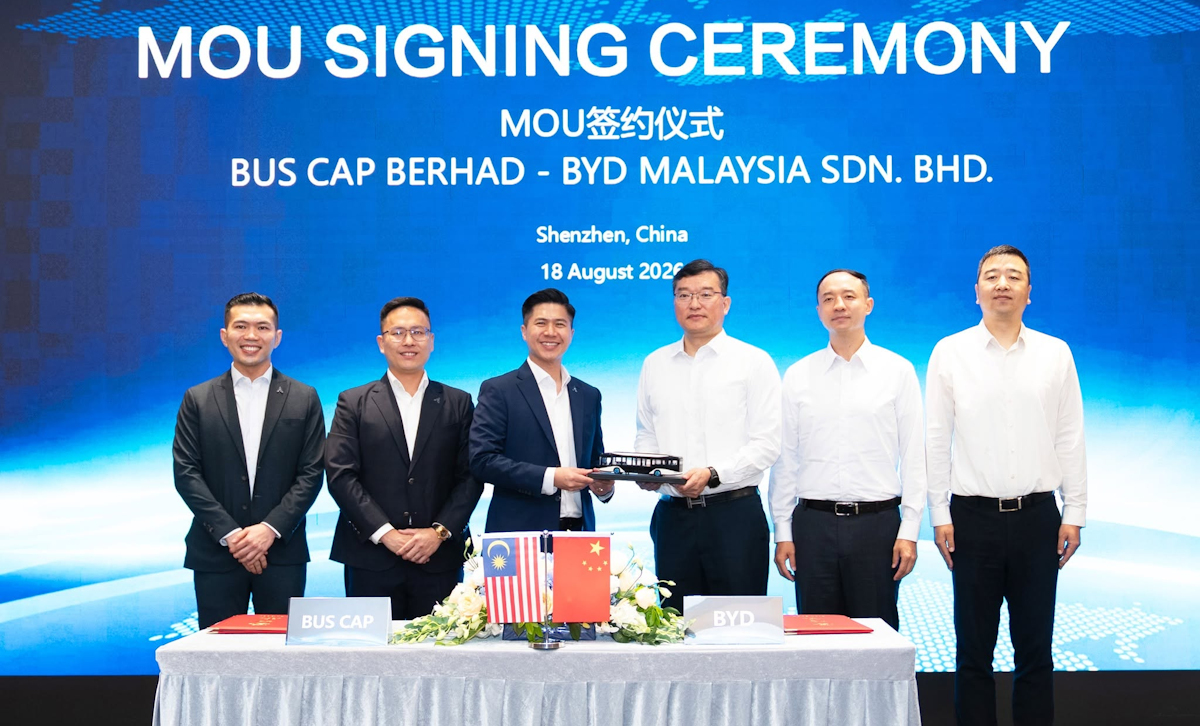
That is why BYD’s announcement involving a memorandum of understanding for completely knocked-down, or CKD, electric bus assembly in Perak deserves attention. The announcement is not simply a signal that electric buses will immediately become available to every Malaysian business. It points to a wider change in how commercial transport may be planned, assembled, operated and supported locally.
TL;DR: BYD’s Perak CKD proposal concerns electric buses, not a direct announcement about local passenger-car manufacturing. For Malaysian SMEs, the practical lesson is to prepare better fleet data, route planning and maintenance workflows before making any vehicle decision.
The original report states that BYD signed an MOU related to electric bus CKD activities in Perak. Read the source report.
What This Means
CKD means a vehicle is brought in as separate components and assembled locally, rather than arriving as a fully built imported unit. In this case, the reported proposal relates to electric buses and local assembly activity in Perak.
An MOU, or memorandum of understanding, should also be read carefully. It usually records an intention to explore or cooperate on a project. It is not the same as a completed factory, confirmed production schedule or guaranteed delivery programme. You should therefore treat the announcement as an industry direction, not as a promise that a particular bus model will be ready for your business immediately.
The important idea is that commercial electric transport may become more relevant to Malaysian operations. Local assembly could eventually support stronger supply chains, technical skills, parts availability and after-sales capability. However, the benefits for your business will depend on practical matters such as charging access, route length, vehicle utilisation, driver training, maintenance support and the availability of reliable operating data.
The useful question is not “Should I buy an electric vehicle now?” but “Do I understand my routes well enough to choose the right vehicle when the time comes?”
How This Applies to Malaysian SMEs
1. Staff transport operators need visibility across routes. If you provide transport for factories, schools, hotels, construction sites or office teams, your main challenge is rarely just the bus itself. You need to know when each vehicle leaves, which driver is assigned, how many passengers board, where delays happen and whether the vehicle returns for its next trip on time. An electric bus may suit predictable routes with regular depot returns, but that conclusion is difficult to reach if trip records are kept in scattered chats or handwritten logs.
Start by recording the basics for every route: departure time, arrival time, distance, passenger count, waiting time and unplanned stops. You do not need complex software at the beginning. A shared digital form can give you a consistent record, while an automation system can notify a supervisor when a trip is late or a vehicle misses a scheduled inspection. This creates a clearer operating picture before you compare diesel and electric options.
2. Delivery and service businesses should separate vehicle suitability from vehicle popularity. A bakery supplier, pharmacy distributor, laundry company, air-conditioning contractor or spare-parts business may use vehicles differently from a bus operator. Your vehicles may stop frequently, carry different loads and travel through urban areas with heavy traffic. An electric vehicle could be suitable for some patterns, but not necessarily for every route or every type of work.
Map your delivery zones and classify them by distance, number of stops and time spent parked. For example, one vehicle may complete several short urban runs and return to the same premises every afternoon, while another may travel between states with limited opportunities for charging. These are operationally different cases. A simple route register can show which vehicles have predictable usage and which ones require more flexibility.
3. Manufacturers, suppliers and contractors should prepare for new service requirements. If your SME supplies components, cleaning services, inspection work, tyres, workshop support or facility management to transport operators, local electric-bus assembly may create demand for different capabilities. The opportunity is not limited to building vehicles. Businesses may support depot charging areas, safety procedures, scheduling systems, spare-parts tracking, technician training and battery-related maintenance processes.
Begin by listing the services you already provide and identify where electric fleets would change the workflow. A workshop may need new diagnostic tools. A cleaning contractor may need procedures for high-voltage safety zones. A facilities company may need to coordinate charging access alongside other electrical loads. Planning early helps you ask better questions when transport clients begin changing their requirements.
4. Tourism and hospitality businesses should watch route reliability. Hotels, resorts and tour operators often manage airport transfers, event shuttles and scheduled excursions. Guests judge the service by punctuality, comfort and communication, not by the technical specification of the vehicle. If you consider an electric bus in future, your booking and dispatch process should already capture passenger numbers, luggage needs, pickup points and expected travel times.
Connect booking information to the daily transport schedule so your team can see changes quickly. If a group adds passengers or changes its pickup time, the assigned driver and operations manager should receive the same update. Better coordination reduces the risk of assigning an unsuitable vehicle or discovering a capacity problem only when the bus is about to depart.
A simple data view for fleet decisions
Before choosing any vehicle technology, track the operating pattern for at least several weeks. The exact period depends on your business, but consistency matters more than complexity.
| Metric | What to record | Why it matters |
|---|---|---|
| Daily distance | Distance by vehicle and route | Shows whether usage is predictable or highly variable |
| Stops per trip | Planned and unplanned stops | Helps compare urban delivery work with longer journeys |
| Return pattern | Whether the vehicle returns to base between trips | Indicates whether scheduled charging may fit the route |
| Downtime | Maintenance, waiting and breakdown time | Shows where operations are losing working capacity |
| Passenger or load level | Typical and peak capacity used | Prevents selecting a vehicle based only on average demand |
The table contains operating categories rather than external market statistics, so you can adapt them to your own records. The source article provides the announcement context, while your own fleet data should guide any business decision. See the reported BYD MOU details.
Practical Takeaways
- Do not treat an MOU as a confirmed rollout. Follow the project as an industry signal while waiting for details about assembly, models, support and availability.
- Separate buses from passenger cars. The reported arrangement concerns electric-bus CKD activity, so do not assume it means every BYD vehicle category will be assembled locally.
- Create one fleet register. Record vehicle identity, assigned driver, route, inspection status, service history and current availability in one place.
- Measure route behaviour. Capture distance, stops, waiting time, passenger or load levels and return-to-base patterns.
- Automate routine reminders. Set notifications for inspections, licence renewals, scheduled maintenance and document expiry.
- Plan exceptions. Keep a process for vehicle breakdowns, delayed arrivals, route changes and substitute-driver assignments.
- Ask suppliers operational questions. When discussing future electric vehicles, ask about charging requirements, technician support, parts lead times, warranty handling and training.
- Start with a controlled route. If you later test an electric vehicle, choose a predictable route where the vehicle can return to a known charging location.
Build the workflow before changing the fleet
Many SME owners make vehicle decisions based on a brochure, a sales presentation or a single busy week. That approach can create problems because the vehicle is only one part of the system. Dispatching, maintenance, driver communication, customer updates and documentation all affect performance.
A practical workflow might begin when a booking or delivery order is confirmed. The system records the route and load, checks vehicle availability, assigns a driver, sends the schedule, captures departure and arrival times, and creates a follow-up task if a trip is late. Maintenance data should then be linked to the vehicle record rather than kept in a separate notebook.
This type of operational foundation is useful whether your fleet remains conventional, becomes electric or uses a mixture of vehicle types. It also makes it easier to explain your needs to suppliers because you can provide actual route and usage information instead of estimates.
The Bigger Picture
The reported Perak CKD proposal suggests that commercial electrification is becoming connected to local industrial activity, not just vehicle imports. That could gradually influence transport operators, workshops, logistics providers, property owners and technology vendors. The pace will depend on project execution, infrastructure, regulations, technical support and customer demand, so you should avoid assuming that every business must change immediately.
However, waiting until the market is fully mature may leave your business with poor records and slow decision-making. The most useful preparation is operational rather than dramatic: standardise your fleet data, document route requirements, improve maintenance discipline and give your team a clear process for changes.
When suitable vehicles and supporting services become easier to access, you will be in a stronger position if you already know which routes fit, which constraints matter and where your current process wastes time. The Perak announcement is therefore less about rushing to purchase a bus and more about preparing your business to make a sound transport decision.
Ready to Streamline Your Operations?
Your business should run itself. AutoRunBiz deploys AI agents to automate your daily operations — WhatsApp orders, invoicing, customer follow-ups, and accounting. Book a free 15-min ops audit to see where automation fits your business →