
When Rain Stops Play, Does It Stop Your Business?
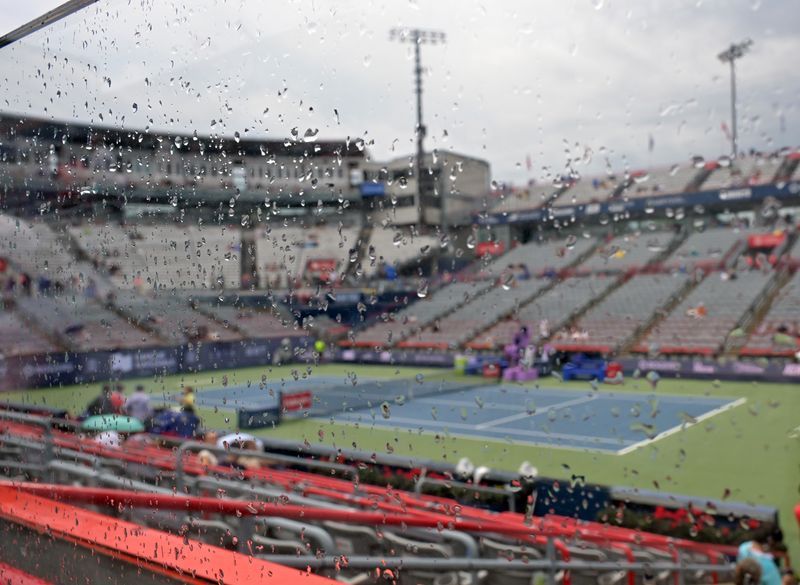
On August 2, 2026, rain halted tennis tournaments across North America. The Washington Open women’s final between Jessica Pegula and Alexandra Eala was suspended mid-match. The Canadian Open in Montreal cancelled its entire evening session. Play stopped in Toronto too.
You’re a Malaysian business owner. Maybe you skimmed that headline and scrolled past. Tennis, America, Canada — not your world. But here’s what actually happened: organisers lost a full day of operations. Match schedules collapsed. Ticket holders waited hours for answers about refunds and rebooking. Staff scrambled to coordinate responses across multiple venues.
Swap “tennis final” for “your delivery fleet” or “your F&B outlet” or “your outdoor event team” and you’re looking at the exact scenario that plays out across Malaysia every monsoon season. The stakes are different, but the pattern is identical: an unpredictable external event forces you to respond manually, slowly, and at the cost of customer trust.
TL;DR
Weather disruptions are inevitable — especially in a country where thunderstorms can roll in within hours. The tennis tournaments’ slow, manual response to rain cost them time and customer goodwill. You can automate your response: instant customer alerts, automatic rescheduling, and remote work handoffs. The businesses that bounce back fastest aren’t lucky — they’re prepared.
What This Means: Business Continuity, Not Meteorology
Nobody expects you to predict the weather. But every business owner should expect the weather to disrupt them — and have a plan for what happens next. That’s business continuity planning, and for SMEs, it’s often skipped because it sounds like corporate jargon. It’s not. It’s just answering three questions: What happens to my customers? What happens to my staff? What happens to my orders?
Look at how the tennis organisers handled it: they announced on social media that the evening session was cancelled and promised their ticketing team would contact ticket holders “shortly” with options. That’s a manual process — hours of phone calls and emails, frustrated customers waiting for answers, staff tied up in admin instead of doing productive work.
Now think about your last flood or thunderstorm. Did you manually WhatsApp every customer whose delivery was late? Did you call each client to reschedule appointments? Did you frantically drafta social media post while the rain hammered your shop’s roof? Every hour you spend on manual disruption management is an hour you’re not selling, serving, or building your business.
How This Applies to Malaysian SMEs
Malaysia is one of the most weather-exposed markets in the region, with annual rainfall averaging over 2,500mm and thunderstorms occurring on more than 200 days a year in many areas. Flash floods in Kuala Lumpur, Penang, and Johor Bahru have become recurring events, not rare exceptions. For SMEs — which account for 97.4% of businesses in Malaysia and contribute nearly 38% of GDP — weather is an operational risk you live with daily.
Consider e-commerce and delivery businesses. When KL floods hit, courier pickups stop, deliveries miss their time slots, and customers send angry messages. If you run an online store, your customers don’t care why their parcel is late — they just want to know when it’s coming. A simple automated system that sends proactive WhatsApp or SMS updates to affected customers — triggered by a delivery status change — turns a negative experience into a manageable one. You look professional instead of reactive.
For retail and service businesses — salons, clinics, tuition centres, F&B outlets — the afternoon thunderstorm is the enemy of foot traffic. Appointments get cancelled at the last minute, leaving your staff with empty chairs and lost time. An automated reminder system can ping clients 24 hours ahead, let them reschedule with one tap, and keep your day full even when the weather outside is miserable. Some Malaysian clinics and tuition centres already use this to maintain attendance during the rainy season.
Then there are the outdoor-dependent trades: event organisers, photographers, contractors, and maintenance teams. When the sky opens, jobs stop instantly. The most successful operators use internal automations to notify clients immediately, reschedule crews, and reassign equipment — all from a single dashboard instead of a chaotic chain of phone calls. It’s not about stopping the rain; it’s about making sure everyone knows the plan within minutes, not hours.
“The best weather-proof business isn’t the one that predicts rain — it’s the one that responds before the first drop falls.”
Weather Scenarios vs. Automation Responses
| Weather Event | Typical Manual Response | Automated Response |
|---|---|---|
| Afternoon thunderstorm (KL, 4pm) | Call each customer whose delivery is delayed | Trigger-based WhatsApp/SMS alerts sent in seconds |
| Flash flood near your outlet | Post on Facebook, hope regulars see it | Auto-alert all booked clients + offer one-tap rescheduling |
| Monsoon season (Nov–Jan) | Manually juggle staff shifts, then cancel per site | Auto-adjust staffing schedules linked to weather feeds |
| Event cancellation due to rain | Call vendors, clients, and attendees one by one | One-to-many notifications with automatic rebooking workflows |
Practical Takeaways: Set These Up This Week
- Build a trigger list. Identify your top 5 disruption scenarios — heavy rain, flood, power outage, staff no-show, supplier delay. Write down exactly what you would tell customers for each.
- Automate customer updates. Use your CRM, messaging tool, or email platform to send proactive alerts. Don’t wait for customers to ask what’s happening.
- Make rescheduling self-service. If you take bookings, use an online calendar that clients can reschedule without calling you. This saves hours during bad weather.
- Keep your team in the loop automatically. Use a team communication tool with pre-set announcements, so staff on the road know what’s happening without chasing you for answers.
- Create a “rain day” operating plan. Define which tasks can go remote, which orders get priority, and which services get postponed. Write it once, reuse it every monsoon.
- Test your system on a fake rainy day. Send yourself a test alert and run a mock cancellation. If the whole process takes more than 10 minutes, tighten it.
The Bigger Picture
Weather volatility is only increasing. Climate change is already reshaping Southeast Asia, with more intense storms and unpredictable rainfall patterns across the region. Malaysian SMEs that treat weather as a permanent business partner — one you can’t control but can absolutely prepare for — will be in a far stronger position over the next decade.
The tennis tournaments in Washington and Canada weren’t careless. They have large logistics teams and years of experience. Yet they still took hours to respond, and ticket holders still had to wait for answers. As an SME owner, you have a different advantage: small size. You can implement flexible automation faster than any big corporation. You don’t need an enterprise-grade system — you need a clear plan and simple tools that run on autopilot.
Start small. Pick one weather scenario this week and automate your response to it. When the next storm hits — and it will — your customers will receive a timely, professional update from you while your competitors are still drafting their apologies. That’s the kind of reputation that keeps people coming back, rain or shine.
Ready to Streamline Your Operations?
Your business should run itself. AutoRunBiz deploys AI agents to automate your daily operations — WhatsApp orders, invoicing, customer follow-ups, and accounting. Book a free 15-min ops audit to see where automation fits your business →