
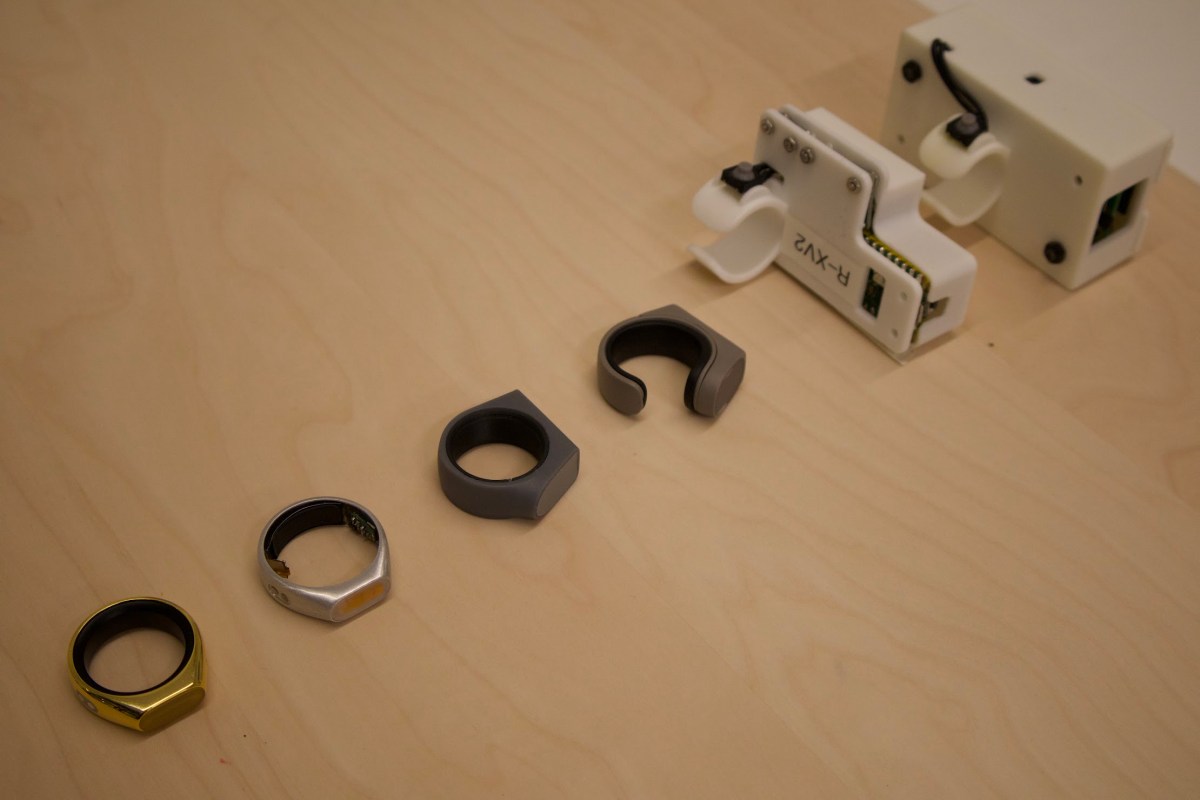
Voice Rings Are Coming: What It Means for Your Business
You’re three meetings deep by 11 a.m. One with a supplier who quoted you a new material. Another with a client who changed the delivery terms. A quick one with your foreman about a staffing issue. By lunch, you remember the gist of each conversation — but the details? The exact quantity, the new deadline, the name of the person who promised to follow up? That’s gone.
That gap between “we talked about it” and “let me find the notes” is exactly what a new wave of voice-powered AI wearables is trying to close. TechCrunch reports that AI notetaking hardware has taken off in the last couple of years, and the newest bets are being placed on rings — small devices you wear on your finger that listen, transcribe, and summarise on your command.
If you run a small business in Malaysia, this isn’t a gadget story. It’s a story about never losing another detail again.
TL;DR: Voice-first AI wearables — rings, pendants, pins, earbuds, and card-sized recorders — are moving beyond meeting notetaking. The next wave captures your stray thoughts anywhere, anytime. The design principle that matters for business owners: you stay in control of what gets recorded and what the AI does with it.
What This Means
First, some plain-language context. For a few years now, people have been able to buy small AI devices that sit in on your meeting, record what’s said, and produce a summary with action items automatically. The TechCrunch piece notes this category has genuinely taken off — credit-card-sized recorders, pendants, pins, and transcribing earbuds all exist for exactly this purpose.
Now the same idea is moving from your meeting room to your daily routine. Instead of only capturing scheduled calls and appointments, the next generation of wearables — rings especially — is designed to capture thoughts the moment they happen. You’re walking out of a client’s office and something important hits you: you tap the ring, say it aloud, and the device turns that into a note, a reminder, or a message drafted for you.
Sandbar, the startup behind the Stream ring, argues that earlier voice hardware struggled because it didn’t trust the user. Their bet is the opposite: keep the human firmly in control. You decide when it listens, what it keeps, and what it sends to an AI for processing. That’s a bigger deal than it sounds, especially for a business owner.
The difference between a gadget and a business tool comes down to one thing: control. If you can see what a device captured — and decide what gets processed or deleted — you can trust it with the details that actually matter.
How This Applies to Malaysian SMEs
Let’s be honest: most Malaysian SME owners don’t live their lives in front of a laptop. You’re at the shop, at the warehouse, at the supplier’s place, or on the road between three locations. Typing notes on a phone while walking through a factory is awkward. Standing in a car park tapping out a reminder that your staff must call the client back? Inconvenient. A voice ring built around “capture it and move on” fits the way you actually work — hands busy, brain full, and a workshop full of people waiting for your next decision.
Then there’s language. Malaysian business conversations are rarely pure English. Your meeting might start in Bahasa Malaysia, shift to English for the technical details, and include a few Mandarin or Tamil phrases — sometimes all four in a single sentence. That’s a real test for any voice AI. The interview highlights human oversight as the core design bet for the new generation of devices. For you, that means the AI doesn’t need to be perfect. You can listen back, spot an error, and correct it before any summary reaches your client or your team. The device works for you, not the other way around.
Privacy is the third reason this matters. As an SME owner, you hold information about your people, your pricing, and your client relationships. Sending all of that to an AI service without knowing what happens to it is a legitimate worry — and one reason earlier voice hardware failed to break through. The new approach, as described in the TechCrunch interview, gives the human control of the entire pipeline. For a small business, that’s the difference between a tool you can use with confidence and a risk you can’t justify.
Finally, think about your standard operating procedures. You know how to run your business, and you’ve probably given the same instructions to five different staff members over the years. Voice capture lets you articulate a process while you’re actually doing it — walking through the kitchen, checking stock, or doing a site handover — and turn that spoken walkthrough into a document your team can follow. It turns your memory into your company’s memory.
Practical Takeaways
- Start with a low-stakes use case. Test voice AI on your own reminders and to-dos for a week before you point it at anything client-facing.
- Check the control settings first. The article’s key lesson is human control — look for devices and apps that let you review before the AI sends or summarises anything.
- Test your real language mix. Don’t try it only in English. Run it through an actual conversation with your staff or supplier to see how it handles Bahasa Malaysia, Mandarin, Tamil, and code-switching.
- Use it to build SOPs. Narrate a process while you do it, then have your team refine the transcript into a proper procedure.
- Keep a backup path. A voice note is not a filing system. Make sure important items land in your existing workflow — your email, your CRM, or your team chat — and aren’t trapped inside one device.
Which Form Factor Fits What
The TechCrunch article groups today’s voice AI hardware into five main form factors (source). Here’s how to think about each from a small-business perspective:
| Form factor | Strengths | Best for |
|---|---|---|
| Credit-card-sized recorders | Simple, familiar, easy to place on a table | Room-based meetings and group discussions |
| Pendants | Hands-free, worn close to the body | Walking around a site while dictating notes |
| Pins | Small, discreet, clips onto a shirt | Quick capture on the go without drawing attention |
| Transcribing earbuds | Capture from your own perspective while mobile | Calls and one-on-one conversations |
| Rings | Always with you, instant tap-to-capture, built for stray thoughts | Capturing ideas between meetings and out in the field |
The Bigger Picture
Look past the hardware and you’ll see the real trend: voice is becoming the most natural way to interact with AI. Typing a prompt is still typing. Speaking the thought the moment it occurs is the closest thing to an assistant who never sleeps.
For Malaysian SMEs, the near future may look like this: every business owner has a personal AI that attends meetings, takes notes, and remembers what was promised — but only if the trust question gets answered. That’s why the human-control philosophy matters. It’s not a technical feature; it’s a condition for adoption. The companies that succeed in selling voice AI to small businesses will be the ones that make the owner feel safer, not watched.
Your move is simple. Don’t wait for the perfect device, and don’t dismiss the category either. Test one approach, in a small way, on a real part of your week — a staff briefing, a supplier visit, or a walkthrough of your own operations. The ring may not be for you, but voice capture probably is. The business that remembers everything has a quiet edge over the one that relies on memory.
Ready to Streamline Your Operations?
Your business should run itself. AutoRunBiz deploys AI agents to automate your daily operations — WhatsApp orders, invoicing, customer follow-ups, and accounting. Book a free 15-min ops audit to see where automation fits your business →