
You Left That Meeting With Great Ideas. Now Where Are They?
You sit down after a client meeting, ready to type up your notes. But the details are already fuzzy. What exactly did the client ask for in the second half? You remember the gist, not the specifics. So you do what most SME owners do: you recreate the conversation from memory, miss one key detail, and discover the gap three weeks later when the client follows up asking why you never sent that quotation.
This is the daily reality of running a business with 50 people or fewer. You don’t have a dedicated assistant. You have a phone that demands both hands — hands you don’t have free when you’re carrying product samples, driving between sites, or walking through a client’s factory floor in Shah Alam. You’ve learned to live with the gaps. But the gaps are costing you credibility, one forgotten detail at a time.
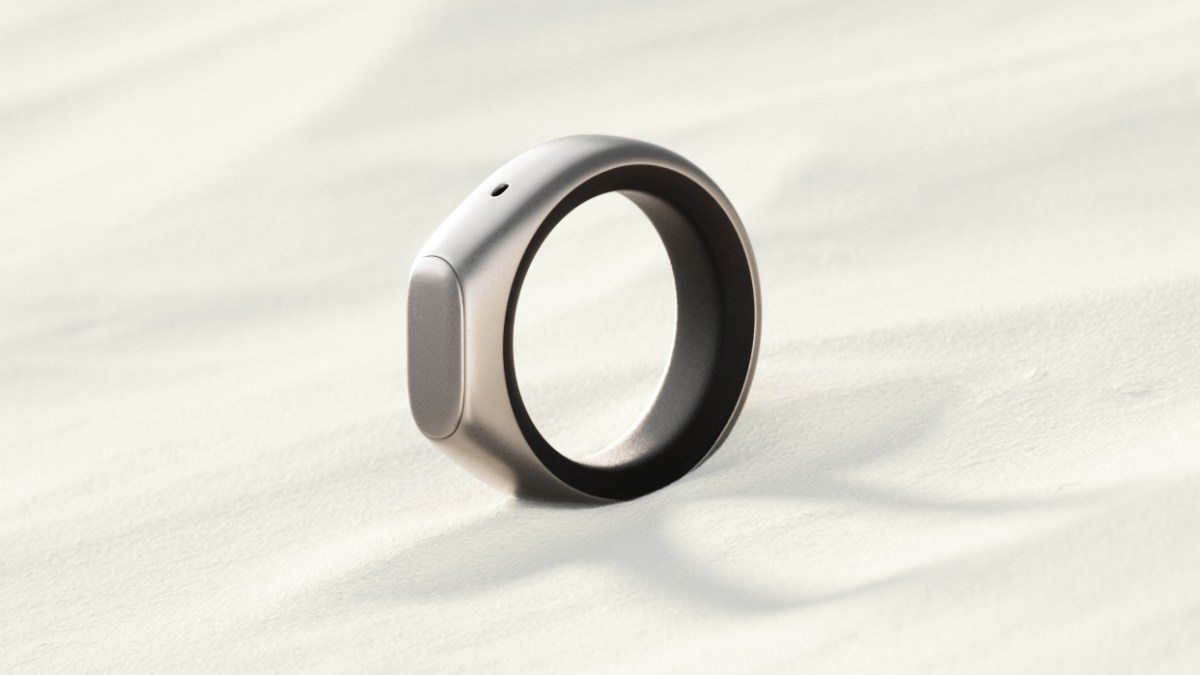
That’s why the recent buzz around voice-enabled wearables like Sandbar’s Stream ring matters to you. Not as a gadget story. As a potential answer to a workflow problem you’ve probably stopped noticing because you’re so used to it.
TL;DR: AI voice-recording devices keep dying because they capture too much and hand control to the machine, not you. Sandbar’s Stream ring pushes back with push-to-talk — you tap a button, say what matters, and nothing else is recorded. For Malaysian SMEs, this points to a bigger pattern: the tools that win are the ones that respect your attention, your clients’ comfort, and the messy, multilingual way you actually work.
What This Means
For the past couple of years, companies have tried to sell AI notetaking hardware — credit-card-sized recorders, pendants, pins, even transcribing earbuds (source). Most of these landed in what’s been called the “AI hardware graveyard.” They promised to capture everything and turn it into neat summaries, but they overlooked a basic human truth: nobody wants a device silently listening to every conversation in the room.
Sandbar, a startup behind a voice-enabled ring called Stream, believes it has found the missing piece. The ring is push-to-talk. Nothing gets recorded unless you physically press the button. Sandbar’s co-founder and CEO Mina Fahmi, who previously worked at CTRL-labs (the neural interface startup Meta acquired in 2019), designed the device around a simple principle: keep the human firmly in control (source). The company has raised significant backing — $36 million to date, including a $23 million Series A led by Adjacent and Kindred Ventures (source).
The lesson here isn’t really about rings. It’s about how you drop technology into your daily workflow. When a tool captures everything without asking, it creates friction — for you and for the people around you. When it waits for your cue, it feels like an assistant, not an eavesdropper.
How This Applies to Malaysian SMEs
Think about your typical week. If you run a retail or F&B business, you’re juggling suppliers, staff schedules, and customer complaints. If you’re in professional services — accounting, legal, consulting — you’re in back-to-back client meetings where the exact wording matters. If you’re in sales, you’re on the road, and your best idea about a prospective client hits you while you’re stuck in traffic on the LDP or waiting to turn out of a parking lot in Damansara. In all these moments, your hands are occupied and your mind is full. A push-to-talk wearable lets you capture a thought in three seconds, then gets out of your way.
There’s also the social-acceptability factor Fahmi talks about — the idea that wearable AI only works if people around you don’t feel uneasy (source). This matters double in Malaysia, where business is deeply relationship-driven. If a client suspects you’re secretly recording a discussion, that trust is gone. A push-to-talk device signals intent: you only capture what you deliberately choose to capture. That preserves the human comfort that keeps Malaysian business relationships healthy.
Then there’s the language mix. Many of us switch between Bahasa Malaysia, English, and sometimes Mandarin or Tamil in the same conversation. Generic AI notetaking tools trained on clean single-language audio often mangle this. A push-to-talk device lets you capture the exact sentence a supplier said, in the language they used, and then ask the AI to summarise or translate it afterward. You stay in control of the output — store it, summarise it, turn it into a follow-up email. That’s a meaningful upgrade for a 10-person company that doesn’t have an operations manager to track every verbal promise.
“A voice recorder that listens to everything isn’t a tool — it’s a liability. The tool that waits for your signal is the one that earns a place in your daily routine.”
Practical Takeaways
You don’t need to buy a ring this week. But you should rethink how you capture business information, because the hardware graveyard is full of products that ignored your workflow. Here’s a quick checklist:
- Choose push-to-talk over always-on. Whether it’s a wearable, a phone app, or a voice assistant, the best tool for a small business is one that waits for your cue.
- Set a meeting recording rule. If you record meetings using your phone, tell the client at the start and ask permission to record only the action-item portion. You build trust and still get the details.
- Capture on the spot, in your own words. The moment you leave a client site, record a 30-second voice memo about your follow-ups. It preserves more detail than a scribbled note an hour later.
- Test tools with your actual speech patterns. If a voice tool can’t handle “tolong hantar quotation esok,” it will let you down in real contexts. Test with code-switching before you commit.
- Connect capture to action. The value isn’t in the recording — it’s in the summary, the reminder, the drafted reply. Pick tools that output action items, not just transcripts.
The Numbers Behind the Hardware Bets
| Approach | Key Feature | Traction |
|---|---|---|
| Earlier AI notetaking devices (pins, pendants, credit-card recorders) | Always-on recording, automatic summaries | Mostly failed to gain mainstream traction — the “AI hardware graveyard” (source) |
| Sandbar’s Stream ring | Push-to-talk, custom-built hardware, human-controlled capture | $36 million raised to date, including a $23 million Series A led by Adjacent and Kindred Ventures (source) |
The Bigger Picture
What Sandbar’s bet signals is not that rings are the future. It’s that the market is finally learning a hard lesson: AI hardware fails when it removes human agency, and succeeds when it amplifies it. Fahmi also chose the “gruelingly painful” path of building completely custom hardware instead of reskinning an off-the-shelf device (source) — because he understood that the software has to feel seamless to earn a spot on your finger.
For Malaysian SME owners, the long-term takeaway is your selection criteria for any new tool. Don’t ask, “Is this impressive?” Ask, “Does this respect how I actually work?” Does it let me stay in control? Does it keep my clients comfortable? Does it handle the messiness of real life — traffic jams, language switching, five things happening at once?
The tools that survive will be the ones that act like a trustworthy assistant who stands at the door, waits to be called, and leaves everything else untouched. As a business owner, that’s exactly the kind of help you need. Not a machine that watches everything, but one that listens when you speak — and only when you speak.
Ready to Streamline Your Operations?
Your business should run itself. AutoRunBiz deploys AI agents to automate your daily operations — WhatsApp orders, invoicing, customer follow-ups, and accounting. Book a free 15-min ops audit to see where automation fits your business →