
Your Training Videos Are Collecting Dust. Here’s What Actually Works.
You’ve spent time and effort creating or buying training videos for your team. But let’s face it—how much of that content actually changes how your employees perform? They watch the videos, nod along, but when faced with a real customer complaint or a difficult sales call, they freeze. That’s because passive learning, like watching a video, rarely transforms behavior. According to a meta-analysis of learning research cited by Synthesia, most corporate training stops short of actually changing behavior. The key to real learning is practice, combined with constructive feedback.
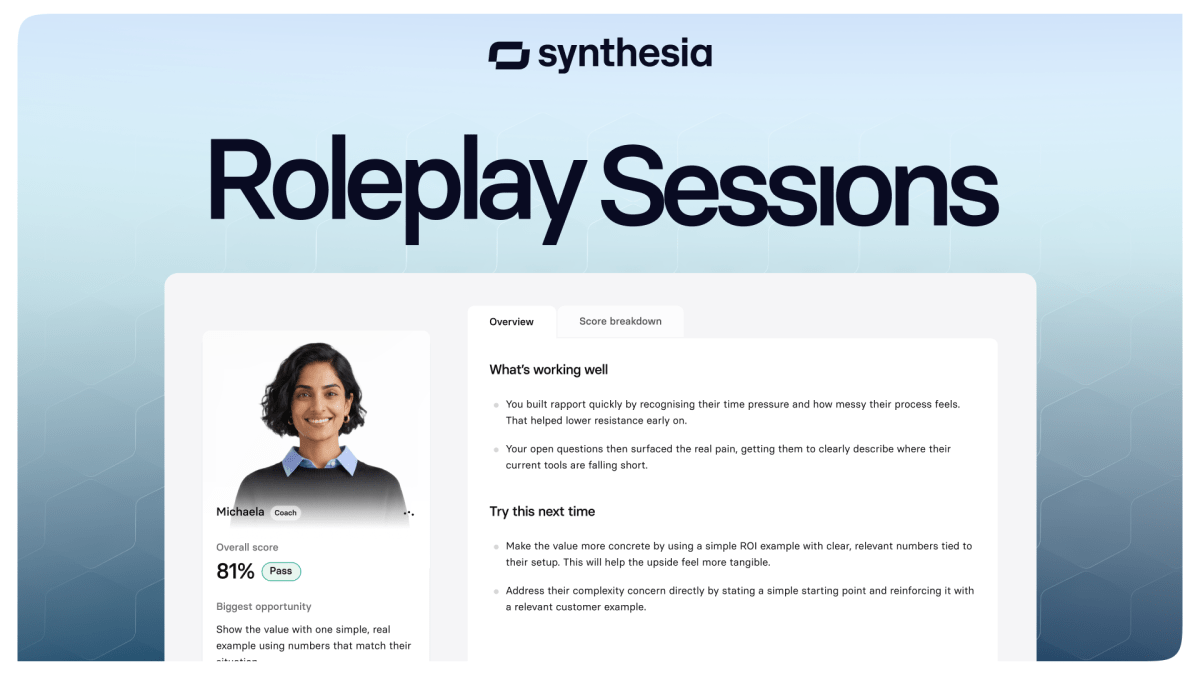
This is where AI roleplay training enters the picture. Synthesia, the company known for AI video avatars, has launched Roleplay Sessions. This platform allows your employees to practice high-stakes conversations—like sales pitches, performance reviews, or customer complaints—with an AI avatar that talks back, pushes back, and then evaluates their performance against a custom rubric. It’s like having a personal coach available 24/7, without the scheduling headaches or high costs of traditional training.
Before we dive deeper, here’s the TL;DR: AI roleplay training enables your team to practice real-world scenarios with an AI avatar, receive immediate feedback, and build skills faster than any passive video ever could. This is active learning that drives measurable results, and it’s becoming more accessible for SMEs in Malaysia.
What This Means for Your Business
In simple terms, Synthesia’s new product moves beyond generating training videos. Instead, it creates interactive sessions where your employee takes on a role—say, a customer service representative dealing with a complaint—and the AI responds in character. After the session, the AI scores the employee’s performance based on criteria you’ve set, such as empathy, problem-solving, or adherence to company policy. This data gives you a clear picture of your team’s strengths and areas for improvement.
As reported by TechCrunch in their exclusive coverage (source), the most popular use cases for early customers include sales team training and leadership development. Specifically, these sessions focus on soft skills like handling difficult conversations. For Malaysian SME owners, this is directly relevant because you often need your team to manage diverse customer interactions without the luxury of a dedicated training department.
Moreover, Synthesia’s platform can be customized using your existing training documents, or you can work with their consultants to create bespoke scenarios. This flexibility means you can quickly adapt the training to your specific business needs.
How This Applies to Malaysian SMEs
Malaysian businesses operate in a unique environment. With a workforce that communicates in multiple languages—Bahasa Melayu, English, Mandarin, and Tamil—you need training solutions that reflect this diversity. AI roleplay can be tailored to include specific languages and cultural nuances. For instance, you can create scenarios where your sales team practices pitching a product in Bahasa Melayu to a local customer, complete with appropriate greetings and negotiation styles. This makes the training much more effective than generic English-language videos.
Consider the retail sector in Malaysia. Customer interactions can vary from polite inquiries to demanding complaints. With AI roleplay, your staff can practice these interactions repeatedly without the risk of upsetting a real customer. The AI provides instant feedback on tone, body language (through avatar interaction), and key phrases. Over time, this builds confidence and improves service quality. Similarly, for the hospitality and food industry, employees can practice handling food quality complaints or upselling menu items in a safe environment.
Another critical area is sales training. In Malaysia, building trust is essential for closing deals. Your salespeople need to master the art of relationship-building, which includes small talk, understanding cultural nuances, and handling objections. AI roleplay allows them to rehearse these conversations many times. The data collected from sessions—like common objections raised by the AI or scores on specific skills—helps you identify gaps in your sales process. For example, if your team consistently struggles with pricing objections, you can adjust your sales strategy or provide additional support.
Furthermore, AI roleplay can help with performance management. Owners of SMEs often have to conduct employee reviews themselves. By using AI roleplay, you can train your managers on how to handle performance discussions, deliver constructive feedback, or motivate underperformers. This reduces the pressure on you while ensuring consistency in management practices.
Another practical application is in onboarding new hires. Instead of overwhelming them with videos, you can simulate the first few customer interactions with AI. This accelerates their learning and reduces the time it takes for them to become productive. For SMEs with high turnover rates, this can save significant time and resources.
From an investment perspective, AI roleplay is becoming more cost-effective. Synthesia aims to offer this product to small businesses and prosumers in the coming months as inference costs continue to fall (source). This means you can access training tools that were once only available to large corporations, making advanced training more accessible for SMEs in Malaysia.
Practical Takeaways for Your Business
- Identify key scenarios: List the most common or high-stakes conversations your team faces, such as handling customer complaints or closing a sale.
- Start with a pilot: Choose one department or role to test AI roleplay. This could be your sales team or customer service team.
- Customize the AI: Provide your existing training materials, scripts, or guidelines to define the scenarios and rubric.
- Monitor progress: Use the scoring and analytics to track improvement over time. Share this data with your team to motivate them.
- Combine with existing training: Use video training for initial knowledge transfer, then follow up with roleplay for practice and reinforcement.
- Gather feedback: Ask your team about their experience with AI roleplay and adjust the scenarios based on their input.
The Bigger Picture: What This Trend Means Long-Term
The move from passive videos to active roleplay represents a fundamental shift in how businesses approach training. Instead of hoping that employees absorb information, you can now have concrete data on their skills and progress. This is particularly valuable for SMEs, where every training investment needs to show results.
Long-term, this trend will make continuous learning more integrated into daily work. Employees can practice and improve skills without needing dedicated training sessions off the floor. For Malaysian SMEs, this agility can be a competitive advantage. You’ll be able to respond faster to market changes by upskilling your team on demand.
Moreover, as AI models become more sophisticated and affordable, tools like Synthesia Roleplay will become standard. Early adopters in Malaysia will benefit from a more skilled workforce, improved customer satisfaction, and better business outcomes. The data-driven approach to talent development will help you make smarter hiring and
Ready to Streamline Your Operations?
Your business should run itself. AutoRunBiz deploys AI agents to automate your daily operations — WhatsApp orders, invoicing, customer follow-ups, and accounting. Book a free 15-min ops audit to see where automation fits your business →