
Your Machinery Breaks. Do You Replace It—Or Repair It?
Imagine your company’s most expensive piece of equipment—a CNC machine, a commercial printer, or even your POS server. It’s been running faithfully for years. Then one day, the fuel gauge hits empty. The machine still works perfectly, but it can’t stay online without power. Your instinct says: “Time to buy a new one.”
That’s exactly the choice satellite operators have faced for decades. Satellites cost tens of millions to build and launch. Yet when they run out of thruster fuel—not when their electronics fail—they’re simply abandoned. They drift into a “graveyard orbit” and become space junk, even though their transponders, cameras, and computers still work flawlessly.
But that’s changing. Northrop Grumman just demonstrated a new kind of space robot that can refuel, repair, and extend the life of existing satellites. And the logic behind it has a powerful lesson for Malaysian business owners: your most valuable assets might not need replacing—they need servicing.
TL;DR
- Satellites fail because they run out of fuel, not because their technology stops working.
- Northrop’s new robot spacecraft can attach “life extension pods” to old satellites, keeping them operational for years longer.
- For Malaysian SMEs, the lesson is simple: audit your existing equipment before writing it off. Repair and upgrade might be the smarter move than replacement.
What This Means
Let’s break down what actually happened. A spacecraft called the Mission Extension Vehicle (MEV) has been docked to an Australian Optus communications satellite for over a year, essentially acting as a “booster seat” to keep the satellite in its correct orbital position. That satellite was launched in 2009 with a 15-year design life. It’s now running on borrowed time—but it’s still generating revenue for Optus.
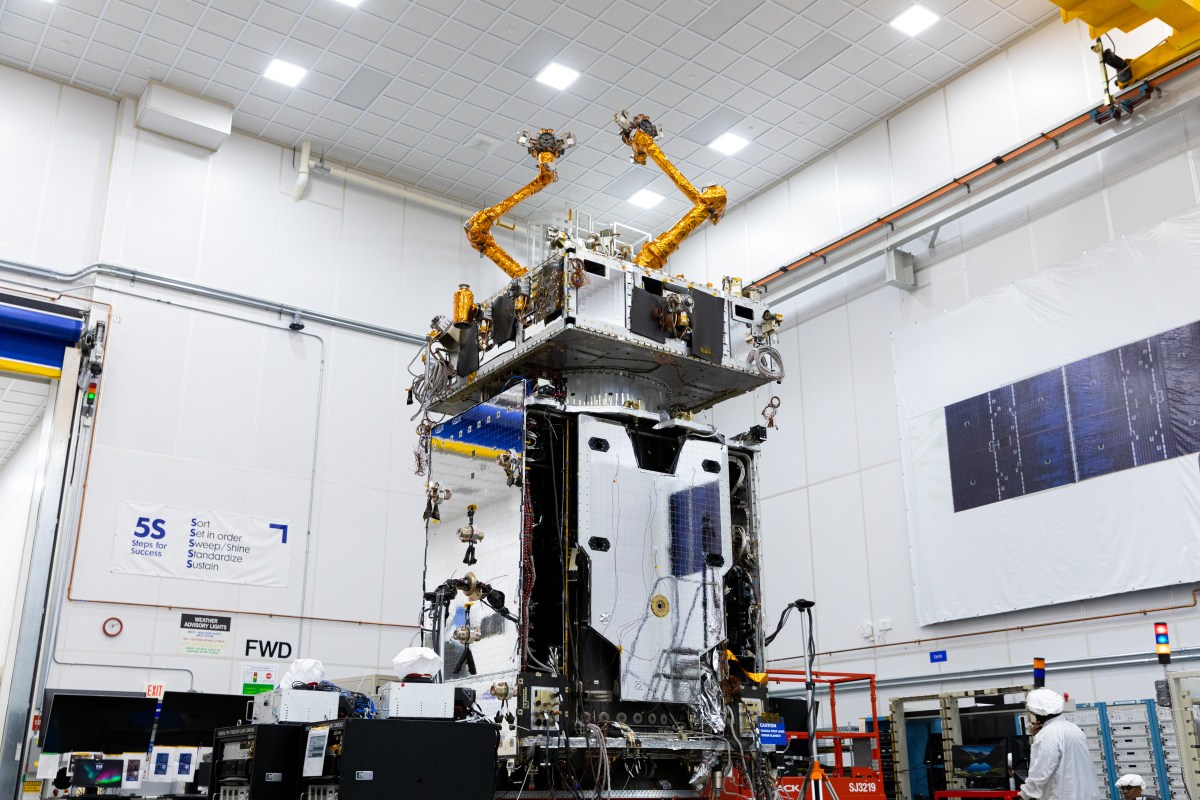
Now, the MEV is moving off, and a more advanced robot called the Mission Robotic Vehicle (MRV) is heading up. The MRV has two robotic arms developed by DARPA (the U.S. military research agency). Its job? To grab a satellite and physically attach a “Mission Extension Pod” (MEP)—essentially an external fuel tank and thruster kit—so the satellite can keep working for another six years or more. These four new spacecraft launched in July on a SpaceX Falcon 9 rocket and will arrive at their target location—about 27,000 miles above Earth—in 2027. Northrop’s director of logistics and servicing, Cassie Wong, calls this a move toward “a more resilient architecture and infrastructure base where we can do things like spacecraft repairs, life extension, or even upgrades and maintenance of satellites.”
The key insight here is the business model shift. Previously, satellite operators had to buy big, expensive, and complicated servicing vehicles. Now, customers can own the smaller, simpler MEP pods (which are essentially modular propulsion systems), while a shared robot handles the installation. That’s cheaper, more flexible, and opens the door for more customers to participate. The MEVs have already provided 10 years of life extension to three customers, including two Intelsat spacecraft.
“The goal is a paradigm shift where we can see space as sustainable, with a more resilient architecture and infrastructure base where we can do things like spacecraft repairs, life extension, or even upgrades and maintenance of satellites.” — Cassie Wong, Northrop Grumman
How This Applies to Malaysian SMEs
You don’t own a satellite. But you almost certainly own expensive equipment, vehicles, or software systems that are “good enough” but aging. The instinct of many business owners is to think in terms of replacement: “This machine is 10 years old, it’s time to budget for a new one.” But that’s a bias toward shiny new things, not a business strategy. The space industry is proving that extending the useful life of an asset is a legitimate, profitable strategy.
Think about a restaurant owner in Penang with a walk-in cold room compressor that’s been running for 12 years. The compressor still cools perfectly. But it’s energy-inefficient and the technician says the seals are wearing out. The typical response is to price out a brand-new unit. But what if you instead invested in reconditioning the compressor, replacing the seals, and upgrading the insulation? You’d keep your existing asset working, avoid the disruption of installation, and defer that capital expense for several more years. The space industry’s “life extension” logic says: repair is a strategy, not a stopgap.
This applies even more directly to equipment with high capital costs. A Klang Valley logistics company with a fleet of delivery vans knows that a new van depreciates rapidly. But a well-maintained older van, with a rebuilt engine and new gearbox, might serve for another 100,000 kilometers at a fraction of the cost. The MRV isn’t replacing satellites; it’s adding new capability to old hardware. Your version of that might be retrofitting an older CNC machine with a new controller, adding a telemetry unit to your truck fleet, or upgrading the software on aging production line PLCs. The question is: What’s actually broken versus what’s merely old?
The Northrop model also highlights a subtle point about modularity. The MEP pods are deliberately simple and standardized. They don’t try to be everything to everyone. For Malaysian SMEs, this translates to: break your systems into replaceable components. If you have a production line, can you isolate the one module that fails most often and design a quick-swap solution for it? Can you standardize your spare parts so that you’re not paying a premium for a bespoke component? The space industry is moving to plug-and-play, and your maintenance department can too.
Finally, consider the “refueling” aspect. The MRV is designed to be refueled in orbit, a proof of concept for sustainable operations. For your business, the analogy is predictive maintenance. Instead of waiting for a machine to break (run out of fuel), you invest in sensors and monitoring to know exactly when a component will fail. That gives you the power to “service” your equipment at the right time, extending its life and avoiding costly downtime. The data you collect is your fuel gauge.
Practical Takeaways
| Traditional Thinking | Space-Servicing Mindset | Your Business Version |
|---|---|---|
| “The asset is old, replace it.” | Extend the life with a “pod.” | Audit equipment: is it truly obsolete, or just under-maintained? |
| Purchase a full, new, high-spec unit. | Buy the service, not the whole platform. | Outsource specialized maintenance or rent upgrades before buying new. |
| Wait for failure, then fix it. | Design for servicing from the start. | Invest in modular components and quick-swap designs. |
| Assume aging assets mean declining output. | Refuel and re-boost to keep generating revenue. | Implement predictive maintenance to maximize your existing asset’s output. |
Your Action Checklist
- Do a “life extension” audit. List your top 10 most valuable physical or software assets. For each, ask: “What is the actual limiting factor?” If it’s a worn part, that’s fixable. If it’s obsolete software, maybe a module upgrade is enough.
- Track your service data. Northrop uses autonomous systems to monitor and dock. You can use simple IoT sensors or even manual logbooks to track when a machine’s output drops. That’s your early warning system.
- Keep the base, replace the module. Instead of replacing an entire machine, look for the one component that’s failing and explore retrofitting options. Your equipment vendor might have an upgrade kit that costs a fraction of a new unit.
- Challenge “new is better.” For non-critical functions, older equipment that is well-calibrated will often outperform newer budget models. Reliability is a feature.
The Bigger Picture
The satellite-servicing market is just getting started. As launch costs fall and components get cheaper, we’ll see more in-orbit repair missions, like Katalyst Space’s plan to fix a tumbling NASA space telescope. The long-term trend is unmistakable: the economy is moving from “build and discard” to “build, maintain, and upgrade.”
For Malaysian SMEs, this isn’t a reason to become a space-tech company. It’s a reason to change your internal narrative about your own assets. The machinery, software, and vehicles that helped you build your business aren’t expired liabilities. They’re capital that, with the right care, can continue generating returns for years. You don’t need a robot arm to fix your business—you just need the mindset that maintenance, upgrades, and life-extension are forms of growth.
The next time someone suggests you “just replace it,” ask them one question: “What would it take to keep it working instead?” Sometimes, the answer will lead you to a smarter and more sustainable strategy.
Ready to Streamline Your Operations?
Your business should run itself. AutoRunBiz deploys AI agents to automate your daily operations — WhatsApp orders, invoicing, customer follow-ups, and accounting. Book a free 15-min ops audit to see where automation fits your business →