
Your Fleet Vehicles Are Sitting Idle 95% of the Time — Here’s How Off-Grid Solar Changes That
You’ve probably thought about switching your delivery vans or service vehicles over to electric. But every time you look into it, one question stops you: where will you charge them? The power grid can’t always handle a sudden surge in EV chargers, and getting new infrastructure installed can take months of paperwork and construction. So you stay with your petrol vehicles, watching fuel costs climb and wondering if there’s a better way.
A new pilot programme in Greater Boston just proved there is. It combines shared electric vehicles with off-grid solar charging that doesn’t need any connection to the utility grid. For Malaysian SME owners dealing with charging infrastructure bottlenecks, this isn’t just a nice story — it’s a blueprint that could make EV adoption practical for your business.
What Happened
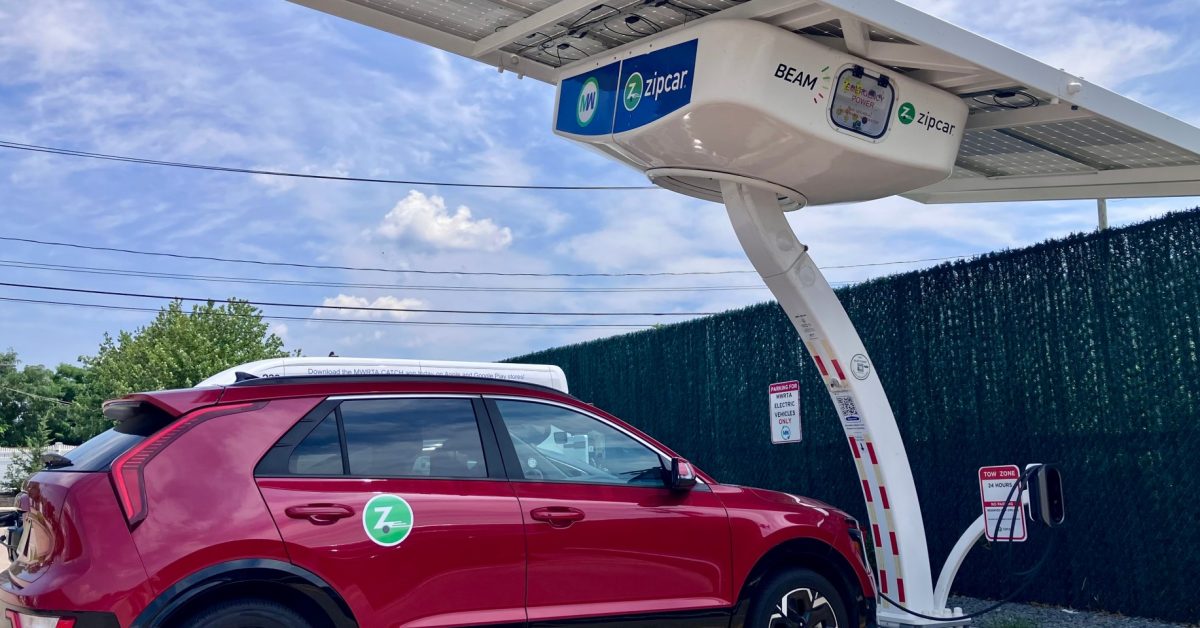
The Metropolitan Area Planning Council (MAPC) has launched CommunityEV Carshare at four locations across the Boston area — at transit authorities, housing authorities, and in downtown districts. The programme pairs Zipcar’s shared electric vehicles with Beam Global’s EV ARC solar charging systems. Each charger generates its own electricity from the sun and stores it in integrated batteries, meaning it can operate completely without trenching, electrical work, or any connection to the power grid (source).
This is significant because it removes the biggest barrier to EV charging: infrastructure delays. According to the article, a conventional charger often requires lengthy and expensive construction, but the EV ARC systems can simply be placed where they’re needed. Each unit can charge two vehicles at once and generate enough solar energy for up to 265 miles of driving per day, all on-site (source).
The timing works well because of how cars are actually used. In the US, household vehicles are parked around 95% of the time, and the median trip in Zipcar’s Boston EV fleet is just 25.5 miles (source). In other words, the cars sit parked for long stretches — exactly when the solar chargers can top them up for the next short journey.
Household vehicles are parked around 95% of the time, and the median trip in Zipcar’s Boston EV fleet is just 25.5 miles.
— US Department of Transportation, via Electrek
Why This Matters for Malaysian SMEs
Think about your own business vehicles. If you run a food delivery service, a logistics fleet, or even a team that travels to client sites, your vehicles probably follow the same pattern: busy during peak hours, then parked outside for hours at a time. That’s exactly the kind of usage that off-grid solar EV charging is designed for. Instead of waiting for Tenaga Nasional or your local building owner to upgrade transformers and run new wiring, you could install a self-contained solar canopy in your parking lot.
Malaysia gets roughly 4,000 to 5,000 Wh per square metre of solar irradiance daily — far more than Boston. While the EV ARC pilot is aimed at car sharing in underserved communities, the underlying principle applies directly to small businesses here. You could set up solar-powered charging bays for your own electric vans, or even create a shared EV pool that employees can book for business errands. This reduces your dependency on public charging stations, which are still unevenly distributed across Malaysia.
There’s also a practical lesson in how MAPC structured the pilot — they’re renting the EV ARC systems from Beam Global rather than buying them (source). For an SME, this means you don’t need a big upfront capital allocation to test a solar charging solution. Rental or leasing models let you try it in one branch or depot, measure whether it fits your operations, and scale up only if it works.
The Bigger Picture
Let’s step back from charging hardware for a moment. The real story here is about making existing assets work harder. You already own or lease vehicles that sit idle most of the day. Solar charging lets those vehicles become productive, low-emission tools without waiting for national infrastructure to catch up. This is precisely the kind of thinking that separates thriving SMEs from struggling ones — finding ways to do more with what you have.
And this connects to the wider business automation trend. Once your vehicles are electric and your chargers are solar-powered, you can integrate them into fleet management software that tracks charging status, vehicle availability, and driver behaviour automatically. The Boston pilot is testing exactly that kind of system: shared EVs, self-powered charging, and smart member reservations all working together. For Malaysian SMEs, this opens the door to automating parts of your logistics that were previously manual and disconnected.
Key Takeaways for Your Business
| Idea | How to Apply |
|---|---|
| Off-grid solar charging | Consider solar canopies with battery storage in your parking area, independent of the grid |
| Vehicle sharing | Turn idle company cars into shared pool vehicles for employee errands or deliveries |
| Rental-first approach | Lease charging or solar equipment as a pilot before committing to ownership |
| Data-driven utilisation | Track how often vehicles are parked vs. driven to align charging capacity with usage |
| Automation integration | Connect charging status and vehicle locations to your existing management software |
At AutoRunBiz, we help Malaysian SMEs streamline operations through automation. The Zipcar-Boston story reminds us that even global clean-energy trends start with a simple business question: how can we make our resources more efficient? Whether it’s solar-powered EV charging or automating your customer follow-ups, the opportunities are out there — you just need to be willing to pilot something new.
The next time you park that van after a delivery run, ask yourself: could this vehicle be charging itself right now, with free sunlight, with no grid dependency and no construction crew? In a few years, that might be the standard way Malaysian SMEs run their fleets. The question is whether you’ll be among the first to try it.
Ready to Streamline Your Operations?
Technology moves fast. Your operations should keep up. AutoRunBiz builds AI systems that run your daily workflows — from WhatsApp order capture to accounting. Book a free 15-min ops audit →