
Rivian’s Robot Factory Is a Lesson for Malaysian SMEs
When you run a small or medium business in Malaysia, a headline about an American electric vehicle maker’s CEO might feel a world away. But Rivian’s RJ Scaringe is about to stand on stage at TechCrunch Disrupt 2026 and explain a bet that touches something you deal with every day: how to keep a physical business running when labor is tight, costs are climbing, and competitors are getting faster. The way he is combining electric vehicles, humanoid robots, and autonomous systems is not science fiction — it’s a playbook for any business that makes, moves, or delivers things.
What Happened
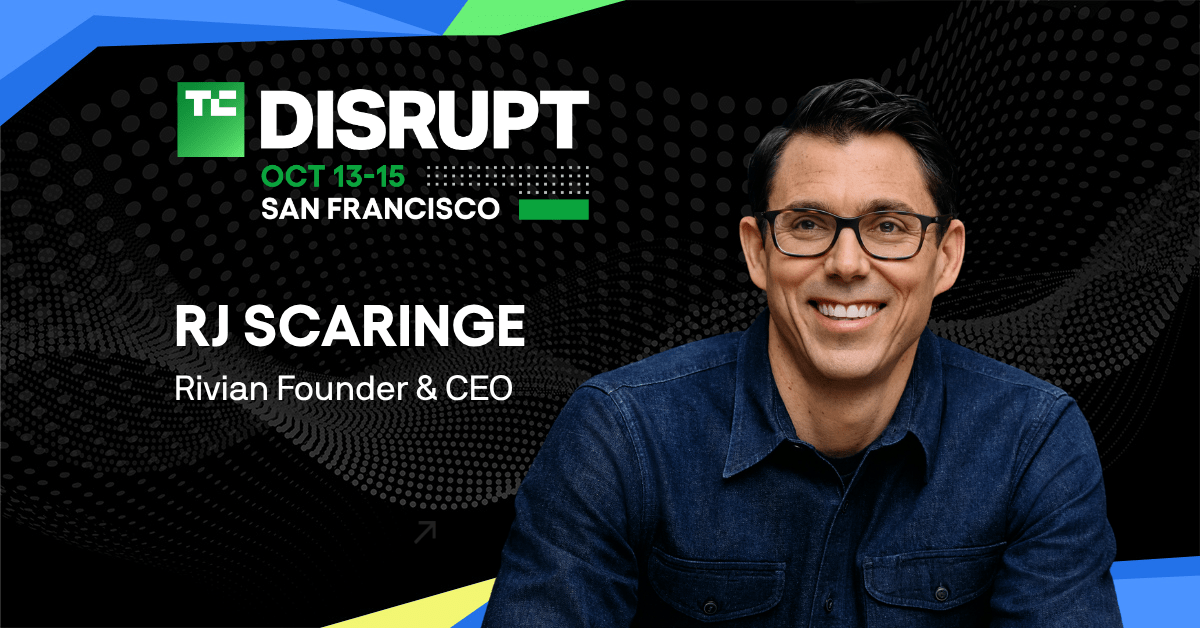
Scaringe has spent the better part of two decades proving that the intersection of AI, software, robotics, manufacturing, and transportation isn’t just survivable — he believes it’s about to become much more crowded. At Disrupt 2026, he will detail how Rivian’s investments fit together and what he’s learned about building in the physical world and then bringing AI into the fold, while many AI companies try to accomplish the inverse.
Besides pushing Rivian toward full Level 4 autonomy by 2028, Scaringe also founded Mind Robotics, a humanoid robotics company that has raised $900 million this year alone. Rivian is both a large shareholder and the launch customer. The goal: turn Rivian’s factory floor in Normal, Illinois, into a proving ground for more ingrained human and robotic coexistence on the assembly line. His reasoning is direct — he sees this as a way to address an anticipated shortage in human labor.
At the same time, Rivian recently began rolling out the R2, the roughly $58,000 SUV Scaringe is counting on to expand the company beyond its niche market. He has called it “maybe the most important thing we’ve launched to date,” amid slowing demand for costlier EVs and mounting competitive pressure, especially from lower-cost Chinese EV manufacturers.
Why This Matters for Malaysian SMEs
You might not need a humanoid robot in your shop, but you almost certainly have the same underlying problem Scaringe is solving for: people are hard to find and harder to keep. Malaysian manufacturers, logistics operators, food producers, and even retail businesses have been wrestling with labor shortages for years. The common instinct is to either throw more bodies at the problem, if you can find them, or simply accept the bottleneck. Scaringe’s approach suggests a different starting point: pick your most repetitive, physically demanding process and treat it as a proving ground for automation — not a full factory overhaul, but one well-defined area where a machine can work alongside your existing team.
There is also a competitive lesson buried in the R2 story. Scaringe is facing intense pressure from lower-cost Chinese EV manufacturers, and his response is not to cut corners but to bring his most accessible product to market while investing in technology that lowers his long-term operating costs. Malaysian SMEs face the same squeeze — cheap imports, rising expectations from customers, and thin margins. You can use automation and AI the same way: to reduce waste, speed up repetitive tasks, and deliver a more consistent experience than the competitor who is simply cheaper. The tool doesn’t have to be glamorous. A well-integrated point-of-sale system, an automated inventory tracker, or a chatbot that handles your after-hours enquiries can be your version of Rivian’s assembly-line robots.
Scaringe thinks the intersection of AI and hardware is about to become much more crowded, which means the cost of these tools will only keep coming down for businesses like yours. The companies that start experimenting now, even on a small scale, will be the ones that have already worked out the kinks before the technology becomes mainstream. You don’t need to wait for fully autonomous anything — you need to pick one process, map it, and ask where a machine could take over the most predictable part of it.
“Scaringe isn’t trying to replace his workforce overnight. He is trying to prove that humans and robots can coexist on the same factory floor — and that building physical products at scale teaches you lessons that pure software companies never learn.”
The Bigger Picture
The most striking part of Scaringe’s strategy is the inversion it represents. Many AI companies are trying to move from software into the physical world and struggling with the messy realities of hardware, supply chains, and factory floors. Rivian started in the physical world — designing, manufacturing, and delivering hardware at scale — and is now pulling AI into the fold. For a Malaysian SME, this is a reminder that you don’t need to be a tech company to benefit from automation. You already have the physical operations, the customer relationships, and the domain knowledge. What you add is the AI layer, whether that’s a smarter scheduling system, predictive maintenance on equipment, or a chatbot trained on your actual products and policies.
The labor shortage Scaringe is preparing for is not unique to the United States. As Malaysia’s workforce dynamics shift, the businesses that thrive will be the ones that treat automation as a complement to people, not a replacement. That starts with understanding what your team actually does all day, where the friction is, and which tasks are so predictable that a machine could do them without a second thought.
Key takeaways from Rivian’s approach
- Start with one proven process. Rivian is using its own factory floor as a test bed before scaling robotics further.
- Automation addresses labor shortage. Scaringe is betting on human-robot coexistence to fill an anticipated gap in human labor.
- Bring AI to your physical world. You don’t need to build software-first; apply AI to operations you already have.
- Don’t ignore cheaper competitors. The R2 is Rivian’s answer to competitive pressure — a more accessible offering backed by long-term efficiency.
- Learn by building. Physical businesses accumulate lessons that pure software companies can’t access easily.
Scaringe will be at TechCrunch Disrupt 2026 running from October 13-15 at San Francisco’s Moscone Center, alongside many other big conversations at the event. But you don’t need a plane ticket to San Francisco to act on what his strategy is telling you. The next time you walk through your own workplace — factory floor, warehouse, kitchen, or service counter — look for the task your staff dreads most. That is your assembly line. That is where you start.
Ready to Streamline Your Operations?
Technology moves fast. Your operations should keep up. AutoRunBiz builds AI systems that run your daily workflows — from WhatsApp order capture to accounting. Book a free 15-min ops audit →