
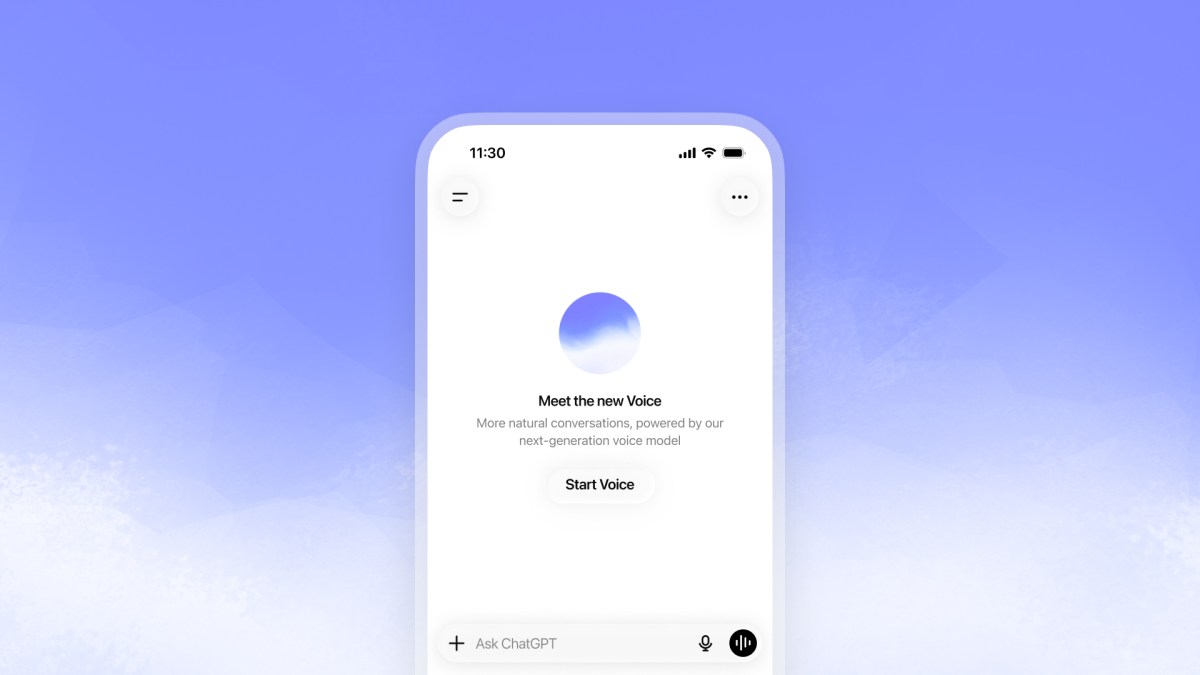
Why This Voice AI Update Should Make You Take Notice
You’re running a small business. Customer calls come in all day. Staff get tied up. Clients complain about being put on hold or repeating themselves. Now imagine a voice system that handles interruptions, stays silent when needed, and speaks naturally enough that customers don’t realise it’s AI. OpenAI just released new voice models that bring this closer to reality — and it could change how you manage customer conversations, internal briefings, even live translation for your export clients.
TL;DR: OpenAI launched GPT-Live-1 and GPT-Live-1 mini — full-duplex voice models that can speak and listen at the same time, allowing natural interruptions and long pauses. They replace ChatGPT’s Advanced Voice Mode and support live translation. This means SMEs can use voice AI for smoother customer service and internal tasks, but it still has language and accent limitations.
How “Full-Duplex” Voice Changes Your Business Calls
The big shift here is that these models don’t work like the old “press-to-talk” systems. OpenAI’s new models can listen while they speak, which means customers can interrupt without the AI cutting them off or talking over them. This feels much closer to a real human conversation — the AI can also stay silent for long stretches, absorbing context until it’s needed. For your SME, this could mean a voice agent that handles complex order changes or troubleshooting without frustrating your customers. Atty Eleti, ChatGPT Voice’s product lead, mentioned he has had 30- to 40-minute conversations with the new voice mode during walks — showing it can handle longer interactions than typical customer service calls.
“Over time, we think this will also unlock the ability to use voice as a kind of primary interface to computing, and to manage increasingly complex long-running agentic work.” — Atty Eleti, OpenAI
Where Voice AI Still Trips Up (And Why You Should Care)
Before you rush to automate everything, let’s look at the gaps. During OpenAI’s demo, the live translation feature for Hindi sounded unnatural and bookish with a heavy American accent. The company said the models are optimised for “most spoken languages” but didn’t specify which. For Malaysian businesses dealing with Bahasa Malaysia, Mandarin, or Tamil speakers, this could be a real problem if the AI struggles with local accents or mixing languages as Malaysians naturally do. The new model also sends queries to GPT-5.5 for reasoning tasks, which adds complexity — it’s not all handled in one shot.
Where it works best right now:
| Use Case | Suitability for SME | Potential Issue |
|---|---|---|
| Customer support (English) | High — natural conversation flow | Accent recognition still improving |
| Live translation for trade calls | Medium — limited language support | Unnatural tone for non-English |
| Internal briefing summaries | High — can visualise data from GPT-5.5 | Requires clear prompts |
| Long form dictation for reports | High — handles pauses and interruptions | May need editing for clarity |
The Bigger Picture: Voice as a Future Tool for Your SME
OpenAI is betting that voice will become the main way people interact with computers for complex work. Rivals like Apple and Amazon are also making their assistants more conversational, while startups like Sesame (founded by Oculus co-founder Brendan Iribe) are focusing on natural task completion. For your SME, this trend points toward a future where you can delegate phone-based tasks — from sales calls to after-service support — to voice AI that feels less robotic and more human. However, the technology is still evolving. OpenAI emphasises it’s not aiming for an AI companion, and has added safeguards for sensitive topics. The practical takeaway? Voice AI will likely integrate into your existing tools over the next year, but you’ll need to test it with your local customer base before fully relying on it.
What You Can Do Right Now
You don’t need to overhaul your entire operations. Start small: use the new voice mode in ChatGPT for internal notes, draft emails by talking, or experiment with live translation for a single client call. Pay attention to how it handles Malaysian English or mixed-language conversations. The new models are available by default to paid ChatGPT users — test them in a low-stakes setting first. As OpenAI rolls out more language optimisations, the tool will likely become more useful for your specific needs.
If you’re unsure where voice AI fits into your workflow or want a practical plan tailored for your SME, we can help.
Book a free 15-min call to see how voice AI applies to your business →