
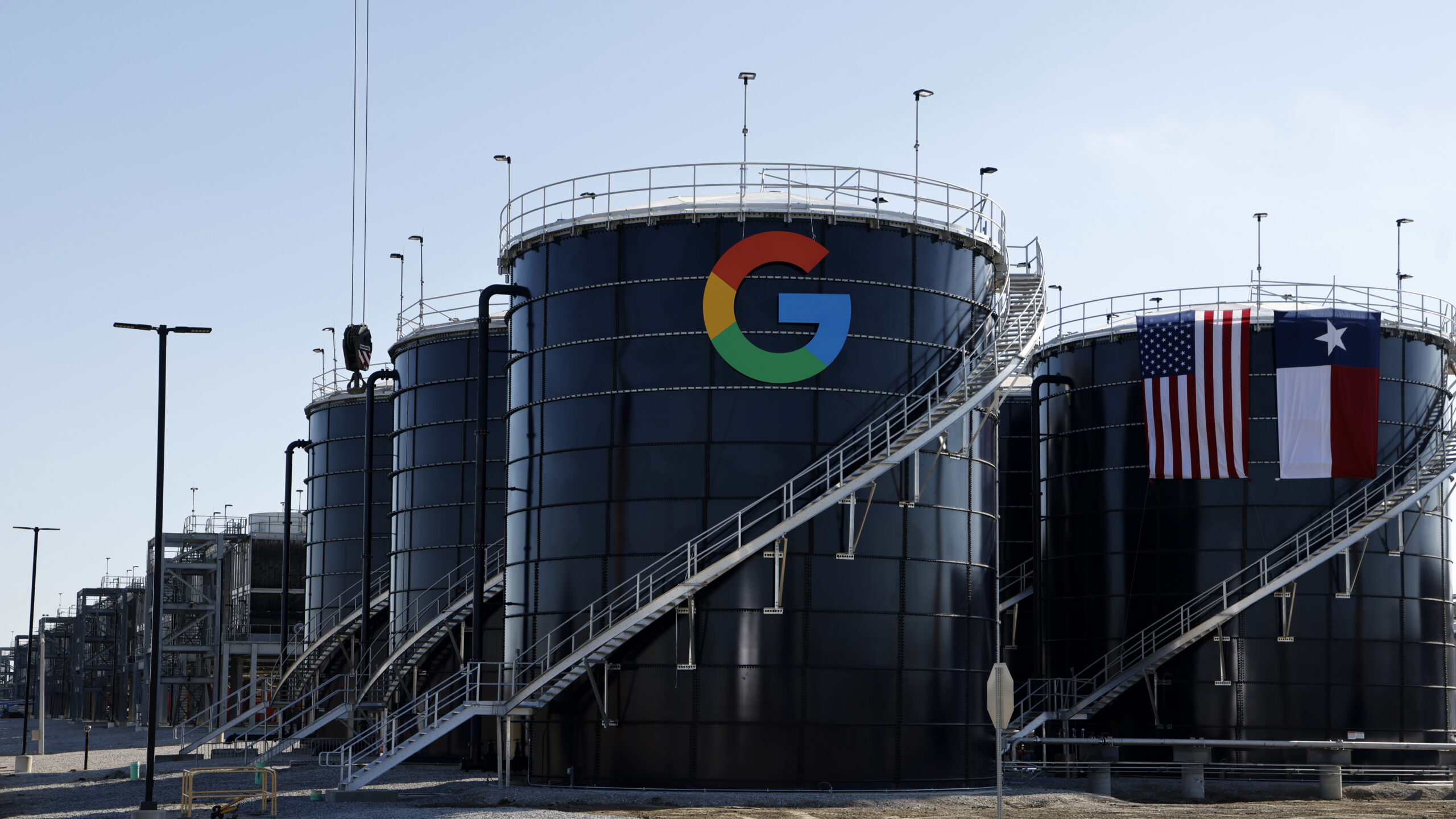
TL;DR: Google’s 2025 electricity consumption jumped 37% — its largest annual increase ever — driven entirely by AI data center expansion. Data centers consumed 42 million MWh, rivaling the entire electricity demand of New Zealand. While Google cut operational emissions 2% via clean energy purchases, supply chain emissions rose 25%. The AI boom has an energy problem the industry hasn’t solved yet.
Every time you ask ChatGPT a question, generate an image with Midjourney, or run a coding assistant, you’re using electricity. A lot of it. How much? Google’s latest sustainability report makes the scale undeniable: the company’s total electricity consumption rose by 37% in 2025 — the steepest single-year increase in Google’s history (source). The driver is unambiguous: data center expansion to power AI training, inference, and cloud services.
By the Numbers — How Big Is AI’s Energy Appetite?
Google’s latest sustainability report breaks down the energy story clearly (source):
| Metric | 2024 | 2025 | Change |
|---|---|---|---|
| Total electricity consumption | — | — | +37% |
| Data center electricity use | 30.6M MWh | 42M+ MWh | +37% |
| Electricity increase since 2019 | 250%+ | — | |
| Operational emissions change | -2% | Declining | |
| Supply chain emissions change | +25% | Rising | |
| Total ambition-based emissions | +18% | Rising | |
To put 42 million MWh in perspective: Google’s data centers alone consumed more electricity than entire countries — New Zealand, Denmark, and Nigeria each use less power annually (source).
The Decoupling That Didn’t Happen
Google has been a vocal advocate of “decoupling” — growing compute without growing emissions. And to its credit, the company managed to reduce operational emissions by 2% even as electricity use climbed 37%, thanks to massive clean energy purchases (source).
But there’s the catch. Google’s supply chain emissions — the carbon embedded in manufacturing chips, servers, and data center equipment — grew by 25% because the company’s Asia-Pacific supply chain “operates on grids that remain undersupplied with carbon-free energy” (source). The result: total “ambition-based emissions” (the metric that counts both operational and supply chain) rose 18% year-over-year.
“While the path to achieving our climate ambitions will not be linear — given our AI infrastructure buildout is currently accelerating faster than the grid is decarbonizing — we remain focused on scaling abundant and affordable clean power globally.”
— Google Sustainability Report 2025 (source)
What This Means for AI Adoption
Google is not alone in this energy trajectory. Microsoft, Amazon, and Meta are all in the same arms race. The International Energy Agency has projected that AI data center electricity consumption could double by 2030, placing unprecedented strain on grids worldwide.
For businesses adopting AI, this has three practical implications:
- Cost volatility — As energy becomes a larger share of AI inference costs, providers will pass through price increases. The era of free or absurdly cheap AI inference has a timer on it.
- Regulatory risk — Expect carbon reporting requirements to extend to AI usage. Your AI-generated marketing copy may soon come with a carbon line item.
- Infrastructure bottlenecks — If Google — with its resources — can’t fully decarbonise its AI buildout, smaller players won’t either. This is an industry-level problem, not a single-company one.
The Bigger Picture
The uncomfortable truth is that AI’s environmental cost is a feature of the technology, not a bug that will be engineered away. Model efficiency is improving (better training algorithms, lower-precision compute), but the Jevons paradox applies: as AI gets cheaper and more efficient, we use more of it, not less. Total energy consumption grows even as per-task energy shrinks.
The timeless lesson: every technology revolution has an infrastructure cost that becomes visible only at scale. For AI, that cost is energy. Companies that factor energy resilience into their AI strategy — choosing efficient models, optimising inference frequency, and monitoring carbon exposure — will be better positioned than those that treat it as someone else’s problem.
Is Your AI Usage Energy-Efficient?
Most businesses don’t think about the energy cost of their AI tools — but they will, as reporting mandates expand and energy prices climb. Evaluating which tasks genuinely need large models versus smaller, more efficient alternatives is both an environmental and financial decision.
Book a free 15-minute call to optimise your AI stack for cost and carbon efficiency → https://autorunbiz.com