
Why Your Business Vehicle Decision Is Becoming More Strategic
If you run a Malaysian SME, a vehicle is rarely just a vehicle. It may carry your team to customer meetings, transport equipment between branches, support site visits, or represent your company when clients see it arrive. A poor choice can create daily inconvenience, while a well-matched vehicle can make travelling, scheduling and customer service more predictable.
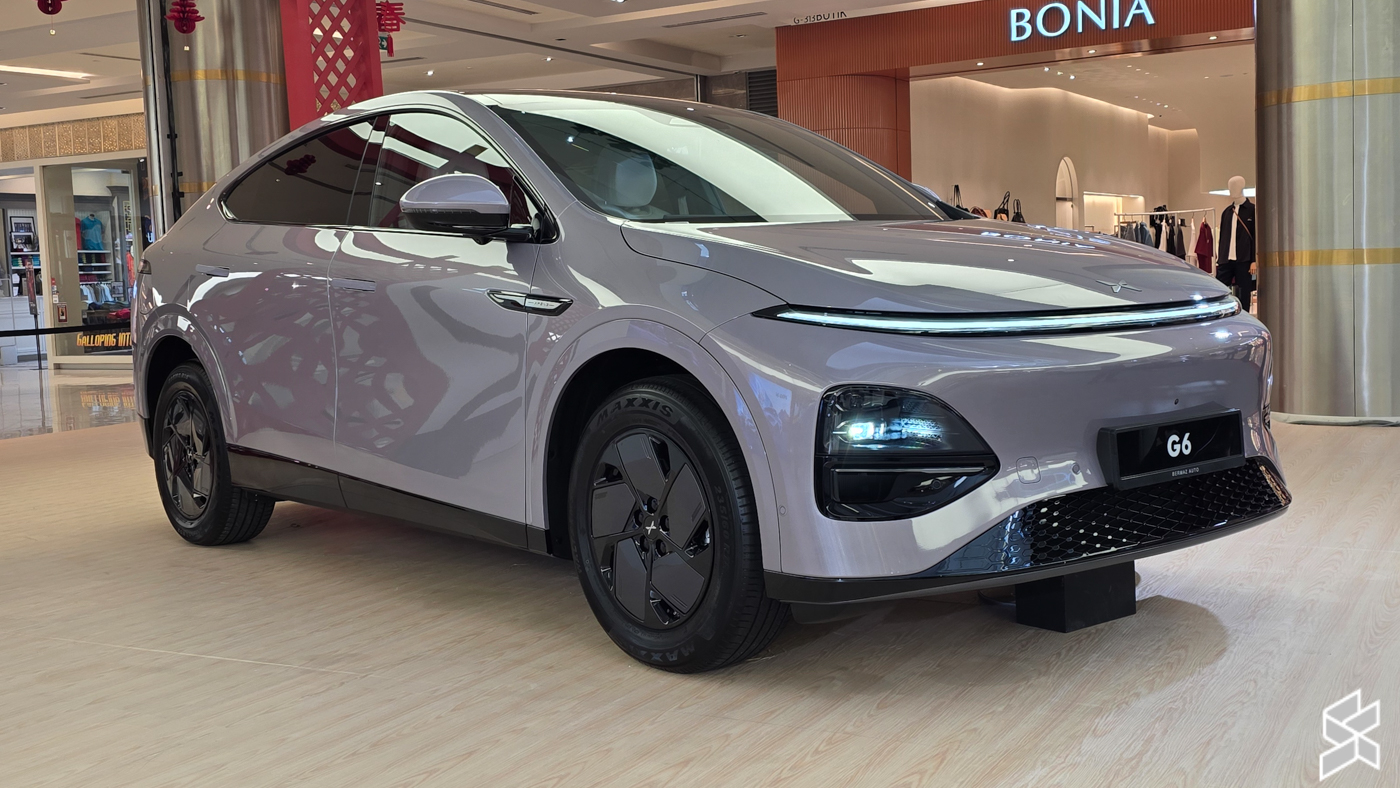
The XPeng G6 is receiving attention because its locally assembled CKD version is heading to customers with specifications that are described as identical to the earlier completely built-up version. The reported starting price is RM159,000, according to SoyaCincau. For an SME owner, the more useful question is not whether the vehicle is fashionable. It is whether an electric SUV can fit your daily operations without creating new problems.
TL;DR: The CKD XPeng G6 gives Malaysian SMEs another vehicle option for executive travel, customer visits and selected field operations. Before deciding, assess charging access, daily distance, staff usage, downtime and the need for specialised cargo space.
What This Means
CKD means completely knocked down. Instead of importing the vehicle as a fully assembled unit, the vehicle is assembled locally from major components. In this case, the important point for buyers is that the reported CKD XPeng G6 retains the same specifications as the CBU, or completely built-up, version.
That matters because business buyers want consistency. If your company has already reviewed the vehicle, changing specifications between batches can affect staff training, internal policies, vehicle booking procedures and expectations about charging or performance. A similar specification reduces that uncertainty when you compare the CKD vehicle with the earlier model.
The XPeng G6 is an electric SUV, so it operates differently from a conventional petrol vehicle. You need to think about where it will charge, when it will charge and who will be responsible for checking its battery level. These are operational questions, not merely technical details.
| Business question | What you should check | Why it matters |
|---|---|---|
| Where will the vehicle charge? | Office, home, customer sites or public locations | Determines whether daily trips can be planned reliably |
| Who will use it? | Owner, sales team, managers or field staff | Defines booking rules and charging responsibility |
| What does it carry? | People, samples, tools or light equipment | Shows whether an SUV is suitable for your work |
| How predictable are routes? | Fixed local journeys or changing interstate travel | Helps you judge whether charging interruptions are manageable |
How This Applies to Malaysian SMEs
For sales and consulting businesses, the XPeng G6 may suit a role focused on customer-facing travel. If you regularly visit offices, showrooms, hotels, construction sites or commercial premises, a comfortable SUV can support longer appointments and make travelling easier for your team. The vehicle can be assigned to a sales manager, business owner or client-facing executive, provided your routes and charging arrangements are properly planned.
Consider creating a simple travel record before making a decision. For four weeks, note each journey’s destination, distance, parking location and expected return time. You do not need complicated software. A shared spreadsheet is enough. This will reveal whether your normal work involves predictable daily driving or frequent last-minute trips. An electric vehicle is easier to manage when your schedule allows charging during planned parking periods.
For service and installation companies, suitability depends heavily on what your staff carry. An SUV may work for laptops, documents, testing devices, compact tools and product samples. It may be less suitable for bulky machinery, long pipes, heavy stock or messy materials. Measure your most common equipment before deciding. Do not assume that a large-looking vehicle automatically provides the cargo arrangement your team needs.
You should also separate passenger use from delivery use. If the vehicle is mainly for transporting people to customer sites, the G6 may be assessed differently from a van or small commercial vehicle. If technicians need to load and unload equipment several times each day, access height, boot shape and storage organisation may matter more than appearance or driving comfort.
For professional firms and growing office-based companies, the vehicle may be considered as a shared company car. Architects, accountants, recruitment firms, property agencies and technology consultancies often need transport for site visits, client meetings and branch coordination. In this situation, the key requirement is a clear booking and charging process.
Assign one person to monitor the booking calendar and vehicle condition. Require drivers to record the battery level when returning the vehicle, remove personal items and report warning messages immediately. This simple discipline prevents the next user from discovering that the vehicle is not ready for an important meeting.
For businesses outside major urban areas, route planning deserves extra attention. Your team may travel between towns, industrial areas and customer sites where charging access is less convenient. Before committing, map your most common routes and identify realistic charging stops. Check whether parking rules, site access and operating hours fit your schedule. Do not rely solely on the assumption that a charger will always be available when you need it.
Practical Takeaways for Your Business
- Map your real journeys. Review at least four weeks of business travel, including short local trips and longer customer visits.
- Identify the primary role. Decide whether the vehicle is for management travel, sales visits, staff transport or equipment movement.
- Confirm charging responsibility. Put one person in charge of checking charging status and recording any issues.
- Inspect your equipment. Measure the largest items your staff carry and compare them with the vehicle’s usable storage space.
- Create a booking policy. Include driver eligibility, return battery expectations, cleanliness and incident reporting.
- Plan for urgent trips. Keep a backup arrangement for unexpected interstate travel, last-minute customer calls or charging disruptions.
- Train employees briefly. Cover safe charging, vehicle handover, dashboard warnings and what to do after an accident.
- Compare business fit, not badges. Assess the G6 against your current vehicle’s workload, reliability and staff requirements.
- Review the warranty and service process. Ask who handles maintenance, where service is available and how downtime is managed.
- Separate personal and business use. Keep a straightforward usage record if the vehicle is shared between company duties and private driving.
The right electric vehicle for an SME is not the one with the most impressive specification. It is the one your team can charge, operate and schedule without disrupting customer work.
A Simple Decision Checklist
Before you proceed, ask yourself these questions:
- Can the vehicle complete your most common workday routes with a sensible charging plan?
- Is there a dependable place to charge overnight or during working hours?
- Will more than one employee use it, and can they follow a shared process?
- Does the interior suit passengers, samples, tools or equipment?
- What happens if the vehicle needs attention before an important appointment?
- Does your team have enough time to learn a different driving and charging routine?
If you cannot answer these questions clearly, delay the decision and gather more operational information. A short route audit is more useful than relying on assumptions.
The Bigger Picture
The CKD XPeng G6 signals that electric vehicles are becoming a more visible option for Malaysian business fleets. The reported local assembly and unchanged specifications also make the model relevant to buyers who want a clearer comparison between imported and locally assembled versions, as reported by SoyaCincau.
For SMEs, the long-term change is not simply about replacing petrol vehicles with electric ones. It is about managing mobility as a business process. Vehicle booking, route planning, driver behaviour, charging schedules and maintenance records will increasingly become connected to how efficiently your company serves customers.
You do not need to electrify every vehicle at once. A practical approach may be to start with one predictable-use vehicle, measure its suitability and then decide whether the same operating model works for other staff. This gives you evidence from your own business rather than copying another company’s fleet decision.
The XPeng G6 deserves consideration if your business needs a modern passenger vehicle for planned travel and you can support a disciplined charging routine. If your work depends on heavy loads, constant long-distance driving or unpredictable dispatches, a different vehicle type may still be more appropriate. The strongest decision is the one that matches your daily work, not the one that sounds most advanced.
Ready to Streamline Your Operations?
Your business should run itself. AutoRunBiz deploys AI agents to automate your daily operations — WhatsApp orders, invoicing, customer follow-ups, and accounting. Book a free 15-min ops audit to see where automation fits your business →