
Why EV Charging Matters to Your Business
If you run a Malaysian SME, your attention is probably on customers, staff schedules, stock, deliveries, and daily operations—not on where drivers charge their vehicles. Yet EV charging is becoming part of the operating environment around offices, shops, warehouses, hotels, restaurants, and service businesses.
A customer who drives an electric vehicle may spend more time at a location while charging. A delivery team may need a reliable charging stop between jobs. Your employees may also expect practical workplace facilities as more company and personal vehicles move away from petrol and diesel. The question is not whether your business should buy chargers immediately. The more useful question is whether you understand how charging infrastructure could affect your location, customer experience, and fleet planning.
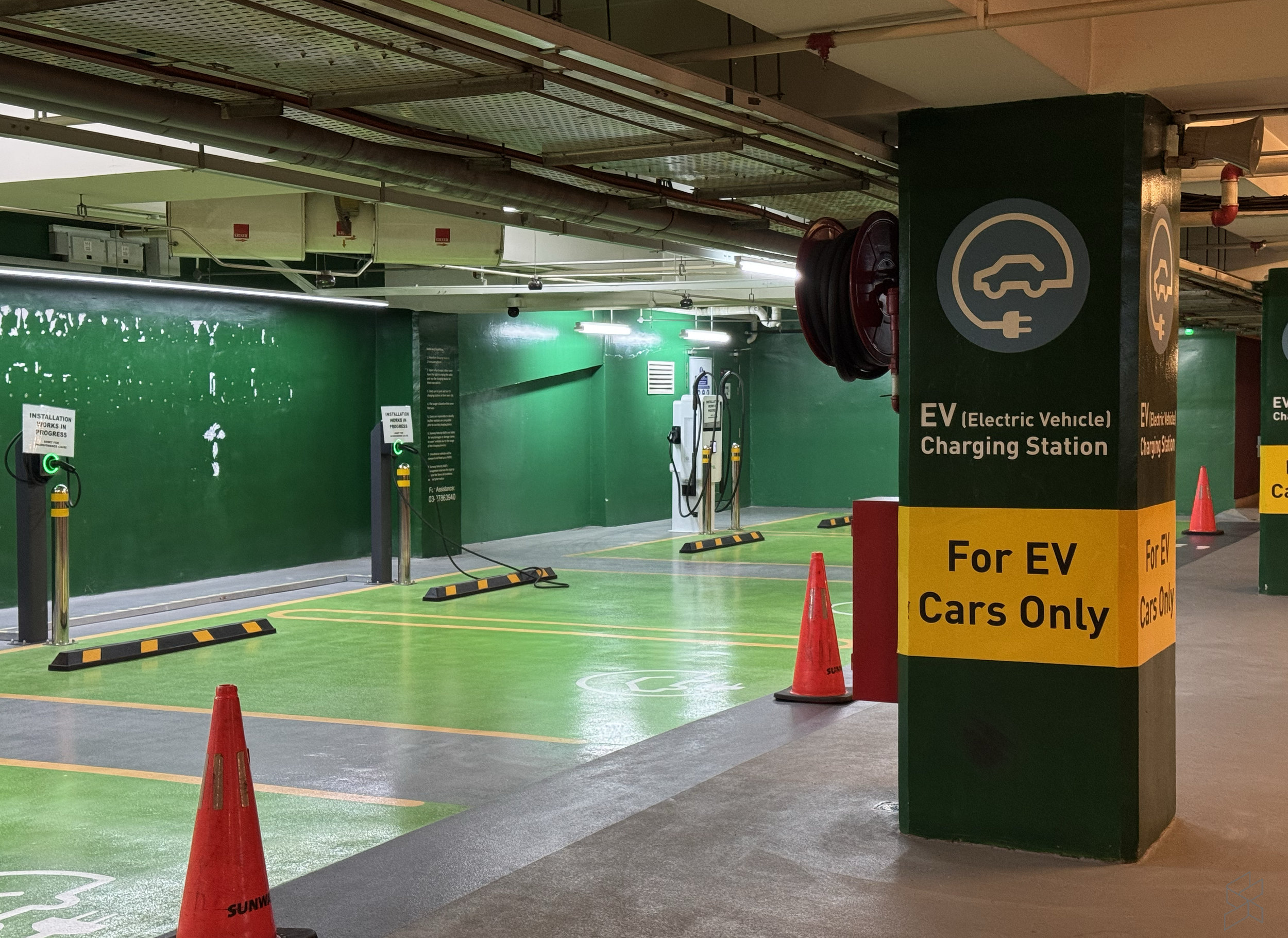
TL;DR: DC Handal has activated six EV charge points at Sunway Velocity Mall, showing how charging is becoming part of everyday commercial destinations. For your SME, the lesson is to watch customer dwell time, fleet needs, site capacity, and digital operations before deciding whether EV charging belongs in your business plan.
The reported Sunway Velocity Mall installation involved six charge points operated by DC Handal according to SoyaCincau’s report. Rather than viewing this as a technology announcement that only concerns large property owners, you can treat it as a useful signal about how Malaysian businesses may need to plan their premises and operations.
What This Means
There are two common types of EV charging. AC charging is generally suited to longer stays, such as overnight parking, office hours, hotel stays, or a meal lasting several hours. DC charging is designed for faster charging, making it more relevant to drivers who are stopping during a journey or need to continue working quickly.
A shopping mall is a natural location for charging because the driver can use the waiting time to shop, eat, attend appointments, or handle errands. The charger therefore does more than supply electricity. It connects a vehicle’s charging period with the customer’s visit.
For an SME, this creates several operational questions. Do customers already spend enough time at your premises for charging to make sense? Does your business operate a delivery fleet? Do employees park for long periods? Is your building’s electrical supply suitable? Can your parking arrangement support chargers without creating confusion or blocking normal access?
Key insight: EV charging is not only a vehicle facility. It is also a question of customer dwell time, site management, fleet scheduling, and service design.
How This Applies to Malaysian SMEs
1. Retailers and food businesses can connect charging with longer visits. If you operate a café, restaurant, grocery shop, clinic, salon, or showroom, customers may already spend between 30 minutes and several hours at your premises. A suitable charging point could make your location more useful to EV drivers, particularly when nearby alternatives are limited. You do not need to assume that every visitor will use it. Instead, review your existing parking patterns, busiest periods, and customer complaints about waiting or access.
For example, a café near a residential area may attract drivers who want to charge while having breakfast. A furniture showroom may suit slower AC charging because customers browse for a longer period. A clinic or wellness centre could serve visitors who remain on-site for scheduled appointments. The right approach depends on how long your customers stay, not simply on whether EVs are popular in the news.
2. Delivery and field-service businesses should include charging in route planning. If your SME operates vans, cars, or motorcycles for deliveries, installations, maintenance visits, or sales calls, vehicle energy planning affects punctuality. A petrol vehicle can often be refuelled quickly at many locations, while EV charging requires more deliberate scheduling. DC charging locations may help during a working day, but availability, traffic, queueing, and charger status still need to be considered.
You can begin with a simple operating record. Note each vehicle’s daily route, parking duration, return time, and current energy requirements. Then identify whether charging can happen at your premises, at a driver’s home, at a customer location, or during planned breaks. This information is more useful than making a fleet decision based only on vehicle range claims.
3. Offices and mixed-use premises can plan for employees and visitors. If your business operates from a shoplot, office building, warehouse, or shared commercial complex, charging may become part of workplace expectations. Employees who drive EVs may ask about charging access, while visitors may prefer a site where they can remain productive while their vehicle charges.
Before installing anything, check who controls the parking bays, whether the landlord permits electrical work, and how charging sessions would be managed. You should also define simple rules: which bays are charging bays, how long vehicles may remain after charging, who reports faults, and how access is prioritised. Clear operating rules prevent a useful facility from becoming a source of daily arguments.
4. Property-based SMEs should treat charging as part of site planning. If you manage a small hotel, serviced apartment, industrial building, private car park, or commercial centre, EV chargers may influence how visitors judge the convenience of your location. The charger itself is only one part of the project. You also need visible signage, safe cable routing, lighting, drainage, bay markings, and a process for handling equipment faults.
Malaysia’s climate makes practical installation details important. Heavy rain, heat, and frequent vehicle movement require proper equipment placement and maintenance. You should ask qualified contractors about electrical protection, permits, load capacity, emergency isolation, and ongoing inspection. Do not treat the installation as a plug-and-play office improvement.
A Simple Way to Assess Your Opportunity
| Area to review | Questions for your business | Useful action |
|---|---|---|
| Customer dwell time | How long do customers usually stay? | Match the site with AC or faster charging needs. |
| Fleet activity | Which vehicles return to your premises each day? | Map routes, parking time, and charging windows. |
| Electrical capacity | Can the building support additional equipment? | Request a professional electrical assessment. |
| Parking control | Who owns and manages the bays? | Confirm permission and write usage rules. |
| Customer experience | Can drivers find and use the charger easily? | Plan signage, access instructions, and fault reporting. |
The six charge points reported at Sunway Velocity Mall are a useful example of a larger commercial site coordinating multiple charging bays as described by SoyaCincau. Your own site may require only one or two points, or it may not be suitable yet. The important part is assessing your operating pattern instead of copying another property’s setup.
Practical Takeaways
- Track demand first: Ask customers and employees whether EV charging would be useful, and record the feedback rather than relying on assumptions.
- Review parking behaviour: Identify which bays are occupied for short visits, long stays, loading, and staff parking.
- Map your fleet: List daily routes, vehicle return times, and the places where charging could happen without disrupting work.
- Check building authority: Speak with your landlord, property manager, building committee, or local technical adviser before planning installation.
- Assess electrical readiness: Obtain a qualified assessment of supply capacity, protection systems, cabling, and equipment location.
- Plan charger management: Decide how users access the charger, how faults are reported, and how vehicles move after charging.
- Use clear signs: Mark the bays, explain the basic process, and keep charging areas free from unrelated parking.
- Connect data to operations: Review charger usage, downtime, peak periods, and repeat users so you can improve the facility.
- Start with a pilot: Test one defined location or a small number of fleet vehicles before expanding your operating process.
Where Business Automation Helps
Even a small charging setup creates information that someone must manage. You may need to monitor usage, record equipment faults, respond to customer questions, reconcile access records, and notify the person responsible for maintenance. If these tasks remain in scattered WhatsApp messages and spreadsheets, problems can be missed.
You can create a basic workflow that sends a fault report to the assigned staff member, records the time of the report, and escalates unresolved issues. A form can collect the charger number, location, error message, photo, and contact details. A dashboard can show which points are available, under maintenance, or awaiting inspection. These processes do not require a large technical department; they require clear ownership and consistent records.
For a fleet, automation can connect vehicle schedules with charging reminders. A driver who returns late can be flagged for the next day’s route review. A charger that repeatedly reports faults can be added to a maintenance list. The aim is simple: reduce the chance that an operational issue depends on one staff member remembering it.
The Bigger Picture
The Sunway Velocity Mall installation indicates how EV charging is being placed within destinations where people already shop, work, eat, and spend time reported by SoyaCincau. As more commercial locations add chargers, convenience may influence where customers choose to visit and where companies choose to operate fleets.
You do not need to make a rushed investment decision. However, ignoring the subject completely could leave you reacting later, when electrical work, parking changes, fleet schedules, or customer expectations are harder to adjust. A practical first step is to collect evidence: vehicle types, customer dwell time, parking demand, route patterns, and site limitations.
For Malaysian SMEs, the strongest response is usually not “install chargers everywhere.” It is to understand where charging fits naturally into your business. If your customers stay longer, your vehicles return regularly, or your premises already function as a destination, EV charging may become a useful operational service. If not, monitoring demand and preparing your site may be the smarter move for now.
Your next step: spend one week documenting parking use, fleet movements, and customer questions related to EVs. That small exercise can give you a clearer basis for deciding whether charging should be part of your business operations.
Ready to Streamline Your Operations?
Your business should run itself. AutoRunBiz deploys AI agents to automate your daily operations — WhatsApp orders, invoicing, customer follow-ups, and accounting. Book a free 15-min ops audit to see where automation fits your business →