
Why the GPU Cloud Race Matters to Your Business
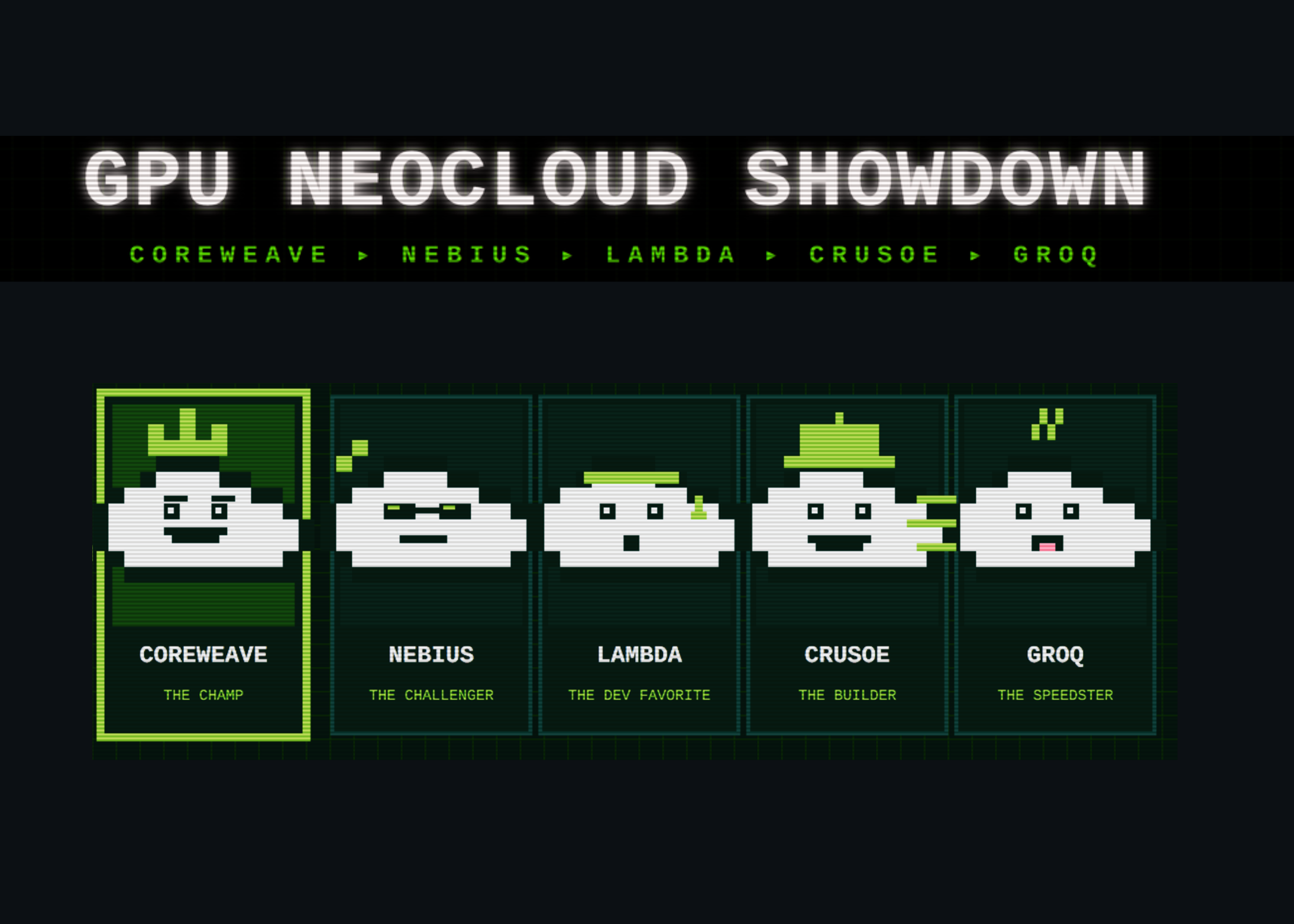
The global race to build AI infrastructure is moving from software headlines to practical business decisions. Companies such as CoreWeave, Nebius, Lambda, Crusoe and Groq are expanding specialised cloud platforms designed for AI training and inference. For a Malaysian SME, this matters because the way you access AI computing can affect how quickly you launch services, automate operations and serve customers.
You probably do not need to buy a data centre or operate a rack of high-end GPUs. However, you may soon need more computing power for customer-service assistants, document processing, product recommendations, image generation, forecasting or internal analytics. Understanding the different cloud models can help you avoid choosing a provider based only on a headline rate or the newest chip.
What Happened in the GPU Neocloud Market?
A recent comparison by MarkTechPost shows that “neocloud” now covers several very different businesses. CoreWeave and Nebius are public companies that report financial results. Lambda and Crusoe remain private companies with reported plans or expectations around future public listings. Groq focuses on inference using its own Language Processing Unit architecture, while also planning to add NVIDIA GPU capacity after licensing its technology to NVIDIA in December 2025.
The providers also differ in hardware, contracts and availability. The source comparison reports that CoreWeave is the only Platinum-rated GPU cloud in SemiAnalysis ClusterMAX 2.0, while Nebius, Crusoe and Lambda received different ratings. Nebius is listed as the only provider in the comparison publishing B300 on-demand pricing. Lambda publishes a B200 rate of $6.69 per GPU-hour, while Crusoe is identified as the only provider in the group with AMD MI300X and MI355X hardware on its rate card. These figures are published by the source and may change, so they should be treated as market signals rather than guaranteed quotations.
For a Malaysian SME, the key question is not “Which company has the biggest AI cluster?” It is “Which provider gives you reliable access, suitable performance and a contract that matches your workload?”
Key Differences at a Glance
| Provider | What stands out | Reported infrastructure signal | Potential SME relevance |
|---|---|---|---|
| CoreWeave | Premium GPU cloud and Platinum ClusterMAX rating | 1.5 GW active power and more than 4.2 GW contracted across 51 data centres, according to the source | Useful for demanding, predictable AI workloads |
| Nebius | Broad published pricing, including B300 availability | AI cloud annualised run-rate revenue of $3.0 billion reported for Q2 2026 | Useful when comparing newer GPU options and transparent rates |
| Lambda | Published B200 on-demand rate of $6.69 per GPU-hour | Multi-year Microsoft agreement covering tens of thousands of NVIDIA GPUs | Useful for teams testing high-performance GPU workloads |
| Crusoe | AMD and NVIDIA options, plus large infrastructure campuses | 4.9 GW contracted and more than 40 GW in development pipeline, according to the source | Useful when hardware flexibility and longer commitments matter |
| Groq | Specialised inference through GroqCloud | 13 data centres and 54 MW reported, with a target above 200 MW in 2027 | Useful for fast, repeated model responses rather than model training |
Why This Matters for Malaysian SMEs
Many Malaysian businesses do not need to train a large foundation model. A local retailer may need an assistant that answers questions about delivery areas, product availability and returns. A logistics company may want to classify delivery documents and flag exceptions. An accounting practice may need to extract information from invoices, while a manufacturer may use computer vision to identify defects. These are often inference workloads: the model has already been trained, and your business sends requests to receive answers or predictions.
That distinction is important. A provider specialising in fast inference may suit a customer-facing chatbot better than a platform designed mainly for long training runs. Groq’s focus on its LPU architecture is an example of this difference. Meanwhile, a company developing a custom vision model or processing large datasets may need flexible access to NVIDIA or AMD GPUs. The source identifies Crusoe as offering AMD MI300X and MI355X alongside other infrastructure, which could be relevant if your technical team wants to compare architectures rather than automatically selecting NVIDIA.
Location and data handling also deserve attention. You may serve customers in Kuala Lumpur, Johor Bahru, Penang, Sabah or Sarawak, but your cloud workload could run in another country. That can affect response time, data transfer and compliance responsibilities. Before uploading customer records, identity documents or financial information, check your obligations under Malaysia’s Personal Data Protection Act 2010 and obtain professional advice where necessary.
Do not assume that the lowest published GPU rate produces the lowest operating cost. Your actual result may depend on utilisation, storage, network transfer, idle capacity, engineering time and contract restrictions. The source reports that some providers publish discounts for reserved commitments, while others use sales-quoted pricing. If your workload runs only occasionally, flexible access may be more valuable than a discount tied to a long commitment.
How You Can Evaluate a GPU Cloud Provider
Start with the workload, not the brand. Record how many requests you expect, the model size, acceptable response time, operating hours and sensitivity of the data. Separate experiments from production. A weekend prototype and a 24-hour customer service system have very different infrastructure requirements.
- For chatbot and API workloads: measure response speed, concurrency and reliability.
- For document automation: test extraction accuracy on real Malaysian documents, including mixed languages and local formats.
- For image or video analysis: compare processing time, memory capacity and batch performance.
- For model training: examine GPU interconnection, storage throughput and the provider’s ability to reserve a cluster.
- For sensitive information: confirm data location, retention, access controls and deletion procedures.
- For production: ask about service-level commitments, support escalation, monitoring and exit procedures.
You should also request a small technical proof of concept. Use the same model, prompts, dataset and traffic pattern on two or three providers. Record latency, failed requests, output quality and engineering effort. A provider with a slightly higher listed rate may be a better business choice if it reduces downtime or requires less technical maintenance.
The Bigger Picture
The figures in the comparison show that AI infrastructure is becoming an industrial-scale business. CoreWeave reported Q2 2026 revenue of $2.575 billion, up 112% year over year, while Nebius reported group revenue of $582.3 million and AI cloud annualised run-rate revenue of $3.0 billion, according to the source article. Crusoe reported 4.9 GW of contracted AI infrastructure, and Groq reported plans to grow from 54 MW to more than 200 MW in 2027. These numbers indicate that the cloud market is being reshaped around AI-specific capacity, not just traditional virtual machines.
For you, this means AI access may become more specialised. Instead of selecting one general-purpose cloud for every task, your business may use one platform for databases, another for GPU-intensive processing and an inference API for customer-facing applications. That can improve flexibility, but it can also create integration, security and monitoring challenges.
The practical response is to build a measured AI infrastructure plan. Begin with one process that has a clear business outcome, such as reducing manual document entry or responding to routine enquiries. Keep customer data protected, monitor usage and document the results. When the process proves useful, you can decide whether to remain with an API, move to a dedicated GPU instance or negotiate a longer-term arrangement.
The GPU neocloud race is not only a story about billion-dollar infrastructure companies. It is a reminder that your AI strategy depends on the right computing model. By matching the provider to your workload, testing before committing and checking Malaysian data responsibilities, you can adopt advanced AI without treating every new chip announcement as an immediate business requirement.
Ready to Streamline Your Operations?
Technology moves fast. Your operations should keep up. AutoRunBiz builds AI systems that run your daily workflows — from WhatsApp order capture to accounting. Book a free 15-min ops audit →