
Google’s New Preferred Sources Button Could Change How Customers Find You
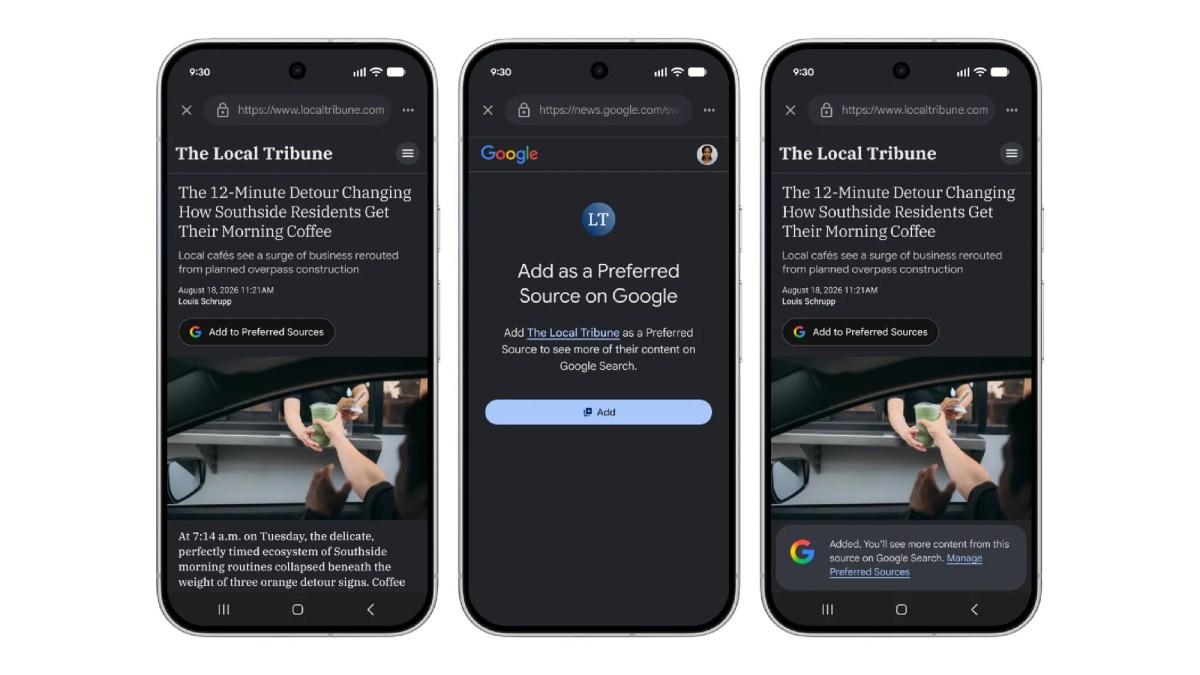
If your Malaysian SME depends on Google Search, social media, or online content to attract customers, a new Google feature deserves your attention. Google is giving publishers a button that lets readers mark a website as a “favorite source”. Those preferred sources may then receive greater visibility across Google Search, Discover, Google News, and Google’s AI-powered search experiences.
This matters because customers are increasingly asking AI tools for recommendations instead of clicking through a long list of websites. If your business publishes useful guides, product information, service pages, or local updates, fewer people may visit your website unless they already recognise and trust your brand. Google’s new feature points towards a future where trust, repeat attention, and direct customer preference influence visibility alongside traditional search ranking.
What Happened
According to TechCrunch, Google is allowing online publishers to embed an interactive “Preferred Sources” button on their own websites. Readers can use the button to indicate that they want to see the publisher highlighted more often across Google Search, Discover, and Google News.
The feature follows Google’s rollout of Preferred Sources in May for AI experiences such as AI Mode and AI Overviews. It was also previously available in Top Stories. Google said that people across the web had already selected more than 345,000 unique sources by the time of the May launch, according to the same TechCrunch report.
Google’s earlier studies found that people were twice as likely to click through to a preferred source when it appeared in results, as reported by TechCrunch. Google is also adding natural-language controls to Discover, allowing users to tell the app which topics they want to see more or less of. Android users will also be able to customise audio daily briefings in Google News, according to the report.
For a small business, the goal is no longer only to appear in search. You also need customers to recognise your business as a source they want to follow.
Why This Matters for Malaysian SMEs
Malaysian SMEs often compete with larger brands that have bigger marketing teams, stronger domain authority, and more content. A neighbourhood air-conditioning service in Shah Alam, a halal bakery in Johor Bahru, or a bookkeeping firm in Penang may not win every broad search for “best service provider Malaysia”. However, they can become the trusted source for specific local questions and customer needs.
Imagine a customer searching for advice about preparing a Malaysian home for the monsoon season. An air-conditioning company that publishes practical maintenance guidance, explains common problems, and provides clear service information may become more memorable than a company that only displays a sales page. If that customer later marks the website as a preferred source, the business has created an additional trust signal that may support future visibility.
The same principle applies to other sectors. A restaurant can publish useful information about catering for office events, halal food preparation, or menu planning. A tuition centre can share revision checklists and explain changes to learning requirements. A logistics company can provide guidance on packaging fragile goods for delivery within Malaysia. A professional services firm can explain common compliance tasks in plain language.
Your content should answer real customer questions before they are ready to contact you. This creates several useful touchpoints: the customer discovers your website, learns from it, remembers your brand, and may choose to follow or prefer it. Google’s feature does not guarantee visibility, but it reinforces the value of being consistently useful.
Practical Actions for Your Business
| Action | Why it helps | Example for a Malaysian SME |
|---|---|---|
| Publish local, practical answers | Builds relevance around real customer searches | “How often should a shoplot air-conditioner be serviced?” |
| Explain your expertise clearly | Helps visitors understand why they should trust you | Show qualifications, experience, process, and service areas |
| Keep business information updated | Reduces confusion when customers are ready to contact you | Maintain current operating hours, WhatsApp number, address, and services |
| Invite repeat visitors appropriately | Encourages customers to stay connected with useful updates | Offer an email update or follow-up guide after an enquiry |
| Measure quality, not only visits | Shows whether content supports enquiries and repeat interest | Track calls, form submissions, WhatsApp enquiries, and returning visitors |
How to Prepare Your Website
Start by reviewing your most important customer journeys. Can a visitor quickly understand what you offer, where you operate, and how to contact you? Your website should make these details easy to find on mobile, since many Malaysian customers browse through their phones.
Next, identify ten questions your customers ask repeatedly. These could involve delivery areas, appointment preparation, product suitability, warranty coverage, documentation, or service timelines. Turn each question into a concise page or article. Use Malaysian examples where relevant, including local terms, common business situations, and service locations.
Do not treat every article as an advertisement. A useful guide should still help a reader even if they are not ready to buy. At the end, explain how your business can assist and provide a clear next step. This approach makes your website more useful to people and easier for search systems to understand.
You should also strengthen your business identity. Use the same company name, address, phone number, and service descriptions across your website, Google Business Profile, social media pages, and directory listings. Clear and consistent information makes it easier for customers and search platforms to connect your content with your actual business.
The Bigger Picture
Google’s Preferred Sources feature is part of a wider shift in how people discover information. Search is becoming more personalised, while AI-generated summaries can answer questions without sending users to every website mentioned. Social platforms are also giving users more control over recommended content, as reported by TechCrunch.
For Malaysian SMEs, this means relying on one channel is becoming riskier. A business should not depend entirely on search rankings, a social media algorithm, or paid campaigns. Build several ways for customers to recognise and reach you: a helpful website, an accurate business profile, a permission-based contact list, strong reviews, and consistent communication.
Automation can help you maintain this system without adding unnecessary manual work. You can organise frequently asked questions, schedule content reviews, route website enquiries to the right staff member, and send follow-ups after a customer request. The important point is to automate consistency, not replace the knowledge and judgement that make your business trustworthy.
Google’s new button is a small interface change, but its message is significant: customers may have more influence over which businesses they see. If you want your SME to remain visible, give people a reason to remember, trust, and choose your business as a source of useful information.
Ready to Streamline Your Operations?
Technology moves fast. Your operations should keep up. AutoRunBiz builds AI systems that run your daily workflows — from WhatsApp order capture to accounting. Book a free 15-min ops audit →