
Why the right evidence matters when decisions affect people
As a Malaysian SME owner, you make decisions with incomplete information every day. A customer gives one version of an incident, an employee gives another, and your records show something else. When pressure is high, it is tempting to accept the most emotional or convenient explanation and move on.
That approach can create bigger problems. A workplace complaint, customer dispute, safety incident or suspected misconduct needs evidence that relates directly to the question you are trying to answer. Information may be genuine but still unsuitable for that specific decision.
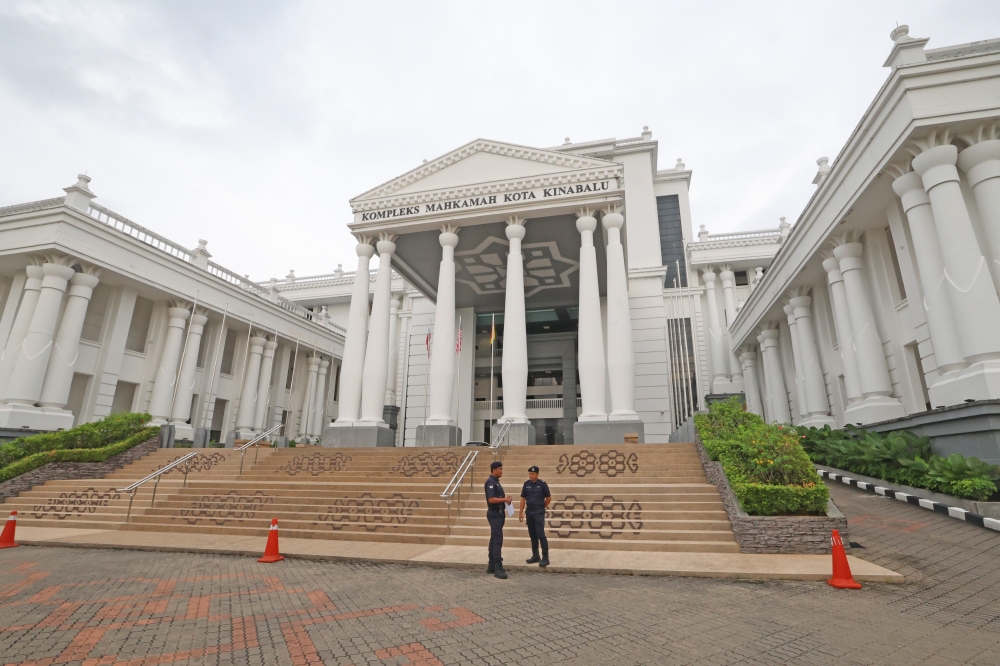
A recent court testimony in the inquest into Zara Qairina’s death provides a useful lesson for business leaders. Consultant forensic psychiatrist Dr Chua Sze Hung told the Coroner’s Court that assessing the surviving mother’s current mental condition would not substitute for a retrospective assessment of the deceased adolescent’s mental state. He described treating the two as interchangeable as a category error, because they involve different people, timelines and psychological realities. Source
TL;DR
Use evidence that directly answers the business question, rather than relying on information that is merely nearby or emotionally powerful.
Separate facts, interpretations and opinions before deciding what action to take.
What This Means
The testimony highlights a simple principle: different questions require different evidence.
A current assessment of a surviving person may explain that person’s present condition. It does not automatically reveal what another person was thinking at an earlier time. Similarly, an employee’s current explanation may not prove what happened during a past incident. A customer’s anger may show dissatisfaction, but it does not by itself establish whether your team breached a process.
In forensic work, a psychological autopsy is a retrospective process. It attempts to understand a deceased person’s mental state and circumstances before death by examining relevant records, behaviour, communications and other evidence. Dr Chua said the focus should be on helping the court determine the manner of death, while the final determination remains the court’s responsibility. Source
You can apply the same discipline to business operations. Before collecting information, define the question. Are you trying to determine what happened, why it happened, who was responsible, whether a process failed or what should happen next? These are different questions. A single document, interview or opinion rarely answers all of them.
Evidence is not useful simply because it is available. It is useful when it is relevant to the decision you need to make.
How This Applies to Malaysian SMEs
1. Handling staff complaints fairly
Suppose an employee reports bullying in a WhatsApp group. You may hear from the complainant, the accused employee and several colleagues. Each account can help, but each person’s current feelings are not the same as evidence of every past event. Your review should examine the actual messages, dates, participants, previous reports and relevant workplace policies.
Do not treat a person’s distress as proof of a particular allegation, but do not dismiss it either. Record the concern, preserve the relevant messages and speak to people separately. Ask specific questions: What was said? When did it happen? Who was present? Was there a previous pattern? This keeps the review focused on observable events rather than assumptions about personality.
2. Investigating customer disputes
A customer may claim that your business delivered the wrong item, missed a deadline or provided poor service. The customer’s account matters, but you also need the order record, delivery confirmation, staff notes, photographs, call logs and written terms. If you only ask the employee involved, you are examining one person’s memory of the event, not necessarily the event itself.
Set up a simple incident file for every serious dispute. Include the original complaint, the order number, relevant timestamps, documents, staff responses and the action taken. This gives you a clearer basis for resolving the matter and helps identify recurring process weaknesses.
3. Reviewing workplace accidents and safety incidents
If an employee slips in your shop, warehouse or office, the immediate priority is medical assistance and reporting. After that, separate the questions. What happened? What condition existed? Was the person trained? Was a warning sign present? Did weather, housekeeping, equipment or workload contribute?
A colleague saying “the area is always dangerous” may indicate a wider issue, but it is not a substitute for checking the actual location and maintenance records. Likewise, the injured employee’s current emotional condition should be handled with care, but it should not replace a factual review of the incident. Keep photographs, inspection checklists, shift schedules and corrective actions together.
4. Making decisions about performance
Performance decisions often go wrong when a manager relies on general impressions. “Not committed” or “has a bad attitude” may describe a concern, but they do not provide a clear basis for coaching or disciplinary action. Use evidence linked to the role: missed deadlines, incomplete tasks, customer complaints, attendance records or repeated process errors.
Give the employee an opportunity to respond. Their explanation may reveal a training gap, unclear instructions, unrealistic workload or a personal issue requiring support. However, a response should be considered alongside the relevant records, not treated as the only source of truth.
A simple evidence framework for your business
Use the following structure whenever an issue could affect an employee, customer, supplier or your reputation.
| Step | Question | Example |
|---|---|---|
| 1. Define | What decision must be made? | Was the delivery process followed? |
| 2. Preserve | What records could disappear or change? | Messages, CCTV, forms and call notes |
| 3. Separate | What is fact, opinion or assumption? | “The parcel arrived late” versus “the rider was careless” |
| 4. Compare | Do different sources agree? | Order time against delivery timestamp |
| 5. Decide | What action matches the evidence? | Correct training, process or conduct |
| 6. Review | What can prevent repetition? | Checklist, approval step or clearer ownership |
The table is a practical management framework rather than a legal standard. For serious matters involving injury, harassment, threats, fraud or possible criminal conduct, obtain appropriate professional advice and avoid making public accusations.
Practical Takeaways
- Write the question first. Avoid collecting documents without knowing what you are trying to establish.
- Use primary records where possible. Original messages, signed forms, timestamps and photographs are usually more useful than recollections alone.
- Keep timelines. A dated sequence often exposes gaps, contradictions and missed handovers.
- Separate current condition from past events. How someone feels now may not prove what happened earlier.
- Interview people individually. Group discussions can influence memories and make it harder to identify what each person actually knows.
- Record uncertainty honestly. “Not established” is better than presenting an assumption as a fact.
- Protect sensitive information. Limit access to records involving health, family matters, complaints or disciplinary action.
- Document your decision. Note the evidence reviewed, the reasoning and the follow-up action.
Building this into your operations
You do not need a complex system to improve evidence handling. Create one standard incident form with fields for date, people involved, location, issue, immediate action, supporting records, witnesses, findings and next steps. Store it in a controlled folder with clear access permissions.
Assign one person to maintain the record, even if that person is an office administrator or operations supervisor. Use consistent file names and keep the final decision separate from unverified allegations. If your team uses messaging apps, instruct staff to move important decisions into an official record rather than leaving them buried in a personal chat.
Review closed incidents every month or quarter. Look for repeated late deliveries, stock discrepancies, customer complaints or staff conflicts. The purpose is not only to identify fault. It is to discover where your process depends too heavily on memory, informal instructions or one person’s judgment.
The Bigger Picture
As your business grows, informal knowledge becomes less reliable. New employees join, supervisors change and customers expect consistent answers. A business that cannot explain how it reached a decision may struggle to resolve disputes, coach staff or demonstrate responsible management.
The long-term lesson from the court testimony is not about copying forensic methods into a small business. It is about matching the method to the question. Good decisions require the right subject, the right timeframe and the right evidence.
When you build that habit into daily operations, you create a calmer workplace. Staff know what records matter. Managers can act without relying on rumours. Customers receive clearer responses. Most importantly, you reduce the risk of treating an assumption as a fact when the consequences are serious.
Start with one recurring problem this week. Define the question, gather the records, separate facts from interpretations and document the action taken. That small discipline can improve the quality of many decisions across your business.
Ready to Streamline Your Operations?
Your business should run itself. AutoRunBiz deploys AI agents to automate your daily operations — WhatsApp orders, invoicing, customer follow-ups, and accounting. Book a free 15-min ops audit to see where automation fits your business →