
Why Apple’s Listening AI Matters to Your Business
Apple’s latest Apple Watch features point to a significant shift in workplace technology: devices are becoming capable of processing nearby conversations, summarising discussions and recalling recently spoken information. For you as a Malaysian SME owner, this is not just a consumer gadget story. It raises practical questions about staff privacy, customer consent, meeting records and the safe use of AI at work.
The technology may help your team remember instructions, capture meeting takeaways and support employees with hearing difficulties. However, it also changes the meaning of “recording a conversation”. A phone visibly recording video is usually obvious. A watch that can turn recent speech into text may be less noticeable, creating risks if your employees, customers or business partners do not understand what is happening.
What Happened
According to TechCrunch, Apple introduced new Apple Watch capabilities called Audio Intelligence, Live Rewind and Siri Recap. Audio Intelligence can identify sounds such as sirens, alarms, doorbells and babies crying, with processing performed on the device. This could be especially useful for people who are deaf or hard of hearing.
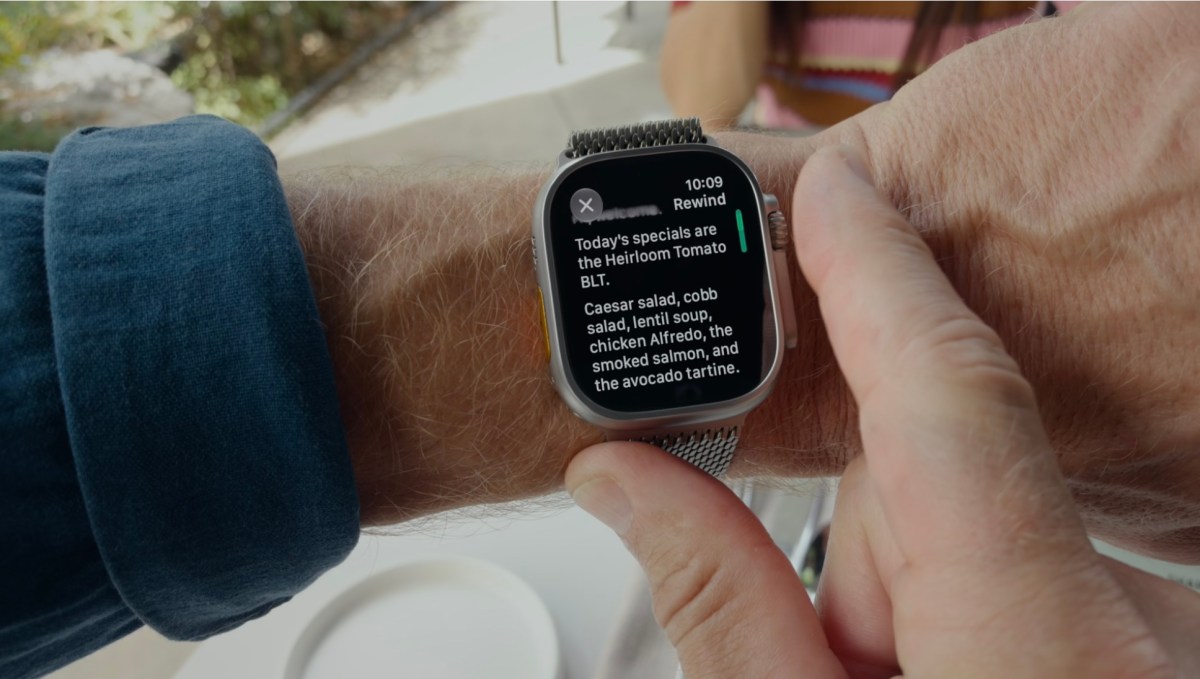
Live Rewind allows a user to go back 15 seconds and generate a transcription of what was recently said, while Siri Recap creates high-level notes, titles, summaries and key points from selected conversations. Apple says Siri Recap is not permanently enabled by default, and users can control when it operates. The company also says it does not create or store audio recordings, and that generated information receives end-to-end encryption, as reported by TechCrunch.
Even so, the feature creates uncertainty. A conversation might not be saved as an audio file, but a transcript or summary can still contain confidential information. TechCrunch also highlighted consent and legal concerns, noting that companies such as Plaud advise users to obtain legally required consent before recording, while Amazon’s Bee terms place responsibility on users to comply with laws involving minors’ data privacy. Read the related guidance in the original report.
Why This Matters for Malaysian SMEs
Many Malaysian SMEs already depend on informal communication through WhatsApp, voice notes, walk-in discussions and short team meetings. A sales representative may discuss a customer’s requirements at a site visit. A restaurant manager may brief staff before a busy shift. An interior design firm may review a client’s renovation choices in a showroom. If an AI-enabled wearable summarises part of that conversation, the resulting notes could become part of your operational records, even if nobody intended to create a formal recording.
You should also consider the Personal Data Protection Act 2010 and related guidance from the Personal Data Protection Commissioner. The precise legal treatment of a particular AI-generated transcript depends on the circumstances, but the business principle is straightforward: personal information should be collected, used, stored and shared for clear purposes, with suitable safeguards. Customer names, phone numbers, medical details, identity information, payroll matters and confidential commercial discussions should not be casually captured by an employee’s personal device.
For example, a clinic, tuition centre or childcare operator may handle sensitive information during daily conversations. A property agency may discuss a buyer’s financial position. A small manufacturer may reveal product specifications during a supplier meeting. In each situation, the question is not simply whether the device stores audio. You should ask whether the resulting summary or transcript is necessary, who can access it, where it is stored and how long it remains available.
Practical checks for your business
| Area | What you should do |
|---|---|
| Consent | Tell participants before enabling transcription, summaries or other listening functions. |
| Devices | Set a clear rule for personal watches, phones and AI wearables during customer or staff meetings. |
| Access | Limit AI-generated notes to employees who need them for their work. |
| Retention | Delete summaries when they are no longer required for a legitimate business purpose. |
| Accuracy | Require a human to check important names, dates, quantities and instructions before acting. |
How You Can Use Listening AI Responsibly
Start with controlled, low-risk situations. You might use approved transcription for internal project meetings where every participant has been informed. You could also use summaries to create action lists after a management discussion, provided the notes are reviewed before being shared. This can reduce forgotten tasks without making every workplace conversation feel monitored.
Next, create a short AI device policy in plain language. State when transcription is allowed, when it is prohibited, who may access the output and how employees can report a concern. Make the rule apply equally to company-provided and personal devices. “Do not record private conversations” is helpful, but a better policy explains how employees should ask for permission and what visible indication should be used when an AI feature is active.
Keep sensitive conversations outside automatic listening tools unless there is a documented reason to use them. This includes disciplinary discussions, health-related matters, salary reviews, customer complaints and negotiations involving confidential information. If you need a formal record, use an approved business process with clear notice and controlled storage rather than allowing staff to rely on an unknown personal application.
The Bigger Picture
Apple’s move reflects a wider direction in AI: technology is moving from responding to typed prompts towards observing context around you. The benefit is convenience. A device can remind you of a spoken recommendation, identify an alarm or turn a meeting into a task list. The risk is that people may become less willing to speak openly when they suspect a nearby device could capture their words.
That trust issue matters in a small business because relationships are close. Your employees may work in the same room, customers may know your staff personally and suppliers may share information informally. A single unexpected transcript can damage confidence faster than a technical explanation can repair it.
For your SME, the right question is not “Can this device listen?” It is “Was everyone informed, was the information necessary, and can you control what happens next?”
Do not reject useful AI simply because it creates privacy concerns. Instead, introduce it with boundaries. Test one approved workflow, document the purpose, inform everyone involved and review the output for accuracy. If your team cannot explain why a listening feature is needed or who controls its notes, it probably should not be active in that situation.
The arrival of always-available AI makes governance a daily business responsibility, not a task reserved for large technology companies. By setting clear expectations now, you can benefit from better meeting follow-up and accessibility while protecting the trust that keeps your Malaysian SME growing.
Ready to Streamline Your Operations?
Technology moves fast. Your operations should keep up. AutoRunBiz builds AI systems that run your daily workflows — from WhatsApp order capture to accounting. Book a free 15-min ops audit →