
AI Education
Alibaba Just Banned Claude Code — What This Means for AI Tools in Southeast Asia
The US-China AI rivalry just escalated — and Southeast Asian businesses are caught in the middle.

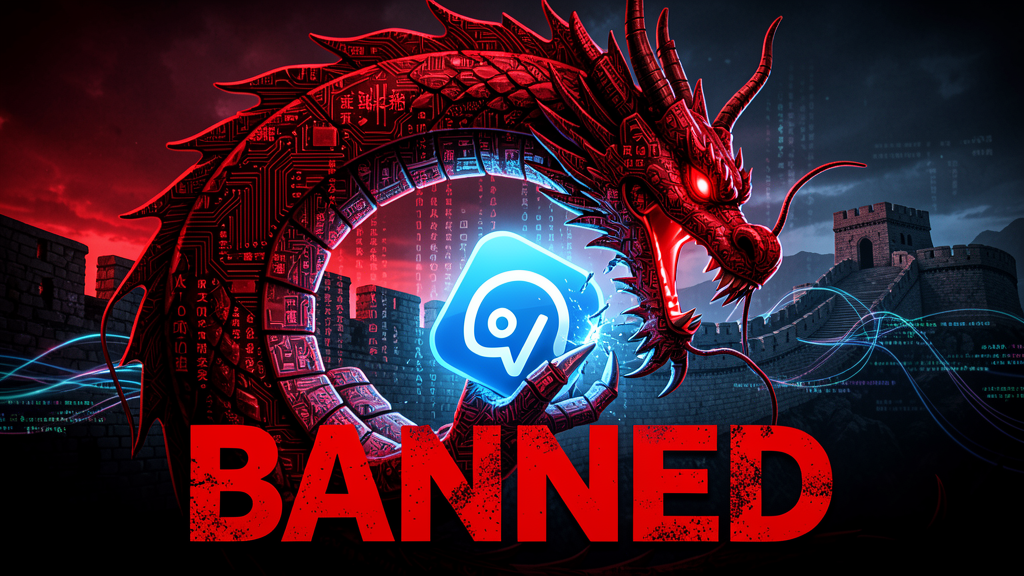
Alibaba will ban its employees from using Anthropic’s Claude Code starting July 10, 2026, according to multiple reports. The move escalates an already tense US-China AI rivalry and signals a future where access to premium AI development tools is increasingly shaped by geopolitics rather than technology.
The ban comes despite — or perhaps because of — the fact that Anthropic already prohibits Chinese companies from using its models. The company has reportedly been working to close loopholes that allow Chinese users to access Claude through third-party resellers and VPNs. Alibaba’s internal directive classifies Claude Code as “high-risk” software and instructs employees to switch to the company’s own Qoder tool instead.
Why Did Alibaba Ban Claude Code?
On the surface, Alibaba’s ban is straightforward corporate policy: classify a foreign AI tool as high-risk and mandate a homegrown alternative. But the context reveals a far more layered story.
Anthropic’s Claude Code is a powerful AI coding assistant that competes directly with tools like GitHub Copilot, Cursor, and Alibaba’s own Qoder. According to a recent Reddit post that broke the story, Anthropic had been running an experiment it called “distillation protection” — a version of Claude Code designed to secretly identify Chinese users.
Anthropic’s Thariq Shihipar confirmed on X (formerly Twitter) that this was “an experiment we launched in March that was meant to prevent account abuse from unauthorized resellers and protect against distillation.” Distillation — where AI models are trained on the outputs of other models — is a growing concern for companies like Anthropic, whose proprietary models represent billions of dollars in R&D investment. Shihipar added that the team “has landed stronger mitigations since then.”
Alibaba’s response was swift: classify Claude Code as high-risk and redirect developers to its internal alternative. For a company of Alibaba’s scale — spanning e-commerce, cloud computing, AI research, and fintech — relying on a US-based AI tool that actively blocks Chinese users was never a sustainable position.
How Are AI Companies Policing Access?
The cat-and-mouse game between US-based AI companies and Chinese users bypassing restrictions has been escalating for months. Anthropic’s distillation protection experiment was just one tactic. Others include:
- IP-based geoblocking at the API and application level, preventing direct access from mainland Chinese IP addresses.
- User behaviour analysis — tracking usage patterns that indicate VPN or proxy usage, such as rapid IP-hopping or mismatched billing regions.
- Enterprise verification — requiring business registration documents that confirm the entity is not Chinese-owned or controlled.
- Reseller audits — investigating third-party API resellers who may be selling access to sanctioned entities.
The US export controls on advanced AI technologies have created a compliance minefield. Companies like Anthropic, OpenAI, and Google must balance their global ambitions against regulatory requirements that limit who can use their most capable tools.
For Anthropic, the challenge is particularly acute. The company’s terms of service already prohibit Chinese entities, but enforcement at scale is difficult. Every reseller deal or indirect distribution channel becomes a potential leak point — and every leak risks regulatory action from Washington.
What Does This Mean for Southeast Asian Businesses?
For Southeast Asian companies — particularly in Malaysia, Singapore, Indonesia, Thailand, Vietnam, and the Philippines — the Alibaba-Claude Code saga is a wake-up call. Here’s why:
1. AI tool fragmentation is accelerating. As US and Chinese AI ecosystems diverge, businesses that operate across both spheres will face compatibility headaches. A toolchain built around Claude Code or OpenAI today may not integrate smoothly with Alibaba Cloud or Tencent’s AI services tomorrow. Southeast Asian businesses increasingly serve customers and partners from both blocs, making toolchain portability a strategic priority.
2. Compliance complexity is growing. If global AI companies adopt region-specific access controls, companies in Southeast Asia may need to navigate multiple regulatory regimes simultaneously. A Malaysian startup using US AI models while serving Chinese clients could find its tools deprecated, restricted, or surveilled — without warning.
3. Local alternatives matter more than ever. The Alibaba-to-Qoder playbook — ban an external tool, mandate an internal one — is not unique to China. We’re already seeing national AI champions emerge across Southeast Asia: Singapore’s Southeast Asian Languages-in-One-Network (SEA-LION) models, Malaysia’s national AI initiatives, and Indonesia’s push for digital sovereignty. The question is whether these alternatives can match the pace of innovation from Silicon Valley and Shenzhen.
4. Geopolitical whiplash is the new normal. Tools that work today may be banned tomorrow — not because of technical shortcomings, but because of political decisions made thousands of kilometres away. Businesses that tie their development workflows too tightly to a single AI vendor — especially one entangled in US-China tensions — are taking on significant operational risk.
| Consideration | Impact for SEA Developers |
|---|---|
| Why bans happen | Geopolitical tension, IP protection (distillation), and export controls drive companies to restrict AI tool access across borders — not because the tools don’t work, but because of where you’re located. |
| Impact on tool choice | Developers must maintain multi-vendor AI strategies. Relying on a single US or Chinese provider risks workflow disruption when access is revoked. Open-source and regionally-hosted alternatives become critical. |
| How to prepare | Build abstraction layers using open standards and APIs. Invest in portable toolchains that can switch between AI vendors without rewriting code. Monitor regulatory changes in both Washington and Beijing. |
The Bigger Picture: AI Tools Are Becoming Geopolitical
The Alibaba Claude Code ban is not an isolated incident. It is the latest symptom of a broader trend: AI development tools are becoming geopolitical assets, not just productivity software.
Consider the pattern. OpenAI restricts access in China and several other countries. Google’s Gemini API has region-specific availability. Anthropic’s terms explicitly exclude Chinese entities. And now Alibaba has reciprocated by banning a US tool from its internal workflows — while simultaneously investing heavily in its own AI ecosystem through Qwen models, the Qoder coding tool, and Alibaba Cloud’s AI platform.
This bifurcation of the AI tool landscape mirrors what happened with social media (WeChat vs. WhatsApp, TikTok vs. Instagram) and cloud infrastructure (Alibaba Cloud vs. AWS). But AI coding tools are different: they are deeply embedded in how companies build products, maintain infrastructure, and innovate. Switching costs are high, and disruption is painful.
For Southeast Asian businesses, the message is clear: don’t put all your AI eggs in one geopolitical basket. The companies that thrive in this new environment will be those that:
- Maintain multi-vendor AI strategies that span both US and Asian providers
- Invest in internal AI literacy and tooling rather than relying on a single external platform
- Monitor regulatory developments in both Washington and Beijing that could affect their toolchains
- Build abstraction layers — using open standards and APIs — so they can switch AI vendors without rewriting entire workflows
“Tools that work today may be banned tomorrow — not because of technical shortcomings, but because of political decisions made thousands of kilometres away.”
📈 Evergreen Takeaway: Don’t Tie Your Stack to a Single AI Vendor
The Alibaba–Claude Code story grabbed headlines in July 2026, but the pattern it reveals is anything but temporary. Geopolitical fragmentation of AI tools is a structural shift — not a one-off event. Whether the next flashpoint involves export controls, data sovereignty laws, or corporate bans, the underlying dynamic is the same: access to the best AI tools is becoming a function of where you are, not just what you can pay.
The specific date — July 10, 2026 — will fade, but the lesson won’t. Southeast Asian businesses that diversify across US, Chinese, and regional AI providers; that invest in portable, standards-based toolchains; and that keep one engineering quarter ahead of regulatory changes will be the ones still shipping when the next ban lands. Build for portability first, and a single-vendor lock-in will never be your bottleneck.
Not Sure How Geopolitical AI Shifts Affect Your Business?
At AutoRunBiz, we help Malaysian and Southeast Asian businesses navigate the rapidly changing AI landscape. Whether you’re evaluating AI coding tools, automating B2B workflows, or future-proofing your tech stack — we can help you make the right call.