
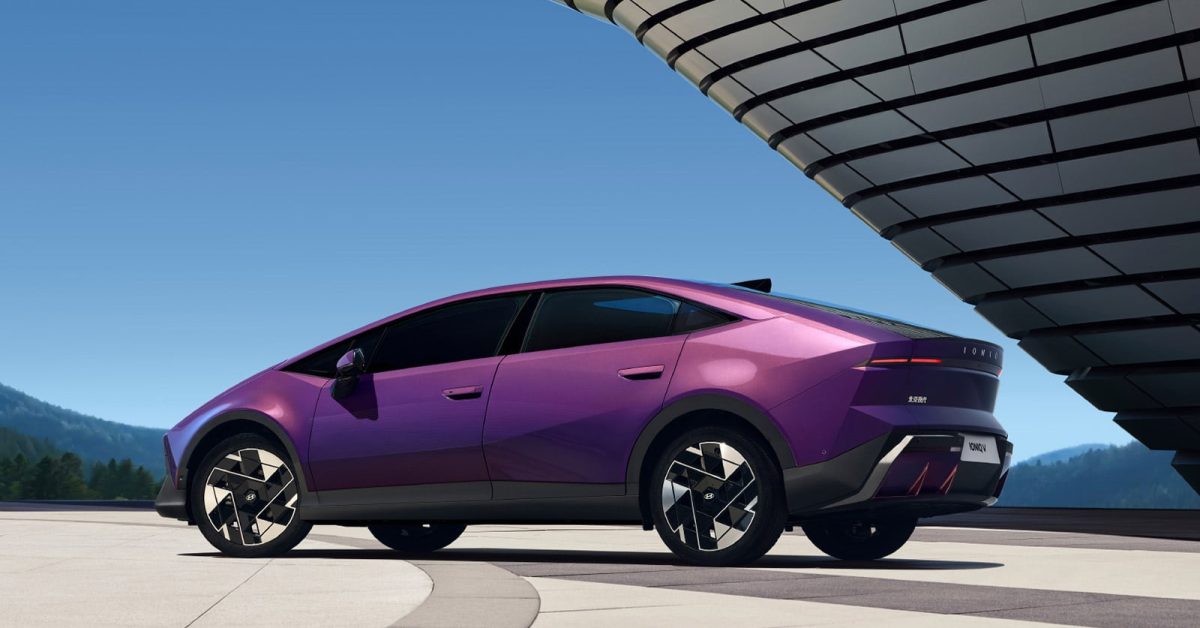
Why a China-Only Hyundai EV Should Matter to Your Business
Hyundai has begun accepting pre-sale orders for the new Ioniq V in China, but buyers in Malaysia cannot order one yet. The model starts at 119,900 yuan in China and is being introduced with three fully electric variants, according to Electrek.
At first glance, this may look like another overseas car launch that has little connection to your company. However, the Ioniq V represents several technology shifts that can affect Malaysian SMEs: faster product development, connected vehicles, artificial intelligence inside everyday equipment, and the growing importance of China as a testing ground for new mobility solutions.
Whether you operate a café, logistics company, property business, workshop, retail outlet, or professional services firm, these changes can influence your transport planning, customer expectations, energy use, and technology decisions.
What Happened
Hyundai unveiled the Ioniq V at the Beijing Auto Show and has now opened pre-sale orders at the Chengdu Auto Show. The vehicle is part of Hyundai’s planned 20-model expansion in China and uses a design direction created for that market, according to Electrek.
The electric vehicle will be offered in three variants. The lower versions use either a 53.5kWh or 66.8kWh battery, produce 188 horsepower, and are rated for approximately 520 to 540 kilometres under China’s CLTC testing system. The higher version produces 225 horsepower and is rated for approximately 620 to 650 kilometres under CLTC. These figures should not be treated as direct real-world Malaysian driving distances because the CLTC system is generally more generous than other testing standards, as noted by Electrek.
The vehicle is based on Hyundai’s E-GMP electric platform and includes an 800-volt charging architecture. Hyundai has not announced the Ioniq V’s final charging rate, although the platform is associated with fast-charging electric cars, according to Electrek.
Inside, the Ioniq V features a large 27-inch display, a heads-up display called Cyber Eye, artificial intelligence models from Baidu and ByteDance, and a driver-assistance system developed with Chinese technology company Momenta. The car will be built in Beijing through Hyundai’s joint venture with BAIC Motor, as reported by Electrek.
The important lesson is not whether you can buy this Hyundai today. It is how quickly vehicles are becoming software platforms that combine transport, artificial intelligence, connectivity, and business data.
Why This Matters for Malaysian SMEs
First, the Ioniq V shows how quickly product features are being shaped by local market conditions. Hyundai is developing a China-specific range because China is a major centre for electric vehicles, charging infrastructure, and automotive software. The company says its Chinese market entry is intended to help it compete globally, according to Electrek.
For you, the business lesson is straightforward: do not assume that established products will remain unchanged across markets. Suppliers are increasingly adapting products for local customer behaviour, regulations, infrastructure, and digital habits. A Malaysian SME that tracks these changes early can make better decisions about fleet replacement, delivery operations, customer service, and workplace technology.
Consider a small catering company serving Kuala Lumpur and Selangor. A connected electric van could eventually support route planning, delivery status updates, battery monitoring, and automated maintenance reminders. A property maintenance company could use vehicle data to assign technicians based on location and estimated travel time. A retailer with several outlets could monitor delivery activity and improve stock replenishment schedules.
Second, the vehicle’s AI features show that artificial intelligence is moving beyond office software. The Ioniq V reportedly combines Chinese AI models with in-car displays and driver assistance, according to Electrek. Similar developments are likely to appear in commercial vehicles, fleet platforms, navigation systems, and logistics applications.
You should therefore ask your technology suppliers how their products use AI, what data is collected, where that data is stored, and which decisions remain under human control. These questions matter even if your company has no electric vehicles today. A delivery platform, accounting system, customer relationship tool, or security camera may already include automated recommendations or AI-generated output.
Key Takeaways for Your Business
| Development | Possible SME Use | What You Should Check |
|---|---|---|
| Electric vehicle platforms | Delivery, service, and company fleets | Charging access, daily routes, downtime, and driver training |
| Vehicle AI assistants | Navigation, dispatch support, and safety monitoring | Data privacy, reliability, and human approval |
| Large connected displays | Digital customer and driver interfaces | Ease of use, distraction risk, and software updates |
| Rapid China product cycles | Early planning for new tools and equipment | Local availability, service support, and compliance |
What You Can Do Now
You do not need to wait for the Ioniq V to arrive in Malaysia before preparing your business. Start by mapping how vehicles and travel affect your daily operations. Record delivery distances, common routes, waiting time, maintenance interruptions, and the amount of administrative work involved in dispatching drivers.
Next, separate essential requirements from attractive features. An electric vehicle may offer useful connectivity, but your business still needs dependable charging access, suitable cargo space, parts availability, trained technicians, and clear warranty support. A vehicle with advanced software is not automatically suitable for every operation.
You should also review your company’s data practices. If drivers use mobile applications for route planning or proof of delivery, identify who can access location information and how long records are retained. If your team uses AI-generated messages or reports, establish a simple review process before anything is sent to customers or used for operational decisions.
For SMEs with fewer than 50 employees, a practical pilot is often more useful than a large technology rollout. You could begin with one digital dispatch workflow, one vehicle tracking system, or one route optimisation process. Measure whether it improves delivery coordination, reduces missed appointments, or gives customers clearer updates.
The Bigger Picture
The Ioniq V is part of a wider shift in which cars are becoming connected computing devices. Its 800-volt architecture, AI systems, driver-assistance technology, large display, and China-focused development strategy illustrate how several technologies are being combined into one product, according to Electrek.
This shift will not affect only large manufacturers. Malaysian SMEs will encounter the same pattern in delivery platforms, warehouse equipment, payment systems, surveillance tools, industrial machines, and customer service software. Products will increasingly arrive with built-in automation, data collection, and predictive functions.
Your advantage is not necessarily adopting every new tool first. Your advantage is understanding which technology solves a real operational problem, preparing your team to use it properly, and selecting suppliers that provide dependable local support.
The Ioniq V may not be available to Malaysian buyers yet, but its development offers a useful signal. The next generation of business equipment will be more connected, more software-driven, and more dependent on good data. The SMEs that start building disciplined processes now will be in a stronger position when these technologies become accessible in Malaysia.
Final Word
Do not treat overseas technology launches as distant news. Use them as early indicators of what customers, employees, suppliers, and competitors may expect next. Review your fleet, identify repetitive work, strengthen your data controls, and test practical automation in small steps.
The question is not whether your business should copy Hyundai’s approach. It is whether you are ready for a market where products improve through software, decisions are supported by AI, and operational data becomes part of everyday business performance.
Ready to Streamline Your Operations?
Technology moves fast. Your operations should keep up. AutoRunBiz builds AI systems that run your daily workflows — from WhatsApp order capture to accounting. Book a free 15-min ops audit →