
Why a China-First EV Launch Should Matter to Your Business
If you run a Malaysian SME, you may not be planning to buy a new electric vehicle anytime soon. You may be more concerned with delivery schedules, customer follow-ups, staff productivity, and keeping daily operations organised. Even so, changes in the car industry can affect your business earlier than expected—especially if your company depends on vans, sales vehicles, service vehicles, or last-mile delivery.
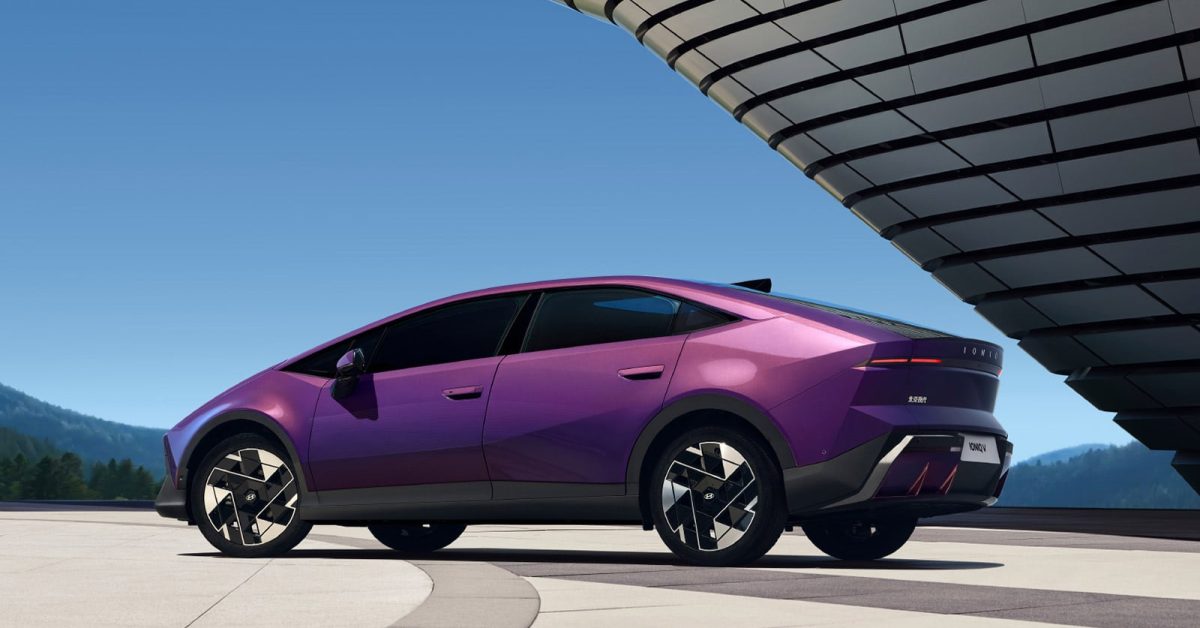
Hyundai’s new Ioniq V shows how quickly vehicle makers are adapting products for specific markets. The model is currently available for pre-sale orders in China, but not in English-speaking markets. That detail is more important than the vehicle itself: manufacturers are increasingly testing designs, software, charging systems, and connected features in markets where adoption is moving fastest.
For you, the practical question is not whether this exact Hyundai model will arrive in Malaysia. It is whether your business systems, fleet decisions, and customer processes are ready for a market where vehicles become more digital, data-driven, and operationally connected.
TL;DR
Hyundai’s Ioniq V is being introduced in China first, with three electric trims, two battery sizes, and technology designed for a highly competitive EV market. Read the source report.
Malaysian SMEs should watch the trend, not wait for the exact model. Prepare your fleet records, charging plans, route data, and customer workflows before electric mobility becomes a normal part of business operations.
What This Means
The Ioniq V is a fully electric vehicle built on Hyundai’s E-GMP platform. The source article reports three Chinese launch trims, with listed prices of 119,900 yuan, 129,900 yuan, and 139,900 yuan; this article does not convert those figures into Malaysian currency because vehicle pricing varies by market, taxes, specifications, distribution, and regulation. Source: Electrek.
The model is reported to use either a 53.5kWh or 66.8kWh battery. The lower-powered versions are listed with 140kW of motor output and claimed CLTC ranges of approximately 520 to 540 kilometres, while the higher version is listed with 168kW and approximately 620 to 650 kilometres of CLTC range. Source: Electrek.
Those range figures require careful interpretation. CLTC is China’s vehicle testing cycle and can produce more optimistic results than other testing systems. Real-world range depends on traffic, weather, driving speed, air-conditioning use, payload, tyre pressure, and road conditions. You should never plan commercial routes using the headline range alone.
The vehicle also includes an 800-volt charging architecture, a large central display, a head-up display called Cyber Eye, and driver-assistance technology developed with Momenta. It uses Chinese artificial-intelligence models from Baidu and ByteDance, according to the source article. Source: Electrek.
In plain language, this is not just a petrol car with its engine replaced by a battery. It is a connected digital product. The vehicle can create operational data about routes, charging, usage, maintenance, driver behaviour, and vehicle availability. That creates opportunities—but only if your business has a reliable way to capture and use the information.
How This Applies to Malaysian SMEs
1. Delivery businesses should start measuring route and vehicle data. If you operate a bakery delivery service, pharmacy distribution business, catering company, spare-parts operation, or online retail fulfilment service, vehicle performance directly affects customer experience. Before considering an electric van or car, record each route, daily distance, waiting time, payload, delivery count, and return-to-base time. A simple digital form can give you a clearer picture than guesswork. When a suitable EV becomes available, you can compare its operating pattern with your actual routes.
2. Service businesses need to plan around charging, not just driving range. A plumbing contractor, air-conditioning company, pest-control operator, or facilities-maintenance firm may send vehicles to several customer locations each day. The vehicle may have enough theoretical range, but charging access and timing can still disrupt the schedule. Map where your vehicles begin and end each day. Then identify whether charging would happen at your premises, a depot, a customer site, or a public station. This is a workflow issue, not merely a vehicle purchase decision.
3. SMEs with sales teams should connect vehicle activity to customer management. A sales representative who visits customers across Selangor, Penang, Johor, or Sabah creates useful operational information: which areas are visited most, how long visits take, and which appointments are frequently postponed. If that information stays inside chat messages or personal notebooks, you cannot manage it well. A central system can connect appointments, travel records, follow-up tasks, and customer histories. This becomes increasingly useful when vehicles provide more connected data.
4. Construction and trading businesses should distinguish vehicle suitability from brand excitement. A passenger EV may not suit a business carrying tools, stock, equipment, or heavy materials. You should assess boot capacity, payload, ground clearance, weather protection, charging access, workshop support, spare-parts availability, and driver requirements. The Ioniq V’s specifications are not a recommendation for every Malaysian SME; they are a reminder to assess the complete operating environment before adopting new technology.
5. Businesses serving tourists and corporate clients should watch customer expectations. Hotels, travel operators, event companies, and premium transport providers may face more questions about quiet vehicles, digital booking, charging availability, and lower-emission transport. You do not need to change your fleet immediately. However, you can begin by adding vehicle type, passenger capacity, charging requirements, and preferred pickup arrangements to your booking workflow.
A Useful Comparison for Planning
| Reported Ioniq V detail | What it could mean operationally | What you should check locally |
|---|---|---|
| Three launch trims | Different capability levels may suit different routes | Actual Malaysian specifications and support |
| 53.5kWh or 66.8kWh battery | Battery size affects route planning and charging time | Usable battery capacity and real-world testing |
| 140kW or 168kW motor output | Performance is not the same as carrying suitability | Payload, boot space, and commercial use limits |
| Approximately 520–650km CLTC range | Useful as a test-cycle reference only | Real-world range in Malaysian traffic and weather |
| 800V charging architecture | Potentially faster charging with suitable equipment | Compatible chargers, electrical capacity, and site approval |
| Connected displays and driver assistance | More data and digital functions inside the vehicle | Data access, privacy, training, and reliability |
All vehicle figures in this table come from the source article and should be treated as reported launch information rather than Malaysian-market specifications. Source: Electrek.
Practical Takeaways for Your Business
- Build a fleet register: Record each vehicle, driver, route, mileage, service date, and business purpose.
- Measure actual routes: Track daily kilometres, idle time, delivery stops, and time spent waiting.
- Separate personal and business use: This makes vehicle performance easier to evaluate.
- Create a charging-readiness checklist: Review parking arrangements, electrical capacity, operating hours, and backup plans.
- Do not rely on advertised range: Test using your own traffic, payload, air-conditioning, and route conditions.
- Centralise vehicle records: Keep inspection reminders, insurance details, maintenance notes, and driver assignments in one accessible system.
- Review data permissions: Connected vehicles may produce information about drivers, locations, and customer visits.
- Ask suppliers practical questions: Confirm service coverage, parts availability, warranty terms, software updates, and support response times.
- Start with one controlled trial: If your operations suit an EV, test one vehicle on a predictable route before changing the whole fleet.
The useful lesson is not “buy this vehicle.” It is “make your business ready to compare vehicles using real operating data.”
The Bigger Picture
Hyundai’s China-first launch reflects a broader change in how products are developed. The source article describes the Ioniq V as part of Hyundai’s planned entry into China’s crowded EV market, where charging technology, software, design, and driving assistance are developing quickly. Source: Electrek.
For Malaysian SMEs, this means product availability may become less predictable. A model may launch in one country first, receive software updates in another market, and arrive elsewhere with different equipment. You will need to evaluate vehicles based on local support and business fit rather than online specifications alone.
It also means your internal systems will matter more. A modern vehicle can provide useful information, but information scattered across spreadsheets, messaging apps, paper forms, and personal phones is difficult to manage. When customer schedules, fleet records, staff tasks, and maintenance reminders are connected, you can make better decisions about utilisation and service reliability.
You do not need to become an automotive expert or make a rushed fleet decision. Start with accurate records. Identify the routes and processes that are most predictable. Document where delays happen. Then use that information to judge whether future vehicles, charging infrastructure, or automation tools can genuinely improve your operations.
The Ioniq V may or may not reach Malaysia in the same form. The more important point is that business vehicles are becoming part of a wider digital workflow. SMEs that prepare their data and processes early will be in a stronger position to choose sensibly when the next suitable model arrives.
Ready to Streamline Your Operations?
Your business should run itself. AutoRunBiz deploys AI agents to automate your daily operations — WhatsApp orders, invoicing, customer follow-ups, and accounting. Book a free 15-min ops audit to see where automation fits your business →