
Robotaxis aren’t parked in Arizona. They’re parked at your doorstep.
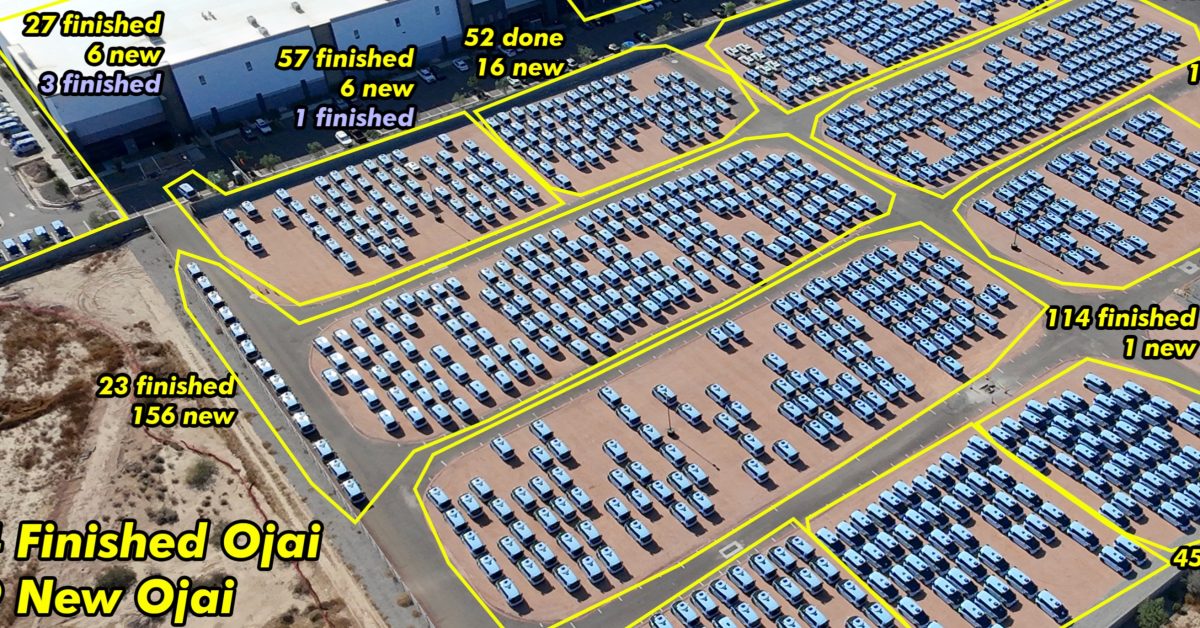
Every month, someone on Reddit counts cars from the sky. This month’s aerial photo shows nearly 1,000 Waymo robotaxis sitting at a factory in Mesa, Arizona — 684 of them fully finished and ready to deploy according to Electrek. And that pile of idle vehicles is actually a massive signal for your business in Malaysia, even if you never touch a self-driving car.
Why? Because when a company stockpiles nearly 1,000 autonomous vehicles before flipping the switch, it’s not a science experiment anymore. It’s a logistics operation. It’s an inventory play. It’s the kind of scaling that changes how goods and people move in cities like Kuala Lumpur, Penang, and Johor Bahru — sooner than you think.
What happened
Waymo currently operates about 500,000 paid rides per week across a dozen cities, and it’s targeting one million weekly rides before the end of the year as reported by Electrek. The company’s older fleet of Jaguar I-Paces was never built for full-time robotaxi duty, so Waymo designed a purpose-built vehicle called the Ojai, made in China by Zeekr and retrofitted by Magna in Arizona.
The August factory count shows 953 Ojai units on the lot, with 684 fully converted and ready to ship. The same tracker counted roughly 500 units back in early June — meaning production and conversion are accelerating per the same monthly aerial survey. For the first time, 12 finished Hyundai IONIQ 5 robotaxis also appeared at the factory, a sign that Waymo is diversifying its vehicle supply chain beyond a single partner.
Why this matters for Malaysian SMEs
You might run a restaurant in Petaling Jaya, a logistics company in Shah Alam, or a retail chain in Penang. You don’t need a robotaxi. But you do need to understand what happens when autonomous fleets stop being a demo and start being a deployed asset class. The Waymo ramp proves that autonomous vehicles are nearing the point where the bottleneck isn’t sensor tech — it’s deployment speed. For your delivery business, that means the cost of “last mile” is about to change shape.
Think about your own operations. If you deliver food, parcels, or documents across town, how much of your margin goes to paying drivers, waiting time, and fuel? Waymo’s sixth-generation system uses 13 cameras and four lidars — 42% fewer sensors than the previous generation. Fewer sensors, cheaper base vehicles, and a supplier line that can convert 684 units in a month or two. That’s not a car company story. That’s a unit economics story. When a vehicle can be produced in high volume and converted at that pace, it eventually becomes a service you can book on demand — not a vehicle you need to own.
In Malaysia, the adoption path might look different — regulatory approvals, road conditions, and weather all play a role. But the underlying trend is the same: the more robotaxis scale elsewhere, the more Malaysian SMEs will benefit from cheaper, more predictable delivery infrastructure, because global suppliers will build toward that scale. Your business can start adapting now by structuring your operations to be compatible with autonomous dispatch — think digital order flow, standardized pickup points, and API-ready logistics — so you’re not left behind when the switch flips locally.
“The only question left is how fast Waymo turns finished inventory into paying rides.” — Electrek’s analysis of the factory count
The bigger picture
Here’s what most business owners miss: the number to watch isn’t how many self-driving cars exist in Silicon Valley. It’s how many are sitting in a lot, finished, waiting for someone to press “go.” That’s the exact same pattern your business faces when you invest in inventory, hire ahead of demand, or build a new branch before the customers arrive. Waymo is staking its growth on having capacity ready before the rides are booked. That’s a business strategy you already understand.
And it’s not just Waymo. The same aerial photos show a second vehicle model already moving through the same factory. That’s how you scale past a single supplier — by making the production line flexible enough to handle multiple vehicles. For your SME, the lesson is to avoid locking yourself into one supplier, one platform, or one delivery channel. Build redundancy and optionality into your business model before you absolutely need it.
| What the factory lot tells us | What it means for your SME |
|---|---|
| Aerial count: 953 Ojai units, 684 finished | Inventory readiness is a competitive advantage |
| Only ~500 units counted in early June | Ramping production is possible in weeks, not years |
| 12 finished IONIQ 5 units added | Diversifying suppliers reduces risk |
| 500k weekly rides, targeting 1M | Scale follows when infrastructure is ready |
| Older I-Pace fleet being replaced | Legacy systems must be retired to stay efficient |
Malaysian SMEs already face brutal competition on price and speed. The businesses that survive the next five years won’t necessarily own vehicle fleets or build AI models. They’ll be the ones that treat logistics as a service they can plug into, like they do with electricity or broadband today. And when that service arrives — whether from Waymo, a Chinese operator, or a local player using the same suppliers — it will be cheaper and more abundant because companies like Waymo have already proven how to scale from hundreds to thousands of units.
So don’t watch the robotaxi races as a tech spectator. Watch it as a supply chain signal. The cars are parked. The sensors are installed. The only question left is whether your business is ready to plug in when the ride starts.
Ready to Streamline Your Operations?
Technology moves fast. Your operations should keep up. AutoRunBiz builds AI systems that run your daily workflows — from WhatsApp order capture to accounting. Book a free 15-min ops audit →