
What a car park in Arizona teaches you about stock, speed, and scaling
Wake up, check your phone, and maybe you see a customer east of KL that wants your product this week. But you’re out of stock. And the supplier says two weeks. Now imagine being Waymo: nearly a thousand robotaxis sitting in a factory lot, most of them finished and ready to go. No, this isn’t a fantasy. It’s a real fleet, and it holds a lesson for your business.
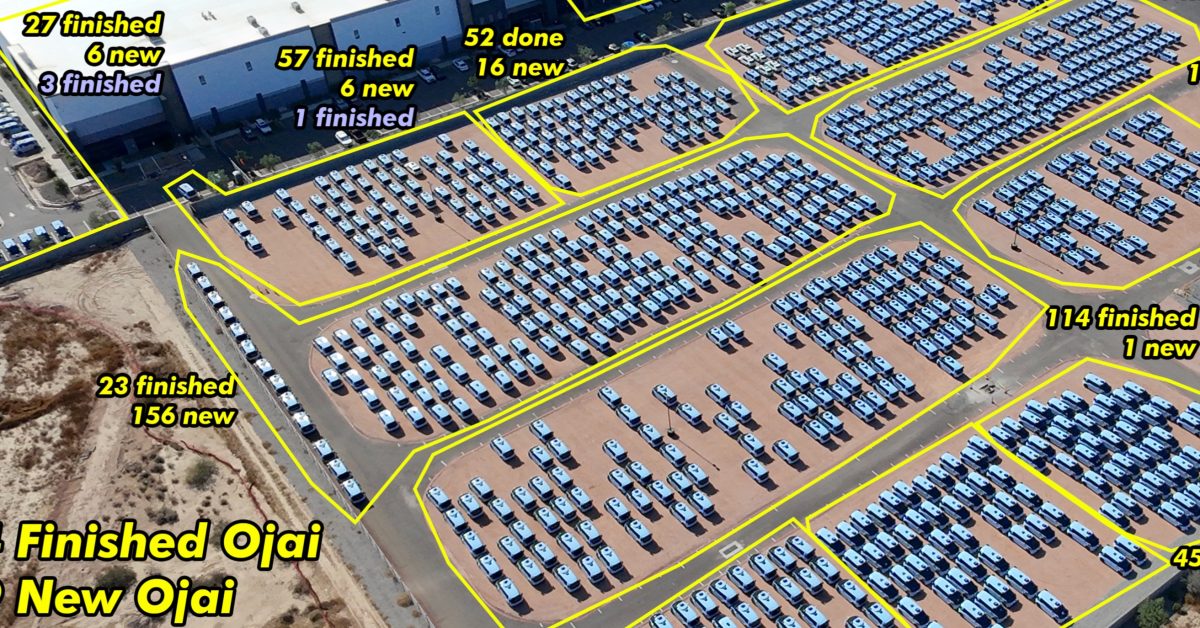
You don’t run a fleet of self-driving cars. You run, say, a food manufacturing business, a logistics company, or an e-commerce brand. But the same operational challenge applies: how much finished product should you hold before demand shows up? Waymo’s decision to stockpile 684 finished robotaxis is a bold answer to that question.
TL;DR: Waymo has 953 purpose-built robotaxis at a single Arizona factory, with 684 fully retrofitted and ready to deploy. That’s a huge buffer of capacity sitting idle by design. For your SME, the lesson is threefold: hold smart inventory, speed up your own conversion process, and put more energy into deployment than production.
| Metric | Value |
|---|---|
| Total Ojai units on the lot | 953 |
| Finished (converted) units | 684 |
| Still waiting for conversion | 269 |
| Finished IONIQ 5 units | 12 |
| Current weekly paid rides | ~500,000 |
| Target weekly rides | 1,000,000 |
What This Means
The article from Electrek details how Waymo has been building up a reserve of its new Ojai robotaxis at the Magna factory in Mesa, Arizona. These vehicles are built by Zeekr, shipped to Arizona, then retrofitted with Waymo’s sixth-generation driver hardware. According to the count, 953 Ojai units are on the lot, with 684 already converted and 269 still waiting for conversion. The same tracker counted roughly 500 units back in early June, so the stockpile has grown by almost 90% in about two months.
Why does this matter? Waymo is already doing 500,000 paid rides a week across about a dozen cities, and is targeting one million weekly rides before the end of the year. With a ready inventory of 684 finished vehicles, they can quickly add capacity to existing cities or expand into new ones. As the article notes, “Production isn’t the bottleneck, and neither is the conversion. The only question left is how fast Waymo turns finished inventory into paying rides.”
“The number to watch now is deployment, not production.” — Electrek on Waymo’s factory stockpile
How This Applies to Malaysian SMEs
Let’s translate this to your world. You run a mid-sized food manufacturer in Shah Alam. Your biggest headache isn’t making the product—it’s the feast-or-famine of orders. When a big buyer suddenly wants 5,000 units, you can’t deliver because you don’t keep finished goods in the warehouse. Waymo’s play is to keep 72% of its on-lot vehicles fully finished and ready to go. That’s a deliberate buffer. For you, that might mean keeping a minimum stock of your top three SKUs ready at all times, even if it feels risky. The risk of holding stock is often lower than the risk of turning away a big order.
Second, look at the conversion rate. 684 of 953 vehicles are already retrofitted, which means the conversion line is keeping pace with deliveries. The factory isn’t a bottleneck. Now ask yourself: how fast can you convert raw materials or inputs into finished goods? For a customisation-heavy business—say, a printing or signage company—the “retrofit” step is where the value happens. If you can shorten that step, you can accept more orders without adding headcount. The article says the same tracker saw roughly 500 units back in early June, meaning the conversion rate has been steep. That’s the kind of operational speed that impresses buyers.
Third, think about deployment. Waymo doesn’t need to build more vehicles; they need to get those cars onto streets and into paying rides. For many Malaysian SMEs, the bottleneck is the opposite. You have products ready, but your sales and marketing aren’t aggressive enough. You’d rather tweak the product again than push it out. Waymo’s approach suggests you should be obsessing over distribution: how to get your finished goods in front of customers faster. If you have a product sitting in your shop or warehouse, it’s costing you opportunity. The goal is to move it out, not to perfect it further.
There’s another angle: the article mentions that 12 finished Hyundai IONIQ 5 robotaxis showed up, showing that Waymo is diversifying beyond a single supplier. For Malaysian SMEs, this is a warning about single-supplier dependence. If you rely on one raw material source or one factory to pack your products, consider a backup. When one supplier fails, you’re stuck. Diversification doesn’t just hedge risk; it creates competition that keeps your existing supplier sharp.
Practical Takeaways
- Audit your buffer: Calculate what percentage of your current stock is “finished and ready to ship”. Is it close to Waymo’s 72%? If not, decide what you’re willing to hold to capture surprise orders.
- Measure your conversion time: Track how many days it takes from materials arriving at your door to the product being packed and ready. Look for the step that slows you down and attack it.
- Track “weekly rides”: That’s your own number of weekly orders or sales calls. Set a target that’s ambitious but realistic, and align your team around hitting it.
- List your critical suppliers: For each one, note how long it takes to replace them. If you’ve only got one source for a key ingredient or component, find a second.
The Bigger Picture
What Waymo is doing in Arizona is a miniature version of what every growing business will eventually face: the transition from making things to moving things. The first stage is building a product. The second stage is building a reliable inventory of that product. The third stage is deploying that inventory into the market at speed. Many Malaysian SMEs stop at the first stage, always tweaking, always launching something new. The real winners will copy Waymo’s playbook: build a buffer, then push it out.
Long term, driverless services could eventually reach Malaysian roads and change last-mile delivery. But that’s years away. What’s relevant today is the method: stockpile finished capacity, keep converting new units, and make deployment your primary metric.
So take a look around your own factory, workshop, or storage room. Are you sitting on 684 units of value waiting for the right moment? Or are you too scared to make the first batch? The way you answer that question will determine your next year.
Ready to Streamline Your Operations?
Your business should run itself. AutoRunBiz deploys AI agents to automate your daily operations — WhatsApp orders, invoicing, customer follow-ups, and accounting. Book a free 15-min ops audit to see where automation fits your business →