
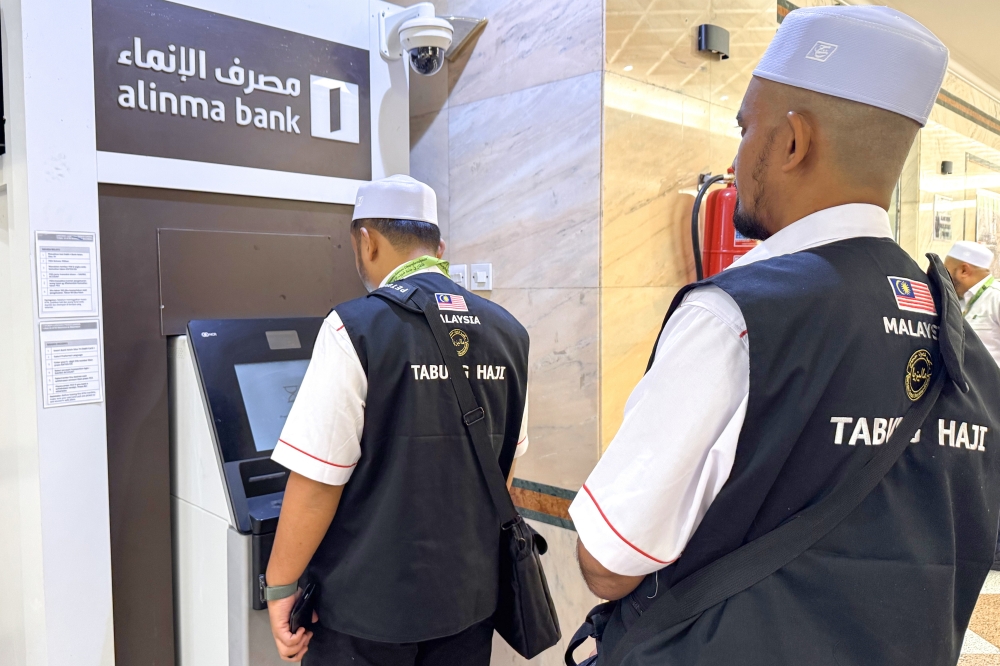
Why the Tabung Haji Crisis Hits Closer to Home Than You Think
You read the headlines. Tabung Haji. RCI report. Creative accounting. RM2.75 billion. It feels distant, institutional—a problem for politicians and civil servants, not for you and your small team in Shah Alam or Johor Bahru.
But the Royal Commission of Inquiry (RCI) that dropped this week exposes a vulnerability that every single business owner in Malaysia shares: the gap between the story you tell yourself and the reality sitting in your accounts.
When Tabung Haji paid out that massive hibah in 2017, it wasn’t just bad luck. It was a strategic choice to over-promise in order to attract and keep customers. Sound familiar?
TL;DR: The RCI report reveals that Tabung Haji used creative accounting to pay RM2.75 billion in hibah it couldn’t afford, leading to a RM4 billion deposit run in 2019. For your SME, the lesson is brutal: overpromising to secure cash flow, hiding behind messy bookkeeping, and ignoring early warning signs is a direct path to the same kind of collapse. The fix is radical transparency in your processes.
What This Means: Trust, Not Just Money
Let’s strip it down. Tabung Haji paid out RM2.75 billion in annual profit and hajj hibah in 2017. The RCI says they shouldn’t have. Why? Because they didn’t have the sustainable profits to back it up. They fudged the numbers—what the report calls “creative accounting”—to make it work. When they finally couldn’t keep up with the fiction, the 2019 payout dropped to 1.25%.
What happened next was a bank run in slow motion. Depositors, realizing the truth, pulled out their savings. The fund’s deposits shrank from RM73 billion to RM69 billion in a single year. Tabung Haji got lucky the run wasn’t worse.
For a small business, this plays out every day. You win a client by promising a six-week delivery you know takes eight. You keep a client by absorbing costs you can’t sustain. You look at your bank balance and call it profit, ignoring the credit card debt and unpaid supplier invoices. You are Tabung Haji. You just haven’t faced your “2019” yet.
How This Applies to Your SME in Malaysia
1. The Overpromise Spiral. You need the cash flow, so you say yes to everything. This moment of relief feels like strategy, but it’s dependency. Tabung Haji’s aggressive hibah policy from 2014 to 2017 was designed to attract deposits. It worked, but it created an expectation beast that had to be fed every year. In your SME, every rush job at a fixed price, every “free service” you throw in to close the deal, is you feeding the beast. The moment you can’t, the client leaves, taking a chunk of your revenue with them, just like depositors did.
2. The “Unqualified” Account Trap. The RCI blasted the National Audit Department for signing off on TH’s accounts when they were clearly shaky. The audit report contained an “emphasis of matter” that should have been flagged as a major non-compliance issue. Be honest: are you your own National Audit Department? Do you look at your management accounts and sign off on them without digging into the details?
When the numbers feel fuzzy, and you accept “close enough,” you are issuing an unqualified audit opinion on your own failing business. If your accounts haven’t been reconciled in months, or your inventory value is an estimate, you are right now creating the conditions for a crisis. The creative accounting doesn’t have to be malicious. It’s often just neglect.
The most dangerous lie in business is the one you tell yourself about your own financial health. The RCI report proves the market will eventually fact-check your story.
3. The Cash Flow Run. The RCI noted that TH was “fortunate that the withdrawals, and their impact, were smaller than feared.” A bank run doesn’t have to be a total panic. It can just be a slow erosion. A major client switches suppliers. A landlord doesn’t renew your lease. A key employee quits. These are your “RM4 billion withdrawals.”
The report highlights how high hibah payments depleted TH’s reserves. In your business, what are your reserves? Is it a cash buffer? Flexible supplier terms? A team that can pivot? If your reserves are tied up in a promise to a single client, you have no reserves. You have a loan disguised as revenue.
4. Automation as Your RCI. The RCI was an external force that finally revealed the truth. Your business needs an internal RCI that runs every single month. The best version of this is not a person, but a rigid process backed by software.
When your invoicing, expense tracking, bank reconciliation, and financial reporting are automated, the creative accounting options are minimized. You can’t “forget” an invoice or “estimate” an expense if the system forces the data to match. This isn’t just bookkeeping. This is your corporate immune system.
5 Practical Takeaways to Implement This Week
- Run the “Hibah” Test: What is the one thing you consistently promise clients that eats your margin? Stop it. Replace it with what you can actually deliver profitably.
- Create a “Withdrawal” Scenario: Map out exactly what happens to your weekly operations if your top 3 clients leave in the same quarter. If the plan relies on “magic new sales,” you have a TH problem.
- Reconcile Weekly, Report Monthly: Do not go to bed at the end of a month without a full Profit & Loss statement and a Balance Sheet. If you are too busy to do this, you are too busy to run a sustainable business.
- Flag the “Emphasis of Matter”: Identify one number in your recent financials that you know is an estimate or a guess. Inventory value? Unbilled work? Goodwill? Create a plan to turn that estimate into a confirmed data point.
- Digitize Your Workflow: Inventory tracking, expense claims, purchase orders. If it involves a physical piece of paper or a manual data entry step, it is a vulnerability to “creative” interpretation. Move it to an automated system.
The Bigger Picture: From Crisis to Credibility
The Tabung Haji case isn’t an isolated scandal. It is a symptom of a systemic risk that exists everywhere operational clarity collides with performance expectations. For the Malaysian SME landscape, the lesson is the dawn of a new standard.
The government is moving toward e-invoicing. Banks are tightening lending requirements. Customers are more educated and less patient. The era of “let’s just figure it out later” is ending. The businesses that survive and thrive will be the ones that can prove their financial and operational health instantly.
An SME that operates with radical financial transparency isn’t just a safe business. It is a powerful business. It earns trust without words. It can negotiate from strength. It makes decisions based on fact, not fear.
The RCI didn’t just investigate Tabung Haji. It handed every Malaysian business owner a mirror. Look at your processes. Look at your promises. Look at the gap between them. And close it before the market does it for you.
The Parallels Between Tabung Haji and an Unstable SME
| Tabung Haji Action (RCI Finding) | Your SME Equivalent | The Business Consequence |
|---|---|---|
| RM2.75 billion hibah payout (2017) | Underpricing or over-servicing a major client | Instant margin erosion, future financial strain |
| Creative Accounting (2014–2017) | Delaying invoice recognition, ignoring payables | Distorted decision-making based on false profits |
| RM4 billion depositor withdrawal (2019) | Loss of a core contract / Mass client churn | Cash flow crisis, potential insolvency |
| Drop in hibah to 1.25% | Forcing a margin kill to retain a client | Business operates at a loss, reserves deplete |
| Unqualified Audit Opinion (despite red flags) | Unreconciled accounting, “gut feel” management | Owner is blind to the real financial health |
Your business is an engine. If you are burning trust and capacity to create the illusion of motion, you are building a Tabung Haji, not a legacy. The mechanics of a healthy business are boring. They involve automated checks, strict reconciliations, and honest promises. But boring businesses rarely collapse.
Ready to Streamline Your Operations?
Your business should run itself. AutoRunBiz deploys AI agents to automate your daily operations — WhatsApp orders, invoicing, customer follow-ups, and accounting. Book a free 15-min ops audit to see where automation fits your business →