
You Think You Know Your Numbers. What If You Don’t?
Every month, you check your sales, your expenses, and your bank balance. You run a small or medium business in Malaysia. You rely on these numbers to make decisions. Do you hire? Do you buy stock? Do you pay yourself a bonus for a good quarter?
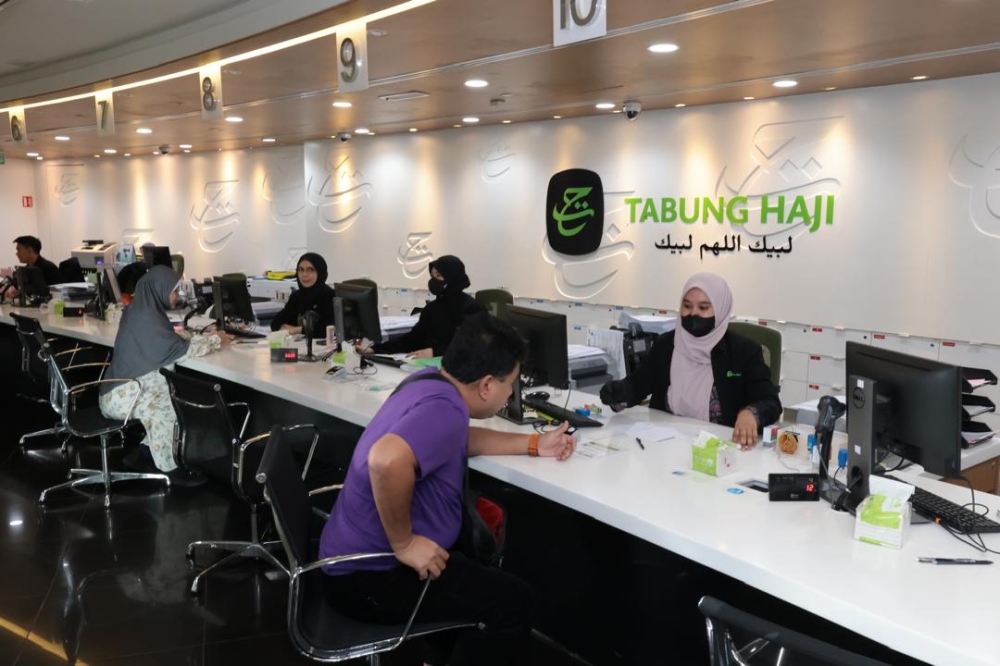
Lembaga Tabung Haji just taught the whole country a terrifying lesson in trusting bad data. A Royal Commission of Inquiry (RCI) uncovered that in 2017, TH reported a profit of RM3.4 billion. The reality? They were facing a net loss of RM1.4 billion. That is a swing of RM4.8 billion — they hid a massive collapse in plain sight.
You might think this is a story about a giant institution far beyond your world. It is exactly the opposite. This is a story about process failure. If a multi-billion ringgit institution with auditors, regulators, and a dedicated finance department can get the numbers this wrong, could the same thing be happening inside your own business?
TL;DR (Too Long; Didn’t Read)
- TH’s Big Mistake: They paid out money they didn’t have, ignored losses, and recorded income that never arrived. This made a loss look like a profit.
- Your Parallel: Many SMEs make the exact same errors — valuing bad debt as good, paying yourself before collecting cash, and using spreadsheets that allow hidden mistakes.
- Automation is the Answer: You can’t earn your way out of bad bookkeeping. The only way to stop making the same errors TH made is to have a system that enforces reality.
What This Means (In Plain Language)
The RCI report cited specific failures. Let’s translate them from “government finance speak” into “how this applies to you”.
The Hibah Trap. TH paid out RM2.75 billion in hibah (returns to depositors) even though the profit wasn’t real. They spent money they didn’t actually have.
Your version: You make a big sale in June with 60-day payment terms. You celebrate, pay yourself a bonus, and buy new inventory. In August, the client hasn’t paid. You are now short on cash. You paid yourself based on a mirage.
The Impairment Blind Spot. The RCI found TH didn’t write down the value of its bad investments. They were losing money on paper but pretending everything was fine.
Your version: You have a debtor who hasn’t paid in six months. You still list that RM10,000 as a full “asset” on your balance sheet. You have stock sitting in your shop for a year. You still value it at full cost. Your balance sheet is lying to you.
The Governance Gap. The report highlighted a lack of firmness and oversight. In your business, who checks the person doing the books? If you are the boss, and your bookkeeper or accountant shows you a number, can you prove it is real? If they use a spreadsheet, a single formula error can cascade into a serious problem.
How This Applies to Malaysian SMEs
You might think your business is too small for this kind of mistake. Let’s be honest: being small means you have less room for error. A RM10,000 mistake for a RM500k business hits harder than a RM1 billion mistake for an RM80 billion institution. Here is how the Tabung Haji failure mirrors your daily reality.
The “Spreadsheet Hero” Danger. Many Malaysian SMEs run their entire business on an Excel file. It works fine until someone types a number in the wrong cell, or uses the wrong formula. The RCI report proved that relying on manual processes eventually breaks. If you are using a basic accounting software but are manually overriding journal entries or ignoring the built-in reporting, you are doing the same thing. A good system enforces rules. It prevents you from booking a payment that shouldn’t exist.
The “Stock and Debtor” Fiction. In the RCI report, TH failed to conduct impairment assessments. In your business, this is “Cash flow is tight, but look at all this stock we have” or “We have RM50k in receivables”. If you haven’t actually checked if that stock is sellable, or if those debtors are going to pay, your net worth is an illusion. Automation can give you a real-time aged inventory and aged receivables report. It yells at you when things are wrong, so you can’t pretend.
The “Trust Me” Culture. In many SMEs, one person knows everything about the finances. If they go on leave, you are blind. If they make a mistake, you crash. Tabung Haji had this problem on a national scale. The RCI found that management was not held accountable. Automation is your governance. It creates an audit trail. It separates duties. Your salesperson should not be receiving payments. Your accountant should not be approving their own entries. A system keeps everyone honest.
“If Tabung Haji, with all its wealth and auditors, can look at a RM1.4 billion loss and call it a RM3.4 billion profit, your own internal numbers deserve a much harder look. Trusting a human brain over a verified system is the riskiest move you can make.”
TH vs Your SME: Spot the Same Mistakes
| The TH Mistake (RCI Findings) | Your SME’s Version | What You Should Actually Do |
|---|---|---|
| Paid RM2.75b hibah based on unrealised profits | Taking owner’s drawings or paying bonuses based on sales that are still uncollected | Compare Accrual Profit vs. Cash Flow every month. Don’t pay yourself until the money is in the bank. |
| Failed to conduct impairment tests on investments | Not writing off old stock or chasing old debts | Run an Aged Receivables report. Anything over 90 days is not an asset. Value your inventory at what you can actually sell it for. |
| Recorded dividends that were never paid to them | Booking a job or project as revenue before the client approves or pays | Use strict revenue recognition. Don’t count it until the service is delivered or the cash is in your hands. |
| Weak internal governance and oversight | No one verifying the month-end numbers or bank reconciliations | Automate payment approvals and journal entry reviews. If you are a team of one, get a virtual assistant or a system that flags anomalies. |
The Bigger Picture
This is not just a political story. It is a cultural signal for business in Malaysia. The government, LHDN, SSM, and banks are taking financial reporting much more seriously. The days of “managed accounts” or “rough estimates” are ending. An SME that can prove its numbers instantly has a massive advantage. You can get financing faster. You can onboard investors smoothly. You can sell your business for its true value.
The Tabung Haji RCI report is a free lesson for every business owner in Malaysia. It proves that process beats trust. Automation beats hope. You don’t have to be a genius to run a profitable business. You just have to be honest about your data. If you are relying on spreadsheets, manual bookkeeping, or hope, you are taking the exact same risk Tabung Haji took.
Your Action Check-List
- Check your debtors. List everyone who owes you money and how long they’ve owed it. If it’s over 90 days, call them or write it off.
- Check your stock. When was the last time you valued your inventory properly? If it isn’t saleable, it isn’t an asset.
- Stop living on cash flow alone. Profit is what you keep after expenses. Cash is just your bank balance. Know the difference. Your business depends on it.
- Audit your system. Is your software enforcing rules, or is it just a glorified calculator? A real system prevents the Tabung Haji mistakes.
- Get a second set of eyes. Even a simple review process can catch the one error that breaks your business.
Don’t let your business be the next case study in financial illusion. The RCI report is a public document, but its private lesson is for you. Get your data right. It is the most valuable asset you own.
Ready to Streamline Your Operations?
Your business should run itself. AutoRunBiz deploys AI agents to automate your daily operations — WhatsApp orders, invoicing, customer follow-ups, and accounting. Book a free 15-min ops audit to see where automation fits your business →