
The money you’re ignoring is quietly shrinking
When was the last time you looked at the balance in your company’s current account? Not the one you check for payroll or supplier payments — the one that just sits there as a buffer for slow months and unexpected expenses.
If you’re like most Malaysian SME owners, that balance is earning you close to nothing. Meanwhile, the cost of raw materials, rent, and everything else keeps climbing. Your idle cash is slowly losing its purchasing power, and you barely notice because it happens quietly, month after month.
A recent story about Singapore’s Chocolate Finance shows what happens when a company decides to solve this exact problem. The platform passed 150,000 users and S$1.5 billion in assets within two years of launching — not by inventing a complicated investment product, but by doing one thing well: giving people a better home for spare cash without locking it away. Here’s why that matters for your business, and what it tells us about where SME cash management is heading.
TL;DR: Your business likely has cash sitting in accounts earning little or nothing. A new wave of cash management platforms — like Singapore’s Chocolate Finance, which hit 150,000 users in two years — is proving that “parked” cash can earn meaningful returns without lock-ins. Malaysian SMEs should take three lessons: review where your idle cash sits, tier your cash by purpose, and treat cash management as an ongoing habit, not a one-time decision.
What This Means: Cash management, without the lock-in
Chocolate Finance isn’t a bank — it’s a licensed fund manager offering a cash management account. Customer funds go into a professionally managed portfolio of high-quality, short-duration fixed-income and money market funds, the kind of conservative instruments that aim to protect capital while generating steady returns.
The key innovation isn’t the product itself. It’s the structure. The account comes with no lock-in period or withdrawal penalties, and no complicated requirements like salary crediting or minimum spending to qualify for a decent rate. At the time of writing, the platform offers 2% p.a. on the first S$20,000 and 1.8% p.a. on the next S$80,000, with a USD option at 4.1% p.a. on the first US$20,000 — rates that beat many Singapore fixed deposits, which now sit around 1.5% p.a. for the best 12-month terms.
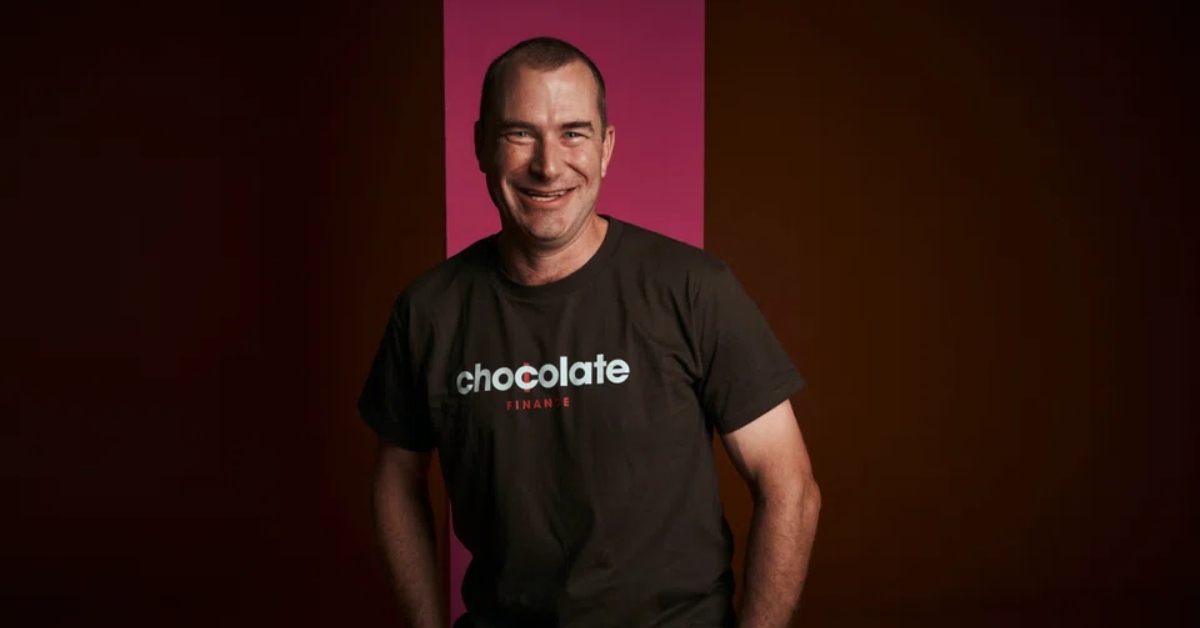
“Imagine returns better than a fixed deposit, but you could take it out anytime. That’s exactly the problem Chocolate Finance was built to solve: helping people get better returns on short-term cash without locking it away.” — Walter de Oude, founder of Chocolate Finance
This isn’t risk-free, and the company is clear about that. Returns and principal are subject to market movements, and funds aren’t protected under Singapore’s deposit insurance scheme. A Top Up Programme supports advertised returns on the first S$100,000 if portfolio performance falls short — but that’s support, not a guarantee. The bigger point stands: the financial industry spent decades telling people they had a binary choice. Earn nothing and stay liquid, or earn something and give up access. That trade-off is no longer necessary.
How This Applies to Malaysian SMEs
Now let’s bring this home. You’re running a business with 1 to 50 employees. You’ve got payroll to meet, suppliers to pay, and taxes to remit. Every owner knows the feeling of needing a cash buffer — usually a few months of operating expenses sitting in a current account “just in case.” That’s prudent. The problem is what happens to that buffer: nothing. It sits there, earning zero, while the cost of everything it will eventually buy keeps rising.
Here’s the hard truth about your cash buffer: you don’t need all of it available at the same moment. Your payroll goes out on a fixed date. Your suppliers have payment terms measured in weeks. Your biggest risk isn’t that you can’t access money on a random Tuesday afternoon — it’s that a chunk of your cash is idle for months at a time, quietly losing value. That money could be doing something useful.
Look at the math from the source story: S$50,000 in a basic savings account earns roughly S$25 a year, while the same amount in a cash management solution could earn S$1,350–1,500 with no lock-in. The exact numbers differ in Malaysia, but the principle is identical. Say you routinely keep RM50,000 as a working buffer. If even a portion of it could earn a meaningful yield without being locked up, that’s money working for you instead of against you. As a business owner, you’d never leave a machine running without checking that it produces value. Why leave thousands of ringgit sitting in an account that produces nothing?
The second lesson is about complexity. In Singapore, traditional savings accounts often require salary crediting, minimum spending, or holding multiple products to unlock the best rates. Malaysian SMEs face a similar maze — and most owners simply don’t have time to chase it. This is where the automation mindset comes in. Instead of manually monitoring rates and shuffling money between accounts, look for systems or processes that do this work for you. The future of SME cash management is set-and-forget: money moves where it needs to go, and you only step in when there’s a real decision to make.
Third, note that Chocolate Finance saw the demand first among consumers, then expanded to businesses — its business account offers eligible companies returns on their first S$300,000 in spare cash. This is a direct signal: the platforms that win will be the ones that make cash management effortless for small companies, not just individuals. Malaysian business owners should watch for similar offerings locally, but more importantly, adopt the mindset now. Start by knowing exactly how much cash you’re leaving idle, and what it’s costing you.
| Where your cash sits | Typical outcome | Access |
|---|---|---|
| Current account | Little to no interest earned | Immediate |
| Fixed deposit | Better rate, but funds locked for months | Penalty to withdraw early |
| Cash management / money market | Competitive rates without lock-in (e.g., 2% p.a. on the first S$20,000) | Anytime, no penalties |
Practical Takeaways for Your Business
- Audit your idle cash. Check every account your business holds. How much sits there for more than a month without moving? That’s your opportunity.
- Tier your cash by purpose. Keep only what you need for the next 30 days in your current account. Put the next 3–6 months of operating expenses into something that earns a return while staying accessible.
- Read the fine print. Cash management products are not savings accounts. Understand what you’re investing in, how liquid it really is, and whether any support program backs the advertised returns. A Top Up Programme is not the same as a deposit guarantee.
- Automate the tracking. Use your accounting or automation tools to see cash positions at a glance, and set a monthly reminder to review idle balances. Treat cash like inventory — something to be monitored and optimized.
- Review quarterly. Rates change. Your business needs change. Make cash management an ongoing practice, not a one-time fix.
The Bigger Picture
What’s happening in Singapore is a preview of what Malaysian SMEs should expect. The boundary between “banking” and “investing” is dissolving. In the past, you parked cash in a bank for safety and took on risk only when you invested. Now, cash management platforms are offering conservative, short-duration, professionally managed options that blur that line — and they’re doing it with the user experience of a modern app, not a branch visit.
For years, the default answer to “where should my business keep its spare cash?” was “a fixed deposit.” That answer is being challenged because it forces an unnecessary trade-off between earning and access. The companies that win this shift — in Singapore, Malaysia, or anywhere else — will be the ones that make it easy for small businesses to put idle cash to work without adding complexity to their week.
The takeaway for your business is practical and immediate. Look at your balance sheet. Find the cash that’s doing nothing. Ask yourself whether you really need every ringgit instantly accessible, or whether some of it could be earning its keep. When someone tells you that a savings account or a fixed deposit is the only sensible place for business cash, remember what 150,000 users in two years proves: thousands of people looked at their idle money, did the math, and decided that leaving it in a low-yield account was a choice — not a requirement.
Ready to Streamline Your Operations?
Your business should run itself. AutoRunBiz deploys AI agents to automate your daily operations — WhatsApp orders, invoicing, customer follow-ups, and accounting. Book a free 15-min ops audit to see where automation fits your business →