
Your customers are talking. Is your business actually listening?
Think about the last time you called a utility company or a bank. You pressed 1, then 3, then waited. You repeated your IC number twice. Then the line dropped. Now imagine one of your own customers calling your shop, only to get a robotic “Please press 2 for reservations” and eventually hanging up. For most Malaysian SME owners, that’s not a hypothetical — it’s a daily grind between staffing costs and missed opportunities.
The usual fix has been a simple auto-attendant or a WhatsApp chatbot. But words on a screen can’t convey hesitation. And a phone tree can’t tell the difference between a customer who says “this is urgent” and one who says “I’ll call back later.” That’s where a new breed of AI is heading — and it’s closer than you might think.
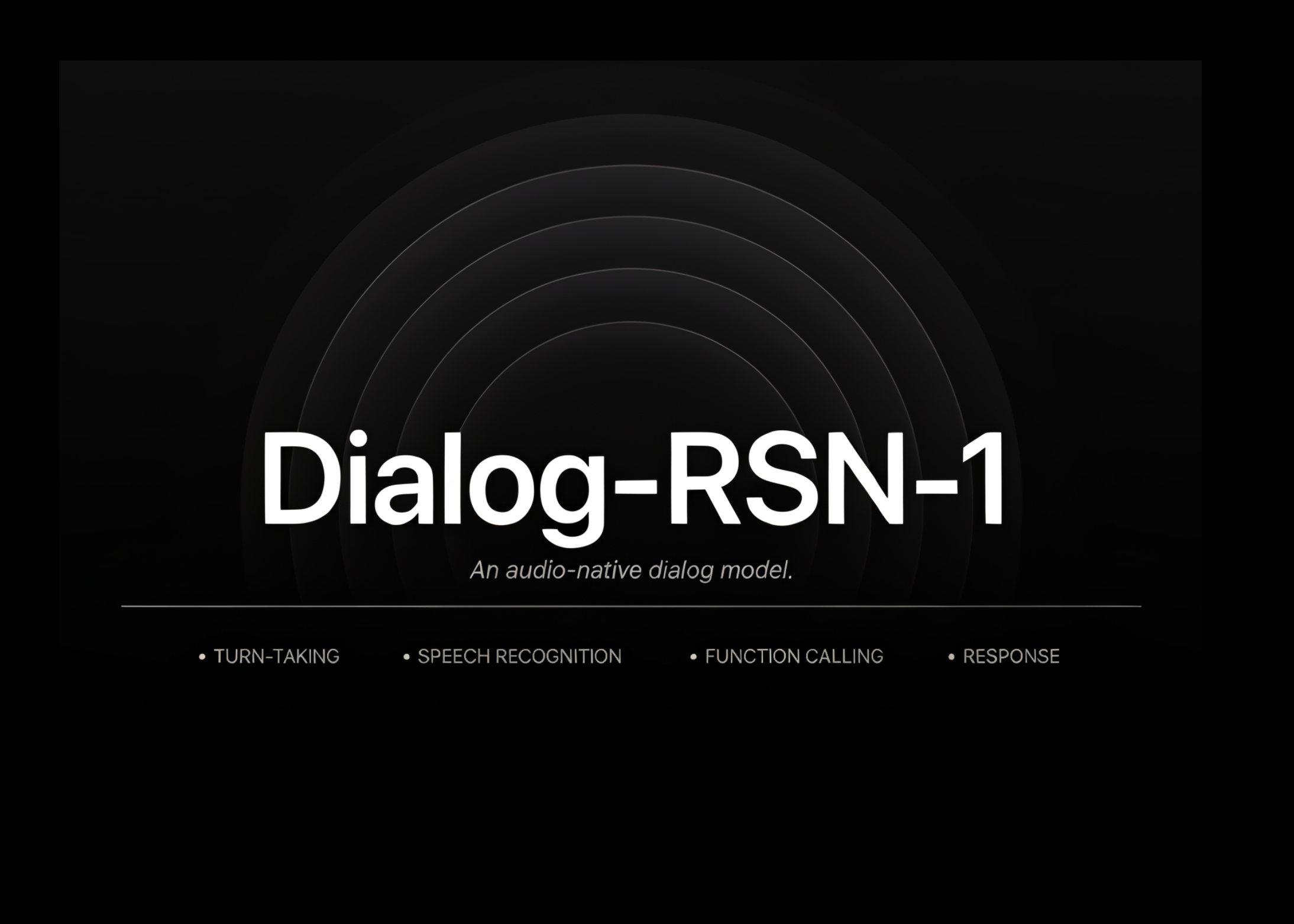
A company called PolyAI just released Dialog-RSN-1, a voice model that listens to raw audio instead of reading a transcript. It understands tone, timing and uncertainty, then decides when to speak — all in under a fraction of a second. You don’t need to buy it, and it’s not aimed at businesses your size yet. But it tells you exactly what “good” phone automation will look like in the next few years, and where you should be preparing right now.
TL;DR
- PolyAI’s Dialog-RSN-1 is an audio-native model: it hears your customer’s voice directly, not just a typed transcript.
- It decides when to speak as its very first action, responding in under 300 milliseconds.
- It’s only available through PolyAI’s enterprise platform, not for download — but the implications for every Malaysian SME are huge.
What This Means: Why “hearing audio” beats “reading text”
Most voice AI systems today work like a game of broken telephone. First, speech-to-text converts what the customer says into words. Then the AI reads those words, decides a reply, and text-to-speech reads the answer aloud. The problem: by the time the message becomes text, the tone is gone. A nervous “is my order still coming?” and an angry “is my order still coming?” look identical on paper.
Dialog-RSN-1 skips that conversion on the input side. It processes the audio itself. It hears the hesitation, the background noise, the rising pitch. It also fuses several jobs — turn-taking, speech recognition, function calling, and response generation — into one model. That means it knows when to talk and when to wait, which is the hardest part of any human conversation.
“Turn-taking is the model’s first output token: EMPTY, ONGOING, or COMPLETE.” — PolyAI’s architecture, as reported by MarkTechPost
In plain language: the AI first decides “should I stay quiet or answer now?” — and only then composes the reply. That’s how a natural phone call works. A human listening on the other end can tell when you’ve finished speaking. Older systems just wait for a long silence, which feels awkward and slow.
How This Applies to Malaysian SMEs
1. Your after-hours calls are leaking revenue.
You run a restaurant in SS15 or a boutique in Johor Bahru. You close at 10pm, but a customer calls at 10:15pm to book a table for Mother’s Day. Nobody answers. They call your competitor. PolyAI reports that its model improved call containment by 11% at a restaurant group — meaning more customers got their issue resolved without needing a human. That’s not just about saving staff time; it’s about catching bookings that would otherwise evaporate.
2. The language barrier is temporary — but your readiness doesn’t have to wait.
Dialog-RSN-1 launches in English only, with PolyAI recommending its Raven model for non-English. Malaysian SMEs operate in Bahasa Melayu, Mandarin, Tamil, and Manglish on a single phone line. Does that mean you should ignore this? No. It means you should start preparing for the day when a local provider offers an audio-native model. That day is coming, and it will favour businesses that already have clear answers for their top 20 phone enquiries, recorded and organised. If you can’t describe your repeat questions today, no AI can help you tomorrow.
3. You can demand a better standard from your vendors.
PolyAI positions Dialog-RSN-1 for large, high-call-volume enterprises, not self-serve SMBs. But you don’t need to buy it to benefit. When your telco, booking system, or CRM vendor next offers you a “voice assistant,” you now have a benchmark. Ask: does it listen to audio or a transcript? How fast does it answer — under 300ms? Does it know when to stay silent? PolyAI’s results include a 37% latency reduction at an insurer. For your customers, every extra second of dead air makes them hang up. That’s the kind of metric you should be evaluating today.
What the numbers tell you
Here are the key figures from PolyAI’s release, and what they mean for your own measurement habits:
| Metric | PolyAI result | Why it matters to you |
|---|---|---|
| Response time | Sub-300ms on A100 GPUs | Feels immediate; your callers won’t notice a robot pause |
| Containment at a restaurant group | +11% relative improvement | More customers get answers without escalating to a human |
| Latency at an insurer | -37% | Shorter calls, happier callers — less time wasted on hold |
| Transcription word error rate (with context) | Improved from 7.8% to 6.9% | Accuracy climbs when the system understands the full conversation |
All figures sourced from PolyAI’s release coverage. You don’t need A100 GPUs or a research team. You need to start tracking your own numbers: how many calls do you miss per day, how many repeat questions come in, and how long it takes your team to answer.
Practical Takeaways: 5 things you can do now
- Measure your missed calls. Put a counter on your phone line or ask your telco for a simple report. If you miss more than one in ten calls, that’s a visible pattern, not bad luck.
- Write down your top five repeat questions. “Are you open on public holidays?” “How long does delivery take?” — these are prime candidates for automation.
- Test your current phone experience. Ring your own business like a customer. Count the seconds of silence between your prompt and the AI’s response. If it’s over one second, your customers feel it.
- Keep your FAQs and price lists structured. Use a simple Google Sheet or a WhatsApp broadcast list. The better organised your answers are, the easier they’ll feed into future voice systems.
- Demand audio-native thinking from your vendors. When a salesperson pitches “AI voice assistant,” ask how the system handles hesitation and background noise. If they only mention speech-to-text, keep looking.
The Bigger Picture
Within a few years, the phone system in your office will no longer be a piece of hardware. It will be a layer of AI that listens, thinks, and responds with human-like timing. Dialog-RSN-1 is an early signal, but the direction is clear: voice models are becoming smart about silence. For Malaysian SMEs, that means you can eventually answer after-hours calls, handle multiple languages, and provide instant support without hiring a full-time receptionist.
But the winners won’t be the ones who buy the most advanced tool. They’ll be the ones who have already cleaned up their customer interactions — clear answers, shorter hold times, and a habit of measuring what actually happens when the phone rings. The technology is coming to you. When it does, your business — even with two employees — can sound like a ten-person company.
Start today by listening to your own line. The AI will do the rest tomorrow.
Ready to Streamline Your Operations?
Your business should run itself. AutoRunBiz deploys AI agents to automate your daily operations — WhatsApp orders, invoicing, customer follow-ups, and accounting. Book a free 15-min ops audit to see where automation fits your business →