
Your AI Assistant Already Knows Too Much About Your Business
You didn’t sign up for a rivalry when you started using that AI writing tool. You just wanted product descriptions, email replies, or a chatbot to handle customer questions. But Palantir CEO Alex Karp is asking a sharper question: what if the company behind your favourite AI tool is quietly building the exact same business as you?
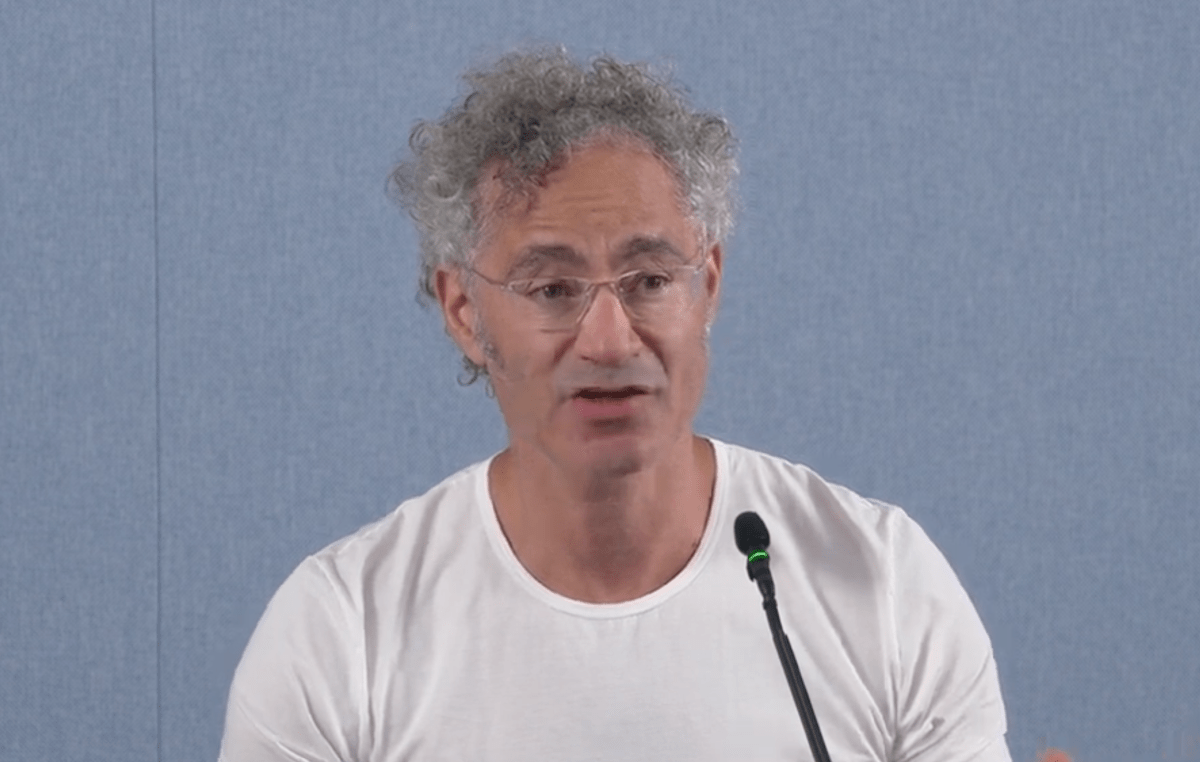
Karp wasn’t talking about Malaysia. Yet the warning is loud enough to travel across the Pacific. In Palantir’s quarterly letter, he said some AI labs intend, knowingly or otherwise, to “capture the means of production of their purported partners.” For a non-economics person, that’s a dramatic way of saying: your AI vendor might become your competitor.
TL;DR: Palantir’s CEO warns that AI labs can use your data and workflows to move into your industry. For Malaysian SMEs, this means choosing AI tools with clear data-ownership terms, keeping your proprietary data out of public models, and dealing with vendors who don’t sell your business secrets on the side.
What “Marxist AI” Actually Means in Plain Language
Ignore the political label for a moment. The phrase “means of production” is just an economist’s way of describing the tools, knowledge, and systems needed to operate a business. When Palantir’s CEO says AI labs want to “capture the means of production,” he means they want the valuable parts of your business—your customer lists, your pricing strategy, your supplier terms, your unique way of solving problems. They don’t need to steal from you. You hand it over every time you type a prompt.
This isn’t exactly a new problem. If you use a global booking platform to run your homestay, the platform knows your occupancy rates. If you use a delivery app, the app knows your margins, your peak hours, and your loyalty data. AI just does this faster, and it can turn what it learns into a product that competes with you.
“There are Marxist overtones and undertones to our business. Others, including many of those building large language models, intend, knowingly or otherwise, to capture the means of production of their purported partners.”
How This Applies to Malaysian SMEs
Run a F&B chain in Petaling Jaya? You may use an AI chatbot trained on your menu, ingredient suppliers, and customer feedback. That chatbot can answer questions, but behind the scenes the AI provider sees your recipe costs and your most popular dishes. If the provider later launches its own kitchen-management platform, it already knows your numbers. You don’t have to be paranoid to demand better terms.
A Johor-based manufacturing exporter might use an AI platform to draft supplier emails and translate product specs. Those emails contain client names, specifications, and pricing. With enough samples from many SMEs, an AI vendor can spot the exact problems you solve and package that into an industry benchmarking tool, then sell it to your competitors. The practical answer isn’t to stop using AI. It’s to use AI tools that are model-agnostic, like the one Palantir promotes, meaning the tool doesn’t secretly train on your data for the vendor’s own benefit.
For a Penang medical or professional services firm, the stakes are even higher. Client files contain personal data protected under Malaysia’s Personal Data Protection Act (PDPA). If you feed that information into an overseas AI assistant, you may be transferring data outside Malaysia without proper consent. That’s not just a competitive risk—it’s a legal one. The AI company may be respectful, but your obligations remain yours.
What the Numbers Say
| What happened | Why it matters to you |
|---|---|
| Palantir’s business grew 93% year over year, according to TechCrunch. | Even a company that criticises AI labs is thriving on AI. Adoption is not the problem—dependency is. |
| AI labs have moved into design, healthcare, legal, and drug discovery, as TechCrunch reports. | If your vendor enters your industry, your own data may be powering the competition. |
| Palantir says its model-agnostic approach lets customers keep their data and AI “exhaust,” including prompts and context. | You can demand the same from your AI vendor, even if you’re a small company. |
Practical Takeaways for Your Business
- Read the terms of service. Search for “machine learning,” “train,” “retain,” and “share.” If those words appear, ask what your data will be used for.
- Set a company rule: no confidential data in consumer-grade AI tools. Use business-grade AI accounts with explicit privacy protections.
- Keep a clean copy of your proprietary data outside AI platforms. Your customer database, supplier list, and pricing models are your assets. Don’t let them become someone else’s training set.
- Ask vendors two questions: “Who owns the input I provide?” and “Can you remove my data when I leave?” Get answers in writing.
- Build a human review layer. AI can draft, summarise, and suggest, but a person should approve anything that goes to clients, suppliers, or regulators.
- Use more than one AI tool. A single vendor that sees your marketing, sales, and operations all at once is riskier than a more balanced stack.
The Bigger Picture
Karp’s “Marxist” line is deliberately provocative, but the underlying warning is straightforward: in an AI-driven market, the most valuable resource is no longer the model—it’s the data that trains it and the practical problems that data solves. Even voices like Microsoft CEO Satya Nadella have made similar arguments about companies needing to protect what makes them unique.
For Malaysian SMEs, this is actually a quiet advantage. You have something foreign AI labs can’t easily buy: local context, trust relationships, Bahasa Melayu and Mandarin fluency, and an understanding of Malaysian habits. If you keep that knowledge guarded and combine it with the right tools, you won’t become the AI vendor’s side business. You’ll become the one who owns the customer relationship.
As AI becomes a normal part of Malaysian business, expect more local and regional providers to offer private, model-agnostic platforms. Policy will likely catch up too. In the meantime, treat every AI tool like a new employee. You wouldn’t give a new hire your entire client list on day one. Give AI only what it needs, set boundaries, and keep the things that make your business different exactly where they belong—with you.
Ready to Streamline Your Operations?
Your business should run itself. AutoRunBiz deploys AI agents to automate your daily operations — WhatsApp orders, invoicing, customer follow-ups, and accounting. Book a free 15-min ops audit to see where automation fits your business →