
Could an Electric SUV Make Sense for Your Business?
If you run a Malaysian SME, your vehicles probably do more than move from point A to point B. They carry products, visit customers, transport staff, attend site meetings, and represent your brand on the road. A vehicle that spends too much time at petrol stations, requires frequent maintenance, or is difficult to manage can quietly disrupt your operations.
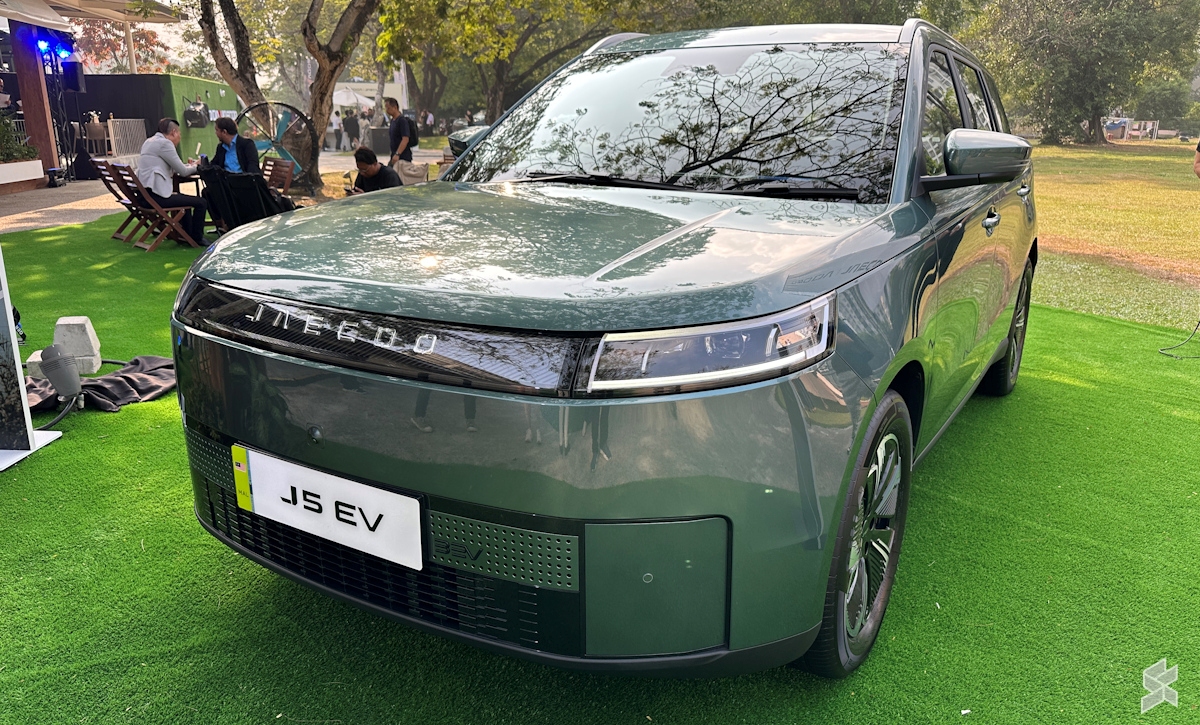
The arrival of the Jaecoo J5 EV in Malaysia gives business owners another vehicle option to consider. The model is reported to be available at RM119,000, with one year of unlimited charging and insurance included in the launch offer. Source Rather than asking whether every SME should immediately switch to electric vehicles, the more useful question is this: where could an EV fit into your existing business operations?
TL;DR
The Jaecoo J5 EV may suit SMEs that need a presentable vehicle for customer visits, management travel, or predictable daily routes.
Before deciding, check your driving patterns, charging access, staff usage, insurance terms, and whether the vehicle’s carrying capacity matches your work.
What This Means
An electric vehicle, or EV, uses an electric motor and battery instead of a petrol or diesel engine. You recharge the battery through a charging point, either at home, at your business premises, or at a public charging location.
For an SME, this is not simply a vehicle purchase. It is an operational decision. You need to understand how the vehicle fits your working day. If your sales team travels within Klang Valley, your service staff follow fixed routes, or your company vehicle returns to the same office every evening, charging may be easier to plan. If your employees travel long distances across several states with little schedule certainty, the same vehicle may require more careful planning.
The Jaecoo J5 EV’s reported launch package includes one year of unlimited charging and insurance. Source Treat these inclusions as part of the initial offer, not as a permanent operating assumption. You should verify the exact terms, charging network coverage, eligible locations, insurance conditions, and what happens after the first year directly with the authorised seller.
The right SME vehicle is not the one with the most impressive specification. It is the one that fits your routes, working hours, staff habits, and customer commitments.
How This Applies to Malaysian SMEs
1. Customer-facing businesses can use it as a professional company vehicle. If you operate an agency, consultancy, property firm, accounting practice, interior design studio, or other service business, your vehicle may form part of the customer experience. A modern EV can support a clean, current brand image when you visit clients, attend presentations, or travel between branches. It may be more appropriate for management and business development work than for carrying heavy stock.
You should still keep the decision practical. Ask who will use the vehicle, how many daily appointments are normal, and whether the driver can recharge between trips. A vehicle that looks suitable for client meetings but creates scheduling problems will not help your team. Build a simple route record for two to four weeks before deciding. Record the starting battery level, distance travelled, waiting time, and where the vehicle is parked at the end of each day.
2. SMEs with repeatable routes may have an easier transition. A bakery delivering to several cafés, a training provider visiting nearby corporate offices, or a maintenance company covering a defined service area may have predictable travel patterns. Predictability makes charging easier because you can set a routine. For example, the vehicle may return to the office each evening, allowing overnight charging, or remain at a branch with an available charger during working hours.
However, do not assume that every delivery role is suitable. Check the vehicle’s boot space, rear-seat configuration, payload requirements, and the way your goods are packed. A small business that transports cartons, tools, cleaning equipment, or fragile products should test the actual load rather than relying on photographs or general descriptions. A passenger-oriented SUV may be useful for light equipment but unsuitable for bulky daily deliveries.
3. Multi-branch SMEs need a charging and scheduling policy. If you have several offices, a sales team, or shared company vehicles, charging must be managed like any other business resource. Decide who may use the vehicle, where it should be charged, how charging records are kept, and what happens when the next driver needs it. A shared calendar can show bookings, routes, and charging windows. You can also add a simple vehicle checklist covering battery level, tyre condition, charging cable, cleanliness, and reported faults.
This is especially useful if employees take vehicles home. Your policy should explain whether home charging is permitted, how employees report charging activity, and how they prepare the vehicle for the next workday. Keep the rules short. The goal is not to create paperwork; it is to prevent avoidable confusion.
Numbers to Check Before You Decide
| Business question | What you should record | Why it matters |
|---|---|---|
| How far does the vehicle travel? | Daily kilometres for at least two working weeks | Shows whether your routine is predictable enough for charging |
| Where does it park? | Office, home, customer site, or public location | Identifies practical charging locations |
| How often is it used? | Trips per day and booking conflicts | Reveals whether a shared vehicle can meet demand |
| What does it carry? | People, tools, cartons, samples, or equipment | Helps confirm whether the vehicle suits the job |
| What is included in the offer? | Charging period, insurance coverage, exclusions, and renewal terms | Prevents assumptions about the first-year package |
The reported launch information states that the Jaecoo J5 EV is available in Malaysia at RM119,000 and includes one year of unlimited charging and insurance. Source Because offer conditions can differ by booking date, variant, registration status, and provider, ask for the written terms before signing any documents.
Practical Takeaways
- Map your routes first: Review actual daily travel instead of estimating from memory.
- Separate business use from personal use: Set clear rules for employee and family driving.
- Inspect your premises: Check parking access, electrical capacity, security, and permission requirements before arranging charging equipment.
- Test your real workload: Bring the bags, tools, samples, or cartons your team normally carries during a test drive.
- Confirm the launch package: Ask what “unlimited charging” covers, which locations participate, and when the benefit ends.
- Check insurance details: Confirm authorised drivers, business use, excess conditions, claims procedures, and renewal arrangements.
- Create a charging routine: Add charging status and vehicle availability to your shared operations calendar.
- Plan for exceptions: Decide what staff should do when a public charger is occupied or a route changes unexpectedly.
- Measure after deployment: Review route reliability, charging interruptions, driver feedback, and vehicle utilisation each month.
Using Automation to Manage an SME EV
You do not need a complex fleet system to manage one or two vehicles. A simple digital workflow can capture booking requests, assign drivers, record destinations, and remind users to return the vehicle with the agreed battery level. Your staff can submit information through a mobile form, while the business owner or operations lead receives a notification when a vehicle is booked or a problem is reported.
You can also automate recurring checks. A form can ask for the vehicle’s current mileage, battery percentage, charging location, tyre concerns, and cleanliness before each trip. If a driver reports a warning light or charging issue, the system can alert the responsible manager immediately. This prevents important information from being buried in a messaging group.
For SMEs already using spreadsheets, accounting software, or customer relationship tools, vehicle records can be connected to existing processes. Sales visits can be linked to customer appointments, service routes can be grouped by area, and vehicle availability can be shown alongside staff schedules. The purpose is simple: help you see whether the vehicle supports revenue-generating work or spends too much time waiting.
The Bigger Picture
The arrival of more EV models in Malaysia gives SMEs greater choice, but it also raises the standard for operational planning. Businesses will need to think about charging access, driver behaviour, vehicle utilisation, and digital records alongside the usual questions about capacity and reliability.
This does not mean petrol vehicles suddenly stop making sense. Different jobs require different tools. A long-distance sales role, heavy delivery operation, or emergency service route may need a different vehicle type. The sensible approach is to start with one clearly defined use case, measure the results, and expand only if the vehicle performs consistently.
For your business, the Jaecoo J5 EV may be worth considering as a customer-facing vehicle, management car, or light-duty shared vehicle. Its reported first-year charging and insurance package may simplify the initial decision, but the long-term suitability depends on your routes and processes. Source
Start with your calendar, not the showroom. Review where your team travels, when vehicles are available, and what each trip requires. Once you understand that pattern, you can judge whether an EV fits your SME based on daily reality rather than excitement around a new model.
Ready to Streamline Your Operations?
Your business should run itself. AutoRunBiz deploys AI agents to automate your daily operations — WhatsApp orders, invoicing, customer follow-ups, and accounting. Book a free 15-min ops audit to see where automation fits your business →