
Small Vehicles, Bigger Lessons for Your Business
If you run a Malaysian SME, you may not be designing electric cars. You may be managing deliveries, service visits, sales calls, field technicians, or a small company fleet. Yet the story of Spain-based Liux and its compact electric vehicle offers useful lessons for how you can make practical decisions when resources, space, and attention are limited.
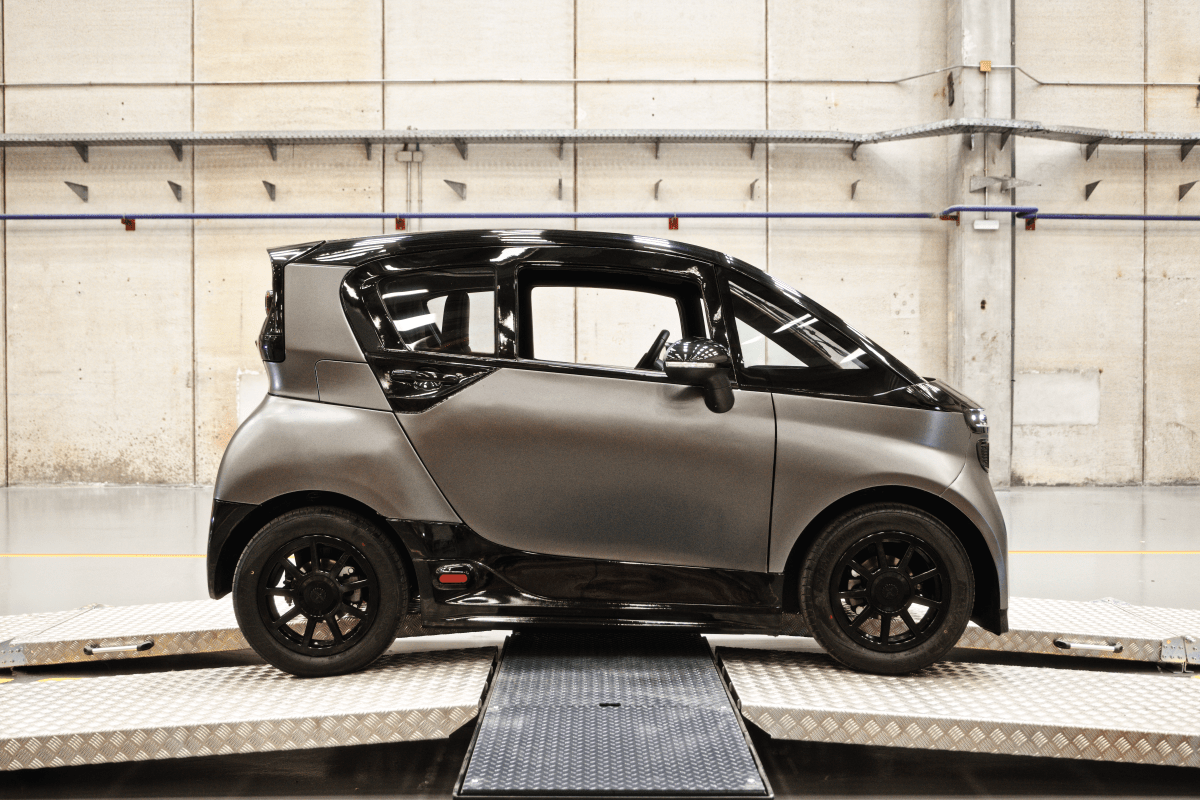
Many business owners assume that staying competitive means becoming bigger: more vehicles, more equipment, more stock, more branches, and more complicated systems. Liux is taking a different route. Its Liux Big is a small electric microcar designed around efficient use of space, easier maintenance, sustainable materials, and a focused production process. The company has secured Europe-wide homologation and expects to begin sales in the first half of 2027, according to the source article.
The business question for you is straightforward: where are you carrying unnecessary complexity? A smaller, better-designed operation may serve customers more reliably than a larger operation filled with waste, duplicated work, and assets that are difficult to maintain.
TL;DR
Liux is betting that a small, repairable, sustainability-focused electric vehicle can compete by being designed intelligently rather than simply being larger or cheaper.
For Malaysian SMEs, the lesson is to simplify workflows, choose assets based on real usage, plan for maintenance and reuse, and test focused solutions before expanding.
What This Means
Liux is a Spanish startup developing the Liux Big, a compact electric microcar for urban use. The vehicle uses a linen-based biocomposite body material intended to support later extraction and recycling. Its batteries can be recharged at home, including with electricity generated from solar panels, and the company says the car is designed to be easier to maintain and less vulnerable to rapid obsolescence.
The company also changed direction. Its first prototype, the fully electric five-seater Animal, was unveiled in 2022. Liux later pivoted to a smaller vehicle because the founders believed homologation would be more achievable. The company had grown to 65 employees by the time of the TechCrunch report, and it was preparing production across three facilities in Spain. Source: TechCrunch
This is not only a vehicle story. It is a story about disciplined design. Liux is accepting that a fully European supply chain is unrealistic, while still trying to control the parts of the product that matter most: material choices, repairability, safety, usability, and production efficiency.
A product becomes sustainable not only because of what it is made from, but because of how easily it can be maintained, reused, and separated later.
That principle applies to your business systems too. A workflow is not truly efficient if it saves time at the beginning but creates confusion during handovers, duplicate data entry, or expensive rework later.
How This Applies to Malaysian SMEs
1. Match your tools to the job, not your ambitions. Liux originally worked on a larger five-seater vehicle before moving to a smaller model with a clearer route to market. You can apply the same thinking to your business. If you have 10 employees, you may not need a complex enterprise platform with dozens of modules. You may need a dependable system for quotations, customer follow-ups, invoicing, stock updates, and task assignments.
For example, a Klang Valley air-conditioning service company could begin with a simple job-management workflow. When a customer contacts the business, the system records the request, assigns a technician, sends appointment details, captures photos after the visit, and alerts the office when follow-up is required. This focused workflow may solve more problems than adopting several disconnected applications that staff rarely update.
2. Design for maintenance from the start. Liux wants its vehicle to avoid fast obsolescence and remain easier to maintain. Many Malaysian SMEs face the opposite problem: business knowledge sits inside one employee’s WhatsApp chats, one salesperson’s spreadsheet, or one manager’s memory. When that person is absent, work slows down.
You can make your operations more maintainable by documenting standard procedures, using consistent customer and product records, and creating clear ownership for every recurring task. A Penang food distributor, for instance, should not depend on one clerk remembering which customers require delivery notes, temperature records, or special packing instructions. Those requirements should be visible in the workflow and easy for another employee to follow.
3. Treat unused capacity as waste. The Liux Big is designed for urban conditions where a smaller footprint can make parking and movement easier. Your business also has limited capacity. Your team has only so many hours, your warehouse has limited shelves, and your managers can review only a certain number of exceptions each day.
Look for capacity that is being consumed without producing useful output. This could include repeated manual data entry, approval steps that no longer serve a purpose, delivery routes planned without current information, or reports prepared but never used. A Johor-based wholesaler may discover that staff spend hours copying orders between email, spreadsheets, and accounting software. Removing that duplication can improve responsiveness without hiring another person.
4. Use sustainability as an operational discipline, not just a marketing message. Liux connects sustainability to material integrity, repair, recycling, and product longevity. For your SME, sustainability can begin with practical controls: reducing paper forms, consolidating deliveries, monitoring energy-intensive equipment, repairing assets before replacement, and avoiding unnecessary disposal of usable stock.
A small café group could track ingredient wastage by outlet and shift, then compare it with sales and preparation volumes. A printing company could monitor paper offcuts and reuse suitable material for internal jobs. A construction supplier could record damaged packaging and identify which handling stage causes the problem. These actions are valuable because they improve visibility and daily decision-making, not merely because they sound environmentally responsible.
Useful Numbers From the Liux Example
| Measure | Reported figure | Business lesson |
|---|---|---|
| Liux workforce | 65 employees | Focused teams can work toward a specific product outcome. |
| Waiting list | More than 7,500 people | Early interest can help a company learn about its target users. |
| Planned production capacity by 2030 | Up to 20,000 cars annually | Design capacity before demand requires expansion. |
| Liux Big boot space | 260 litres | Small does not have to mean unsuitable for practical use. |
| Battery versions | 15 kWh and 20 kWh | Offer clear options for different usage needs. |
All figures in this table are reported by TechCrunch.
Practical Takeaways for Your Business
- Choose one bottleneck: Identify the process that causes the most delays, missed follow-ups, or repeated work.
- Start with a narrow workflow: Automate one process, such as quotation follow-up, service scheduling, purchase requests, or delivery confirmation.
- Build for handover: Ensure another employee can understand the status of a task without asking the person who started it.
- Keep records reusable: Store customer, supplier, product, and job information in structured fields rather than scattered messages.
- Measure before expanding: Track response time, overdue tasks, stock discrepancies, rework, and completed jobs before adding more tools or staff.
- Plan for repair: Select equipment and software that can be maintained, updated, and understood over time.
- Test demand early: Use a waiting list, pilot group, or limited rollout to gather feedback before committing to a wider launch.
- Review quarterly: Remove steps, fields, reports, and approvals that no longer help your customers or employees.
The Bigger Picture
The Liux example points to a long-term change in how products and businesses may compete. A company does not always win by controlling every part of its supply chain or by producing the largest offering. It may win by making careful choices about what must be controlled, what can be partnered out, and what customers genuinely value.
Liux is working with partnerships, dealerships, and possible fleet operators rather than assuming it must do everything alone. The company is also considering a cargo version and other future models instead of describing itself as a one-car brand. Source: TechCrunch
For a Malaysian SME, this means growth should be modular. You can standardise your core processes while allowing different teams, branches, or customer segments to use suitable variations. A logistics company may share one central customer database while giving dispatchers, drivers, and finance staff different views. A retailer may maintain one product catalogue while tailoring promotions by outlet.
The strongest businesses will increasingly be those that can explain how their products, services, and processes remain useful over time. That includes reducing waste, keeping information accessible, making repairs possible, and avoiding systems that become impossible to change when the business grows.
You do not need to build a new electric vehicle to apply this lesson. Start by examining one part of your operation that feels larger, slower, or more complicated than it should be. Make it smaller, clearer, and easier to maintain. That is often where sustainable growth begins.
Ready to Streamline Your Operations?
Your business should run itself. AutoRunBiz deploys AI agents to automate your daily operations — WhatsApp orders, invoicing, customer follow-ups, and accounting. Book a free 15-min ops audit to see where automation fits your business →