
Your Business Was One Helicopter Away From Chaos
You probably run a business that has nothing to do with helicopters. But on August 15, a helicopter engine test at Subang airport changed the afternoon plans of thousands of people — and some of those people were your suppliers, your delivery drivers, your clients, or your own staff.
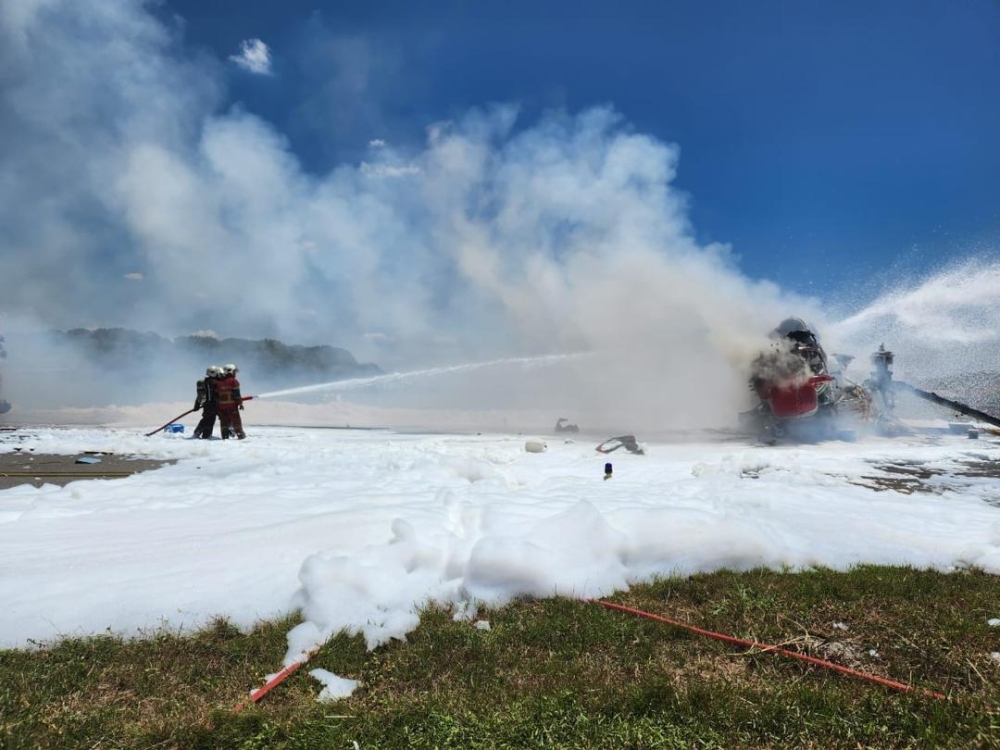
The runway at Sultan Abdul Aziz Shah Airport closed temporarily after a Kamov Ka-32S helicopter exploded and caught fire during a ground engine run-up test at Taxiway Victor. Eight inbound flights were diverted, three departures were delayed, and the runway only reopened at 2:57 pm. One maintenance crew member suffered minor injuries from flying debris.
Why does this matter to you? Because a single event you didn’t schedule, didn’t cause, and didn’t know about until it happened — that’s exactly the kind of disruption that quietly eats into an SME’s day. You can’t predict it. But you can absolutely prepare for being caught off guard.
TL;DR: A helicopter fire briefly closed Subang airport’s runway on August 15, diverting eight flights and delaying three departures. For Malaysian SMEs, this is a live example of how small infrastructure disruptions ripple into deliveries, client meetings, and daily operations. The useful response isn’t prediction — it’s having simple backup plans ready before you need them.
What This Means (In Plain Language)
Flight diversions sound like an airline problem. But think about what actually happens when a runway closes for a few hours. Planes that would have landed in Subang suddenly land elsewhere. Passengers miss connecting meetings. Cargo sits on tarmacs waiting for alternate transport. Airlines rebook, re-route, and recalculate. Meanwhile, your delivery that was supposed to arrive by afternoon — that “on the way” status your client keeps checking — is now stuck in a different city.
The incident occurred at 12.28 pm, and the airport suspended all departures and arrivals until the runway was reopened at 2.57 pm. That’s less than three hours of actual closure. But the knock-on effects — rescheduled flights, missed connections, ground transport rearrangements — stretch much further than the closure window.
The runway reopens, but your day doesn’t reset. The ripples of a 90-minute disruption can last until the next morning.
Here’s the uncomfortable truth: you don’t need to be at the airport for its disruption to reach you. Any business that relies on time-sensitive movement — physical goods, people, or information — is exposed to somebody else’s operational failure.
How This Applies to Malaysian SMEs
Malaysian SMEs in the Klang Valley were the direct shadow audience of this incident. Subang airport isn’t just a hub for commercial passengers; it’s a key site for corporate charters and aviation-linked services. If you’ve ever sent a staff member to a client meeting in Penang on a morning flight, or waited on spare parts flown in for a production line, you’ve already placed a bet on someone else’s schedule holding up.
For SMEs in logistics, e-commerce, and freight forwarding, a runway closure is a concrete stress test. If your business depends on air cargo moving through Subang, even a three-hour closure means shipments arriving late, warehouse schedules shifting, and customers asking questions you don’t have answers to yet. The affected flight information displays at the airport showed revised schedules for several flights — and for every revised schedule, there’s an SME somewhere adjusting its own delivery promise.
Then there’s the client-facing side. Imagine you’ve confirmed an important meeting with a buyer flying into Subang that afternoon. That flight gets diverted to another airport. Your client is now driving two hours to get to you, and your meeting starts late with both of you frazzled. This isn’t a hypothetical — passengers were advised to check with their airlines for the latest updates, which in practice means clients scrambling to rework their schedules, and you scrambling with them.
Even businesses with zero aviation dependence felt this. Staff who commute through Subang’s surrounding roads dealt with increased traffic from diverted ground transport. Service businesses that coordinate with clients on tight timelines had to absorb delays that originated from a source entirely outside their control. The lesson for every SME owner: your operation’s reliability is only as strong as the weakest link in your external dependencies — and you often don’t know where that weak link is until it snaps.
Practical Takeaways: A Disruption Checklist
You don’t need a full disaster recovery plan for every scenario. You need a few simple habits. Here’s a starting list:
- Have one backup route per critical dependency. If your supplier ships via Subang, know which alternate airport or ground route can step in.
- Build buffer time into client promises. When you tell a client “by 3 pm,” you’re making yourself fragile. Say “by end of day” and you absorb surprises without breaking trust.
- Set up a notification system. Follow CAAM announcements and airport social channels for your key hubs. Smart notifications beat finding out from a delayed client.
- Identify your single point of failure. Ask yourself: if one flight, one road, or one vendor fails today, which of my commitments breaks? Fix that one first.
- Communicate externally early. If a disruption hits, tell your clients before they ask. A short “possible delay” message saves hours of damage control.
What the Disruption Numbers Look Like
| Impact Area | Reported Numbers |
|---|---|
| Inbound flights diverted to other airports | 8 |
| Departing flights delayed | 3 |
| Time of incident | 12.28 pm |
| Runway reopened for air traffic | 2.57 pm |
| Total runway closure duration | ~2.5 hours |
| Injuries reported | 1 minor (flying debris) |
Source: Malay Mail report, August 15, 2026
The Bigger Picture
This incident wasn’t a major disaster. No lives lost, no cargo destroyed, runway reopened within hours. But that’s precisely why it’s worth studying. The disruptions that hurt SMEs most are rarely the catastrophic ones. They’re the mid-sized, unexpected interruptions that arrive without warning and leave you to clean up the schedule.
Across Malaysia, infrastructure pressure points — airports, ports, major highways, even power grids — are getting more congested and more complex. Each one is a potential source of a surprise. The long-term winning move for SMEs isn’t trying to predict every failure. It’s building operations that can absorb a punch: flexible timelines, multiple supplier routes, and communication habits that assume something will go wrong on a random Saturday afternoon.
Because the next disruption will come. It might be a helicopter fire, a flood, a network outage, or a supplier’s closing down notice. The businesses that hold up will be the ones that already have a default answer to the question: “what do we do now?” — before they’re forced to answer it.
Every disruption you survive — even a minor one — is a free lesson about the weak spots in your business. The only wasted disruption is the one you never learn from.
Take 30 minutes this week to map out your own dependencies like the ones this incident exposed. Which flights matter to you? Which deliveries only have one source? Which client promises don’t have buffer? Write down your backup plan for each. You’ll probably never need it. But if you ever do, you’ll be glad it’s there.
Ready to Streamline Your Operations?
Your business should run itself. AutoRunBiz deploys AI agents to automate your daily operations — WhatsApp orders, invoicing, customer follow-ups, and accounting. Book a free 15-min ops audit to see where automation fits your business →