
Could the next delivery improvement happen above the road?
If your business depends on moving small, urgent items, you already know the problem: the distance may be short, but the delivery process is slow. A sample, spare part, document, medicine, or high-priority order can sit in a queue while a rider waits for traffic to clear or for several items to be bundled into one trip.
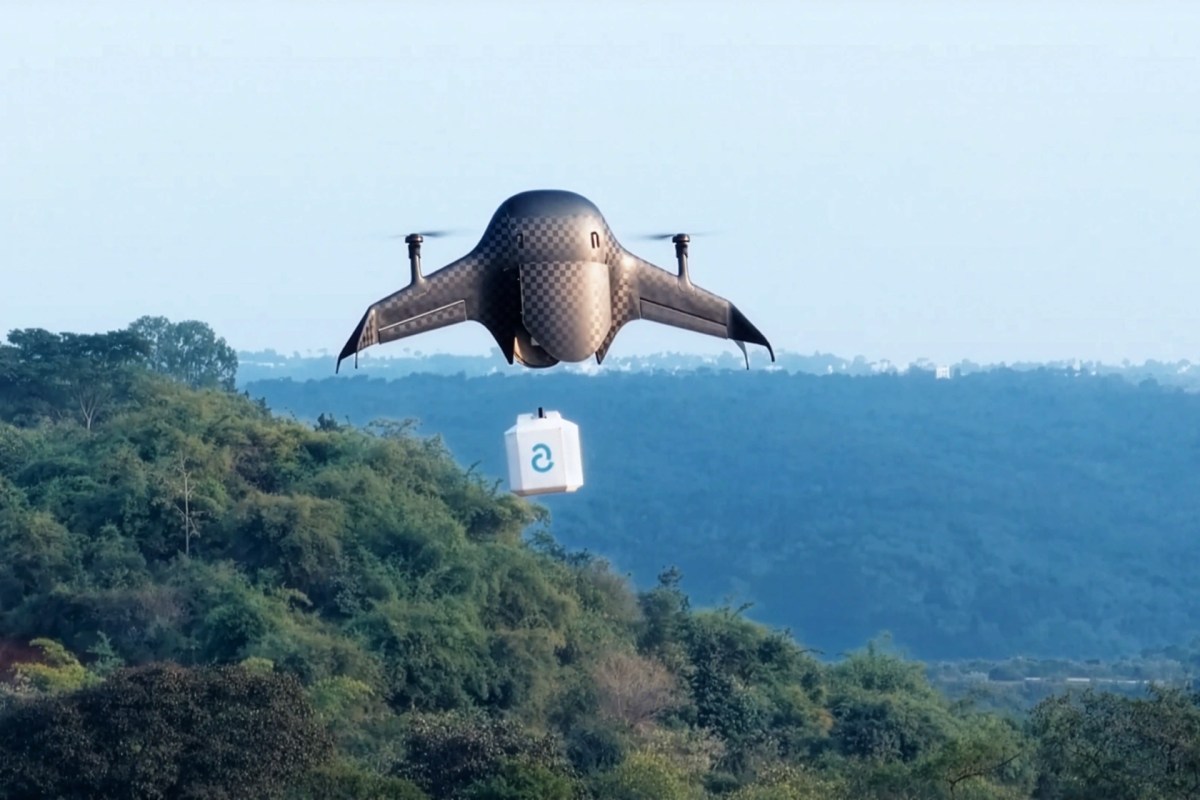
That is why drone logistics is attracting attention. India-based Airbound is developing vertical-flight drones designed to carry goods through the air while using less aircraft weight relative to the payload. The company says it has completed more than 13,000 autonomous flights, including more than 1,000 flights transporting diagnostic samples for Narayana Health. Source: TechCrunch
For you as a Malaysian SME owner, the lesson is not that you should immediately buy a drone. The more useful lesson is that logistics is being redesigned around speed, smaller loads, fixed routes, and fewer handovers.
TL;DR
Drone delivery is moving beyond demonstrations into specialised business routes, particularly healthcare and short-distance logistics.
You can prepare by identifying urgent, repeatable deliveries where road transport creates delays, then improving your order data, route records, packaging, and compliance processes.
What This Means
Airbound’s aircraft uses a “tail-sitter” design. It takes off and lands vertically, then changes position for horizontal flight. This approach avoids dependence on a runway, which matters when a delivery network needs to operate from compact sites such as hospitals, warehouses, or distribution points. Source: TechCrunch
The company’s current drone weighs about 3.3 pounds and carries around 2.2 pounds of payload. Its next aircraft is expected to weigh about 6.6 pounds and carry up to 11 pounds. Source: TechCrunch These figures show the intended business model: use a small aircraft for a small, valuable, or time-sensitive shipment instead of sending a full vehicle.
The strongest use case is not every parcel. It is a delivery where time matters more than volume. Airbound reported that diagnostic samples moved by drone over a route of about 2.5 miles in around seven minutes, while the same samples could take three to five hours by two-wheelers after waiting for enough samples to be bundled for road transport. Source: TechCrunch
The practical insight: automation creates the most value when it removes waiting, not merely when it makes movement faster.
However, important limits remain. Beyond visual line of sight, or BVLOS, approval is needed for many larger-scale autonomous delivery operations. Airbound identified regulation as a major bottleneck, and the company remained broadly pre-revenue despite having more than 150 employees. Source: TechCrunch That means the technology is promising, but practical deployment depends on aviation rules, safety procedures, landing locations, weather, insurance, public acceptance, and reliable operating data.
How This Applies to Malaysian SMEs
Healthcare and laboratory services: Malaysian clinics, pharmacies, laboratories, and medical suppliers often move small but urgent items between branches. A blood sample or diagnostic specimen may be physically light, yet delays can affect patient service. Even before drones become widely available, you can improve the process by recording collection time, dispatch time, arrival time, temperature requirements, and receiving confirmation in one digital workflow. This gives you evidence about where road transport is genuinely causing delays.
Industrial parts and maintenance: If you operate an engineering, manufacturing, or facilities business, a small replacement component can hold up a larger job. A bearing, sensor, connector, or control part may fit inside a compact package, but finding and dispatching it quickly can be difficult. You can prepare for faster transport models by keeping an accurate digital inventory, tagging parts by location, and creating a priority category for items needed to restore operations. A future aerial delivery provider will work better with clean stock and route data than with messages scattered across WhatsApp groups.
Food, agriculture, and remote locations: Businesses serving plantations, construction sites, islands, resorts, or rural properties may face uneven road access. A drone will not replace normal transport for large consignments, but it may suit lightweight urgent items such as test kits, documents, small tools, or premium products. Before considering this, map your actual delivery points and identify locations where road delays are frequent, predictable, and operationally significant.
E-commerce and spare-parts sellers: Most online orders will still require conventional delivery because they involve varied sizes, addresses, and customer availability. A more realistic early use case is a controlled business-to-business route between your warehouse and a nearby outlet, showroom, service centre, or partner site. Fixed routes are easier to monitor than thousands of individual doorstep deliveries. They also make it easier to standardise packaging, handover procedures, and customer notifications.
Island and tourism operations: Malaysian businesses operating around islands, marinas, resorts, and coastal facilities may eventually benefit from compact aerial routes. Yet you should treat this as a controlled logistics project, not a marketing experiment. You will need clear landing zones, weather rules, emergency procedures, and a person responsible for every handover.
A Simple Comparison of Delivery Use Cases
| Use case | Typical shipment profile | Potential benefit | What to prepare |
|---|---|---|---|
| Medical samples | Small, time-sensitive, controlled handling | Less waiting between collection and testing | Chain-of-custody records and packaging controls |
| Industrial spare parts | Compact items needed to resume work | Faster response between sites | Accurate inventory and priority dispatch rules |
| Remote-site supplies | Light items sent to hard-to-reach locations | Fewer road-access delays | Mapped landing areas and weather procedures |
| Routine bulky orders | Large, heavy, or mixed consignments | Limited suitability for drones | Continue using vans, lorries, or courier networks |
The table is a planning guide rather than a claim that every use case is currently approved or commercially available in Malaysia. Drone operations must follow applicable Malaysian aviation and safety requirements. The Civil Aviation Authority of Malaysia provides information on drone operations and unmanned aircraft requirements. Source: Civil Aviation Authority of Malaysia
Practical Takeaways
- List your urgent deliveries. Review the past 30 days and identify items where waiting created customer complaints, production delays, or missed service appointments.
- Separate distance from delay. Record how long each delivery spent travelling and how long it waited for batching, approval, pickup, or receiving.
- Start with fixed routes. A repeat route between two known sites is easier to improve than ad hoc doorstep delivery.
- Standardise packaging. Record item dimensions, weight, fragility, temperature needs, and handling instructions.
- Create a chain of custody. Use timestamps, sender confirmation, receiver confirmation, and exception notes for important items.
- Digitise your inventory. A fast delivery method is not useful if your team cannot confirm where the item is.
- Track service results. Measure dispatch-to-arrival time, failed handovers, damaged items, and missed delivery windows.
- Check compliance first. Do not operate or outsource drone flights without confirming the relevant approvals, operator qualifications, site permissions, and safety requirements.
- Keep conventional delivery as backup. Rain, system faults, restricted airspace, and urgent exceptions will still require other transport options.
The Bigger Picture
Airbound’s approach points to a broader change in logistics: the future may not belong to one universal delivery method. Instead, businesses may use different transport modes for different shipment profiles. Lorries and vans remain suitable for bulk movement. Motorcycles remain useful for flexible city deliveries. Drones may suit small, urgent, repeatable routes where waiting is the main problem.
Airbound has described an eventual network connecting three cities in India, with a target of 10,000 flights per day. The company estimated that reaching that target could require between 250 and 1,000 aircraft, depending on route lengths. Source: TechCrunch The scale of that ambition also shows why this is not simply a hardware purchase. It requires airspace coordination, dispatch software, maintenance, monitoring, trained staff, and dependable business processes.
For Malaysian SMEs, the best response is to become transport-ready rather than drone-dependent. Clean data, clear workflows, reliable packaging, and measured delivery performance will help you whether the next shipment travels by rider, van, automated locker, or aircraft.
You do not need to wait for drones to become common before acting. Start by finding the deliveries where your customer is paying for speed, but your current process is spending time on avoidable waiting. That is where the next practical improvement is most likely to begin.
Ready to Streamline Your Operations?
Your business should run itself. AutoRunBiz deploys AI agents to automate your daily operations — WhatsApp orders, invoicing, customer follow-ups, and accounting. Book a free 15-min ops audit to see where automation fits your business →