
Why a New Electric Car Matters to Your Business
If you run a Malaysian SME, vehicle decisions are rarely just about choosing a nicer car. A company vehicle may carry your staff, deliver products, visit customers, attend site meetings, or represent your brand. When a new electric vehicle combines practical range with stronger performance, it gives you another option to consider for future fleet planning.
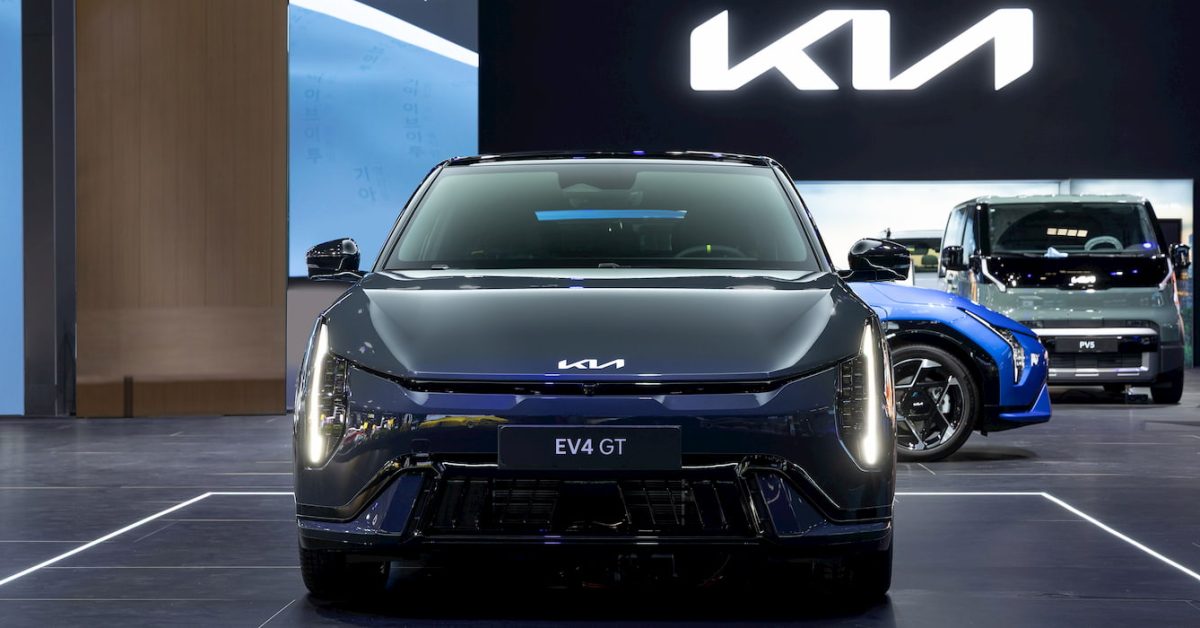
Kia’s new EV4 GT, launched for the Canadian market, is not currently a Malaysian model. However, its specifications show how electric vehicles are becoming more varied. Businesses are no longer looking only at small city cars. They can increasingly consider sedans, hatchbacks, higher-performance models, and vehicles suited to different work patterns.
TL;DR: The EV4 GT shows that an electric vehicle can combine business-friendly range with performance and technology. For Malaysian SMEs, the useful lesson is to assess vehicle suitability by daily route, charging access, staff needs, and brand image—not by headline specifications alone.
What This Means
The Kia EV4 GT is a performance-focused version of Kia’s electric EV4 sedan. According to the source article, the model uses an 81.4 kWh battery and has a Kia-estimated range of 431 km. It has dual-motor all-wheel drive, producing 288 horsepower and 345 lb-ft of torque, compared with 201 horsepower and 209 lb-ft for the standard front-wheel-drive EV4.
In simple terms, the GT version is designed to provide stronger acceleration, sharper styling, and additional equipment while retaining the basic advantages of an electric drivetrain. Its features include a head-up display, 20-inch alloy wheels, performance-focused controls, and distinctive interior finishes, as reported by Electrek.
The model is available for factory order in Canada at a listed starting price of CA$58,595, with an all-in figure of CA$61,344, according to Kia’s reported Canadian pricing. These Canadian figures should not be treated as Malaysian selling prices. Import duties, local specifications, taxes, charging standards, warranties, and after-sales support can all differ.
The practical lesson is not “buy this exact model”. It is “watch how quickly EV choices are expanding, then prepare your business to evaluate them properly.”
How This Applies to Malaysian SMEs
1. Match the vehicle to your daily operating pattern. If your business serves customers within Klang Valley, Penang, Johor Bahru, or another concentrated area, an EV may fit routes that begin and end at the same premises. A sales team visiting several nearby customers could use a vehicle that is charged overnight or during scheduled daytime parking. The reported 431 km range of the EV4 GT is a useful reference point, but your real decision should be based on your own route records, traffic conditions, weather, passenger load, and air-conditioning use.
Start by reviewing four weeks of travel records. Group journeys into local customer visits, intercity trips, deliveries, and personal or non-business use. You may discover that one vehicle has a predictable daily routine while another regularly travels long distances. The first type is usually easier to assess for electrification because its charging schedule is more controllable.
2. Treat charging access as an operations question. For an SME, the most important question may not be the battery size. It may be whether the vehicle can be charged reliably without interrupting work. A business operating from a shop lot, shared office, warehouse, or rented premises needs to check parking rights, electrical capacity, cable routing, safety requirements, and permission from the landlord or building management.
Consider who is responsible for plugging in the vehicle, when charging takes place, and what happens if the vehicle returns late. You should also define a backup process for urgent trips. Public charging can support flexibility, but your team needs clear instructions on where to charge and how to record vehicle availability. These details matter more than a brochure’s performance figure.
3. Decide whether performance supports your brand or distracts from it. The EV4 GT is positioned with a sportier appearance and stronger output than the regular EV4. For a design agency, technology consultancy, property firm, or premium service provider, a distinctive EV may reinforce a modern brand image. For a delivery business or field-service company, however, cargo space, loading height, durability, and easy cleaning may matter more than acceleration.
Ask yourself what customers actually notice. A vehicle can support your brand when it is clean, reliable, properly maintained, and suitable for the job. A sporty trim is not automatically the best business choice if it reduces practicality or makes staff reluctant to use the vehicle for normal work.
4. Plan around Malaysian road and weather conditions. Malaysia’s heat, heavy rain, traffic congestion, and frequent stop-start driving should be part of your evaluation. Range estimates from overseas markets are useful comparisons, but they do not guarantee the same real-world result locally. Your team should test vehicles on representative routes, including highway travel, urban congestion, slopes, and regular use of the air conditioner.
If your staff travel between states, map charging locations along common routes before assigning an EV to that role. If your business operates in areas with fewer charging options, keep the first EV assignment to predictable routes while you build experience.
EV4 GT Facts at a Glance
| Item | Reported EV4 GT detail | Business relevance |
|---|---|---|
| Battery | 81.4 kWh | Provides a reference for evaluating planned daily routes |
| Estimated range | 431 km | Useful for comparison, but test under Malaysian conditions |
| Powertrain | Dual-motor AWD | May suit drivers who value stronger traction and performance |
| Output | 288 horsepower and 345 lb-ft of torque | Shows that EVs can serve performance-oriented company-car users |
| Standard EV4 comparison | 201 horsepower and 209 lb-ft of torque | Highlights why the correct trim depends on actual business needs |
| Market availability in source article | Canada, factory order | Do not assume Malaysian availability or local specifications |
All vehicle figures in this table come from the source article. The table is for planning and comparison, not a Malaysian product specification sheet.
Practical Takeaways for Your Business
- Map actual routes: Record daily distance, parking locations, highway use, and return times for each vehicle role.
- Check charging permission: Confirm whether your premises, landlord, or building management allows the required equipment.
- Separate vehicle roles: A customer-facing sedan, delivery vehicle, and technician vehicle should not be evaluated using the same criteria.
- Test locally: Drive during Malaysian traffic and weather conditions rather than relying only on overseas range claims.
- Write a charging procedure: Assign responsibility for charging, connector care, vehicle handover, and emergency arrangements.
- Review downtime: Ask dealers about service support, parts availability, warranty coverage, and repair procedures in Malaysia.
- Track utilisation: Use a simple spreadsheet or fleet system to record mileage, charging sessions, route delays, and vehicle availability.
- Start with a controlled assignment: Place an EV with one predictable route before changing your entire fleet.
The Bigger Picture
The arrival of performance-oriented EV variants suggests that electric vehicles are moving beyond a single “eco car” category. Manufacturers are building different models for different drivers, including people who want stronger acceleration, more equipment, distinctive styling, or a more engaging driving experience. The EV4 GT’s Canadian launch is one example of that wider product range, as described by Electrek.
For Malaysian SMEs, this means vehicle planning will become more analytical. You will need to compare not only vehicle specifications but also route predictability, charging workflow, staff behaviour, customer expectations, and operational resilience. The best choice may be a mix of vehicle types rather than one standard model for everyone.
You should also treat fleet data as a business asset. Even a basic record of mileage, trip purpose, charging access, and downtime can help you identify which roles are ready for an EV. Automation can make this easier by collecting driver submissions, flagging unusual mileage, reminding staff about inspections, and producing monthly fleet reports.
The EV4 GT may never be sold in Malaysia, and its Canadian launch does not confirm any local release. Its value for your business is as a signal: vehicle options are becoming more specialised, and SMEs that understand their own operations will be better prepared to choose wisely when suitable models arrive.
Final Word
Do not begin with the question, “Should my company buy a sporty EV?” Begin with, “Which business journeys are predictable enough for an electric vehicle, and what must we change to support them?” That question gives you a practical starting point.
Review your routes, confirm charging arrangements, test vehicles locally, and compare each model against the work your employees actually perform. When you make the decision from operational evidence, new EV launches become useful business intelligence rather than distracting showroom news.
Ready to Streamline Your Operations?
Your business should run itself. AutoRunBiz deploys AI agents to automate your daily operations — WhatsApp orders, invoicing, customer follow-ups, and accounting. Book a free 15-min ops audit to see where automation fits your business →