
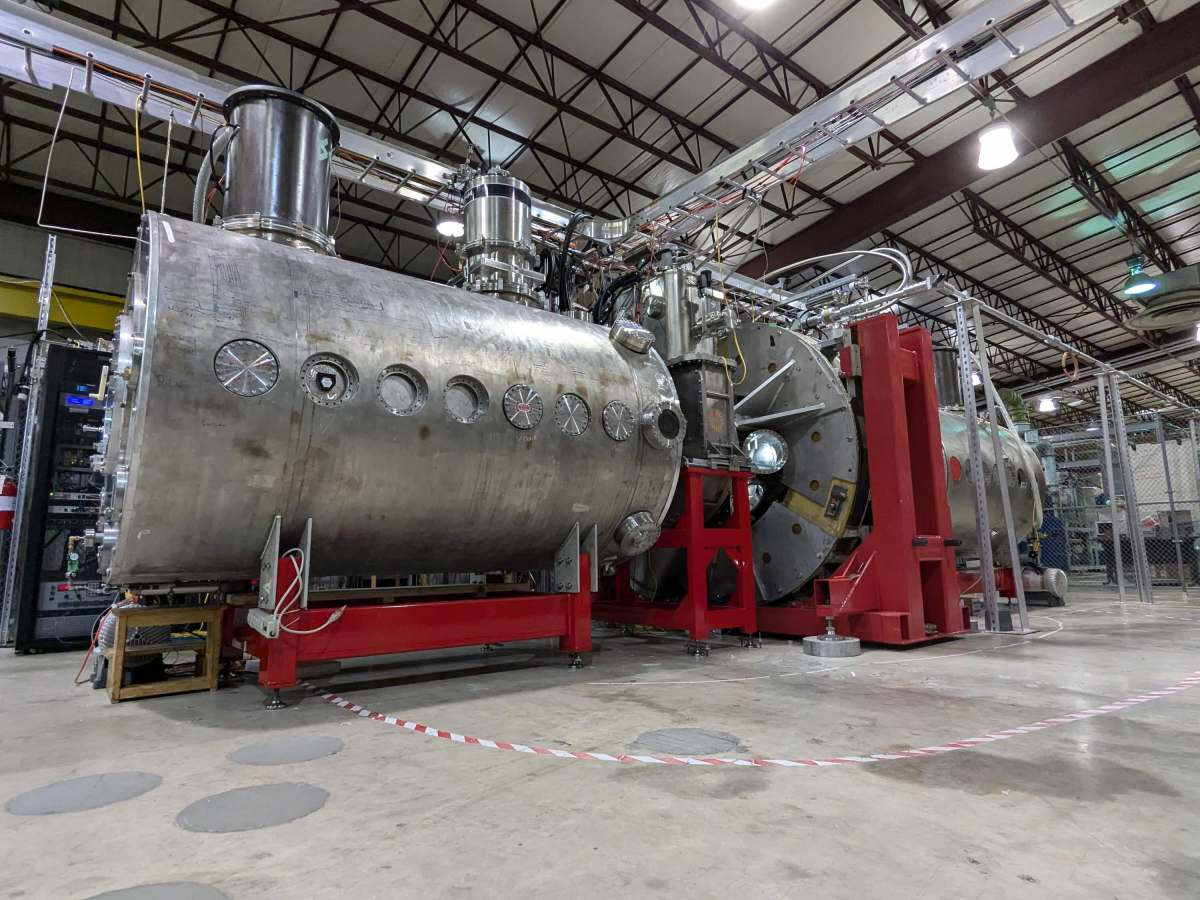
Why a distant energy story matters to your business
You may not be planning to build a power plant, work with a utility company, or invest in fusion technology. Your daily concerns are probably more immediate: keeping operations moving, serving customers quickly, managing staff, and preparing for changes you cannot fully predict.
That is exactly why the growing relationship between fusion startups and utilities is worth your attention. The important lesson is not whether fusion becomes commercially successful. It is how businesses prepare for uncertain technology by forming practical partnerships early, sharing risk, and connecting innovation to real operating needs.
Realta Fusion recently announced an agreement with Madison Gas and Electric to explore a 200-megawatt fusion plant in Wisconsin, targeted for the mid-2030s. Source: TechCrunch Other fusion companies have made similar arrangements involving land, technical support, grid access, and future electricity supply.
TL;DR
Fusion startups are partnering with utilities because both sides need something: startups need sites, expertise, and credibility, while utilities need dependable future power.
For your SME, the practical lesson is to build partnerships around a specific business problem instead of adopting technology simply because it is new.
What This Means
Fusion is a proposed way of generating electricity by combining light atomic nuclei under extreme conditions. The technology aims to provide steady electricity without relying on fossil fuels, although commercial deployment remains a long-term engineering challenge.
Utilities are interested because electricity demand is rising, including demand from large technology facilities. Renewable sources such as wind and solar produce power according to weather conditions, while batteries can help manage fluctuations. Fusion is being considered as a possible source of continuous electricity for the grid. Source: TechCrunch
The partnerships are not ordinary supplier contracts. They combine several forms of support:
- The utility may provide land or access to a suitable grid connection.
- The startup may receive engineering and technical assistance.
- The utility can help with permitting and site planning.
- The startup gains an early customer or future route to market.
- The utility gets an opportunity to learn about a technology before it becomes widely available.
This arrangement reduces some practical obstacles without pretending that the technology is risk-free. That distinction matters for you. A good technology partnership does not remove uncertainty. It gives both parties a structured way to test assumptions, measure progress, and decide what to do next.
The useful question is not “Is this technology exciting?” It is “Who can help us test it against a real business need?”
How This Applies to Malaysian SMEs
1. Treat partnerships as operating tools, not publicity exercises. A Malaysian food manufacturer might need better production scheduling, stock visibility, or delivery coordination. Instead of buying several disconnected software tools, you could work with an automation provider that understands your process, maps the bottleneck, and pilots one workflow first. The partner should contribute practical knowledge, not merely install a system and leave your team to figure it out.
This is similar to the utility-startup relationship. The utility brings operating experience, infrastructure, and a real-world environment. The startup brings a new technical capability. For your business, the right combination may be your staff’s industry knowledge and a technology partner’s process or automation expertise.
2. Start with a problem that can be measured. A wholesaler may lose time checking stock across multiple locations. A construction supplier may struggle to follow up on quotations. A service company may rely on spreadsheets to assign technicians and track job completion. These are clearer starting points than a general ambition to “go digital”.
Write down the current process, the people involved, the handoffs, and the delay points. Then agree on a small pilot. Useful measurements might include response time, order-processing errors, overdue follow-ups, or the number of manual data entries. The exact measure depends on your business, but it should be visible to your team and reviewed regularly.
3. Use existing infrastructure before creating something from scratch. Realta gains access to interconnection sites and an existing industrial facility, including a former Oscar Mayer factory being converted into a research and development site. Source: TechCrunch Your equivalent may be the accounting system, customer database, messaging platform, or inventory records you already use.
Before replacing everything, check whether your current tools can connect through an integration or a simple workflow. A small manufacturer, for example, may keep its existing accounting software while adding automated alerts for low stock, unpaid invoices, or pending approvals. This approach reduces disruption and allows your staff to improve one process at a time.
4. Make the partnership useful for both sides. You should not expect a technology provider to understand every detail of your business automatically. Share your workflow, customer expectations, approval rules, and common exceptions. In return, ask the provider to explain limitations, security arrangements, support responsibilities, and what happens if the pilot does not meet expectations.
A partnership works better when both parties have clear responsibilities. Your team may provide process information and nominate a project owner. The provider may configure the workflow, train users, monitor results, and recommend improvements. Put these expectations in writing so the project does not depend on informal conversations.
Examples of partnership-led automation
| SME situation | Possible partner | First practical step |
|---|---|---|
| Leads are missed after enquiries | CRM or automation specialist | Route every enquiry to one shared follow-up list |
| Stock updates are delayed | Inventory or systems integrator | Connect sales, purchasing, and stock notifications |
| Approvals depend on WhatsApp messages | Workflow automation provider | Create a traceable approval form with status alerts |
| Technicians receive incomplete job details | Field-service software partner | Standardise job assignments and completion reports |
The table is a starting framework rather than a promise that every business needs the same system. The best first step is usually the process that is repeated frequently, affects customers directly, and currently depends on one or two employees remembering what to do.
Practical Takeaways
- Choose one recurring operational problem before choosing a technology.
- Find a partner with experience in your type of workflow, not just a long feature list.
- Run a limited pilot with a named owner from your team.
- Define the result you want to observe, such as faster response or fewer manual checks.
- Reuse existing systems and data where possible.
- Ask who owns the data, who provides support, and how changes will be handled.
- Document exceptions so automation does not break when a customer or supplier behaves differently.
- Review the pilot with frontline employees, not only management.
- Expand only after the process works reliably for ordinary cases.
The Bigger Picture
The fusion partnerships described in the source article show a shift in how long-term innovation is being approached. Utilities are not simply waiting for a finished product to appear. They are engaging earlier because infrastructure decisions take years, and future demand must be considered before pressure becomes a crisis. The agreements involving Commonwealth Fusion Systems and Dominion Energy, Helion and Chelan County Public Utility District, and Type One Energy and the Tennessee Valley Authority each connect a startup’s technology with a utility’s land, grid, or operating capabilities. Source: TechCrunch
You can apply the same thinking on a smaller scale. Do not wait until your business is overwhelmed by orders, staff changes, reporting requirements, or customer expectations before improving the underlying process. You do not need to predict every future trend. You need a repeatable way to test useful improvements while keeping daily operations stable.
For Malaysian SMEs, this may mean building relationships with local automation specialists, software vendors, accountants, logistics providers, or industry associations. A partner that understands your language, compliance environment, customer habits, and staffing realities can help you implement changes more effectively than a generic solution chosen from a feature comparison.
The long-term advantage comes from learning how your business works and making that knowledge easier to share. When a process is documented, measurable, and supported by the right tools, your company becomes less dependent on memory and individual heroics. That gives you a stronger base for growth, even when the technology itself changes.
Fusion may still have a long road before commercial power plants operate at scale. The business lesson is already clear: major innovations move closer to reality when technical specialists and established operators work together around a real-world requirement. Your next improvement can follow the same principle. Find the bottleneck, find the right partner, test carefully, and build from evidence.
Ready to Streamline Your Operations?
Your business should run itself. AutoRunBiz deploys AI agents to automate your daily operations — WhatsApp orders, invoicing, customer follow-ups, and accounting. Book a free 15-min ops audit to see where automation fits your business →