
Why Political Signals Matter to Your Business
When you run a small business, political arguments can feel distant from your daily priorities. You are more concerned with keeping customers satisfied, managing staff, maintaining supplier relationships and making sure operations do not stall.
However, political stability affects the environment in which your business operates. Government decisions influence approvals, public transport, digital services, workforce policies, education, healthcare and infrastructure. Even when you do not follow every political statement, changes in political cooperation can shape how confidently you plan and how quickly public agencies act.
DAP’s decision to remain in Malaysia’s Federal Government is therefore relevant to you—not because your business must take a political side, but because it reduces the immediate possibility of a government rupture. At the same time, the decision may increase political attacks against DAP and create more heated public debate.
TL;DR: DAP staying in government provides greater short-term continuity, but political pressure against it may intensify. Your best response is to plan for policy continuity while keeping your business flexible if public debate affects regulations, approvals or customer sentiment.
Focus less on political arguments and more on whether government agencies continue delivering practical improvements in transport, digitalisation, licensing, education, healthcare and local administration.
What This Means
At its national congress, DAP delegates voted overwhelmingly to keep the party’s ministers and deputy ministers in government. There were 2,106 valid and spoilt ballots. Of these, 1,857 votes, or 88.2 per cent, supported remaining in government, while 242 supported withdrawal.
In plain language, DAP has chosen to pursue its objectives from inside the administration rather than leave and become an opposition party. This gives Prime Minister Anwar Ibrahim’s Unity Government more breathing space because it removes the immediate possibility of DAP ministers leaving.
That does not mean every disagreement has disappeared. DAP may still criticise government decisions, push for reforms or face pressure from its supporters. The difference is that its ministers will continue trying to influence policy while remaining part of the administration.
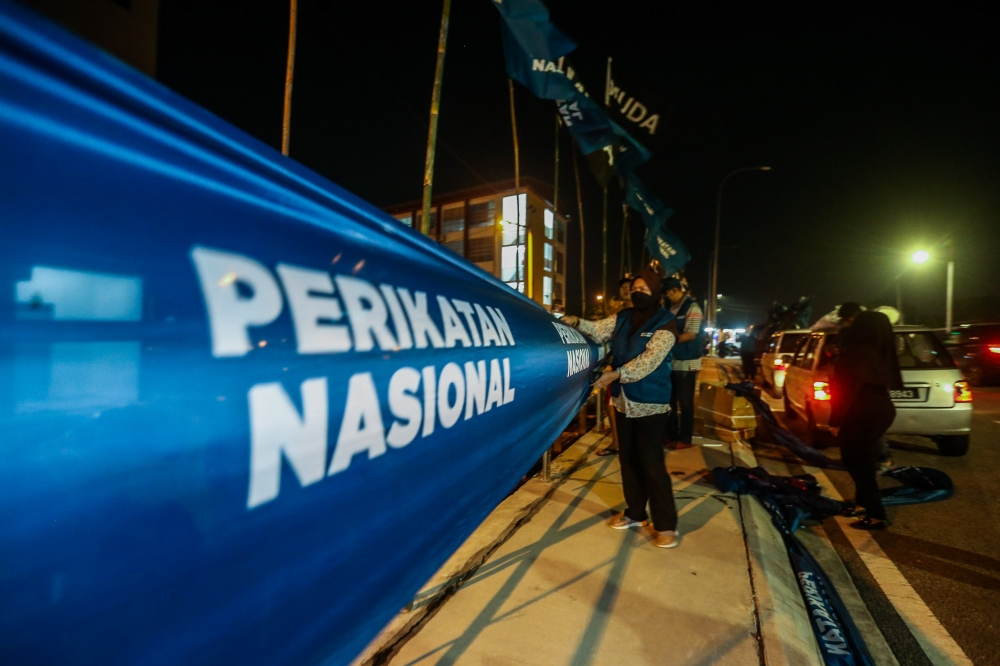
The article argues that Perikatan Nasional, especially PAS, may intensify its attacks on DAP. One reason is that PN wants to show Barisan Nasional that it can weaken DAP and Pakatan Harapan among Malay voters. This creates a secondary contest: PN is not only challenging the government, but also trying to prove its value as a potential political partner to BN.
For your business, the useful lesson is simple: political noise may increase even when government continuity improves. Prepare for both conditions at the same time.
How This Applies to Malaysian SMEs
First, you may have more continuity for ongoing government-facing processes. If your business depends on licences, local council approvals, grants, training programmes, digital systems or sector-specific compliance, a government that remains intact is generally easier to work with than one facing an immediate collapse. This does not guarantee fast approvals or better service, but it reduces the uncertainty of a sudden change in leadership and policy direction.
For example, if you are expanding a food outlet, logistics operation, service centre or small factory, keep tracking the agencies involved in your approvals. Do not rely on political headlines alone. Check whether application procedures, required documents and responsible officers have changed. A stable administration still requires you to maintain accurate records and follow up professionally.
Second, expect public discussion to become more polarised. When PN attacks DAP more aggressively, issues that were previously treated as administrative matters may be presented as political or communal issues. This can affect how customers, employees and business partners discuss government programmes. If your business serves a mixed community, avoid turning political arguments into workplace disputes or customer-service problems.
You do not need to publish a political position to show leadership. Instead, create a clear internal standard: staff should treat customers respectfully, avoid discriminatory remarks and escalate sensitive complaints to a manager. This is particularly important for businesses with public-facing teams, online communities or employees from different backgrounds.
Third, judge policies by operational results. The article says DAP should respond to attacks through performance in areas such as housing, public transport, wages, investment, education, digitalisation, healthcare, local government efficiency and household pressures. As a business owner, you can apply the same practical test. Ask whether a policy makes it easier for you to hire, train, serve customers, move goods, communicate with agencies or complete administrative work.
Suppose a public digital service becomes simpler. That may reduce repeated visits and manual form-filling. If public transport improves, staff may find commuting more reliable. If local government processes become clearer, expansion planning becomes easier. These are the outcomes that matter to you, regardless of which party receives political credit.
Fourth, avoid building your business plan around one political promise. Coalition governments involve several parties with different priorities. A policy announced by one leader may be amended during consultation, delayed during implementation or applied differently by agencies. Keep a written list of assumptions behind major business decisions, and review those assumptions when an official regulation, circular or agency notice changes.
Fifth, protect your brand from unnecessary political exposure. If your business is not directly involved in public affairs, a partisan social media post can create avoidable tension with customers or employees. You can still communicate your values—service quality, fair treatment, reliability and community responsibility—without commenting on every political exchange.
Numbers Behind the Political Signal
| Indicator | Reported figure | Why it matters to SMEs |
|---|---|---|
| Total valid and spoilt ballots at the DAP congress | 2,106 | Shows the decision was based on a substantial delegate vote. |
| Support for remaining in government | 1,857 votes | Signals strong internal support for continuity. |
| Share supporting the decision | 88.2 per cent | Suggests an immediate withdrawal is unlikely. |
| Negeri Sembilan assembly seats | 36 seats | Provides context for the reported BN-PN cooperation. |
| BN, PN and PH seats respectively | 18, 7 and 11 | Shows why future cooperation between parties may attract attention. |
Practical Takeaways for Your Business
- Track official notices: Follow the relevant ministry, local council and regulator instead of relying only on social media discussions.
- Separate continuity from certainty: A government remaining in place does not mean every policy will be implemented quickly.
- Keep documents ready: Maintain current licences, employee records, tax files, contracts and operating procedures so you can respond to administrative requests.
- Review business assumptions: Identify which plans depend on transport, digital services, approvals, staffing rules or public infrastructure.
- Prepare a neutral staff policy: Set expectations for respectful communication when political topics appear at work.
- Use scenario planning: Consider what you would do if a policy is delayed, amended or introduced in stages.
- Measure actual service improvements: Record whether government processes become faster, clearer or easier for your team to use.
- Keep customer communication practical: Explain service changes clearly without turning business channels into political platforms.
The Bigger Picture
The longer-term issue is whether Malaysian politics becomes organised around governing performance or around the ability to attack a particular party. The source article warns that PN’s pressure on DAP could create a contest with BN over who can dominate the Malay political centre. If BN follows PN onto a strategy of constant attacks, it may place strain on its own multiracial identity.
That matters to SMEs because businesses depend on broad customer trust, dependable institutions and workable relationships across communities. A political environment that rewards confrontation can make public debate louder without improving licensing, infrastructure, skills or service delivery.
DAP’s decision gives the Federal Government an opportunity to demonstrate results. It also gives DAP a responsibility to show that remaining in government produces practical benefits. For you, the test is not which party wins an argument. The test is whether your daily interactions with public agencies become clearer, faster and more dependable.
As a business owner, you do not need to predict every political move. Build a business that can operate through changing headlines: keep your records organised, avoid unnecessary partisanship, monitor official policy updates and make decisions based on measurable conditions. Political stability can create room for progress, but disciplined execution is what turns that room into better business operations.
Ready to Streamline Your Operations?
Your business should run itself. AutoRunBiz deploys AI agents to automate your daily operations — WhatsApp orders, invoicing, customer follow-ups, and accounting. Book a free 15-min ops audit to see where automation fits your business →